
American Express Expands Virtual Card Access for U.S. Businesses
American Express is expanding access to its Virtual Cards for U.S. commercial customers, giving more businesses greater control over supplier payments, employee spending and business travel expenses.
American Express is expanding its Virtual Card capabilities for U.S. businesses, giving commercial customers new ways to create and manage digital payment credentials through existing American Express tools.
The company announced the expanded capabilities on August 13, 2026, as part of its effort to make business payments more flexible, controlled and secure.
The expansion centers on two areas. First, eligible American Express Corporate customers can create and manage Virtual Cards directly through American Express @ Work. Second, American Express is expanding Virtual Card functionality for eligible Business Travel Account (BTA) customers through its relationship with Conferma.
Together, the developments give businesses more options for managing payments without relying solely on traditional physical cards.
American Express Brings Virtual Cards to @ Work
The biggest change for corporate customers is the ability to create and manage American Express Virtual Cards through @ Work.
For eligible U.S.-based American Express Corporate Program customers, the functionality provides a more direct way to manage virtual payment credentials within an existing corporate-card management environment.
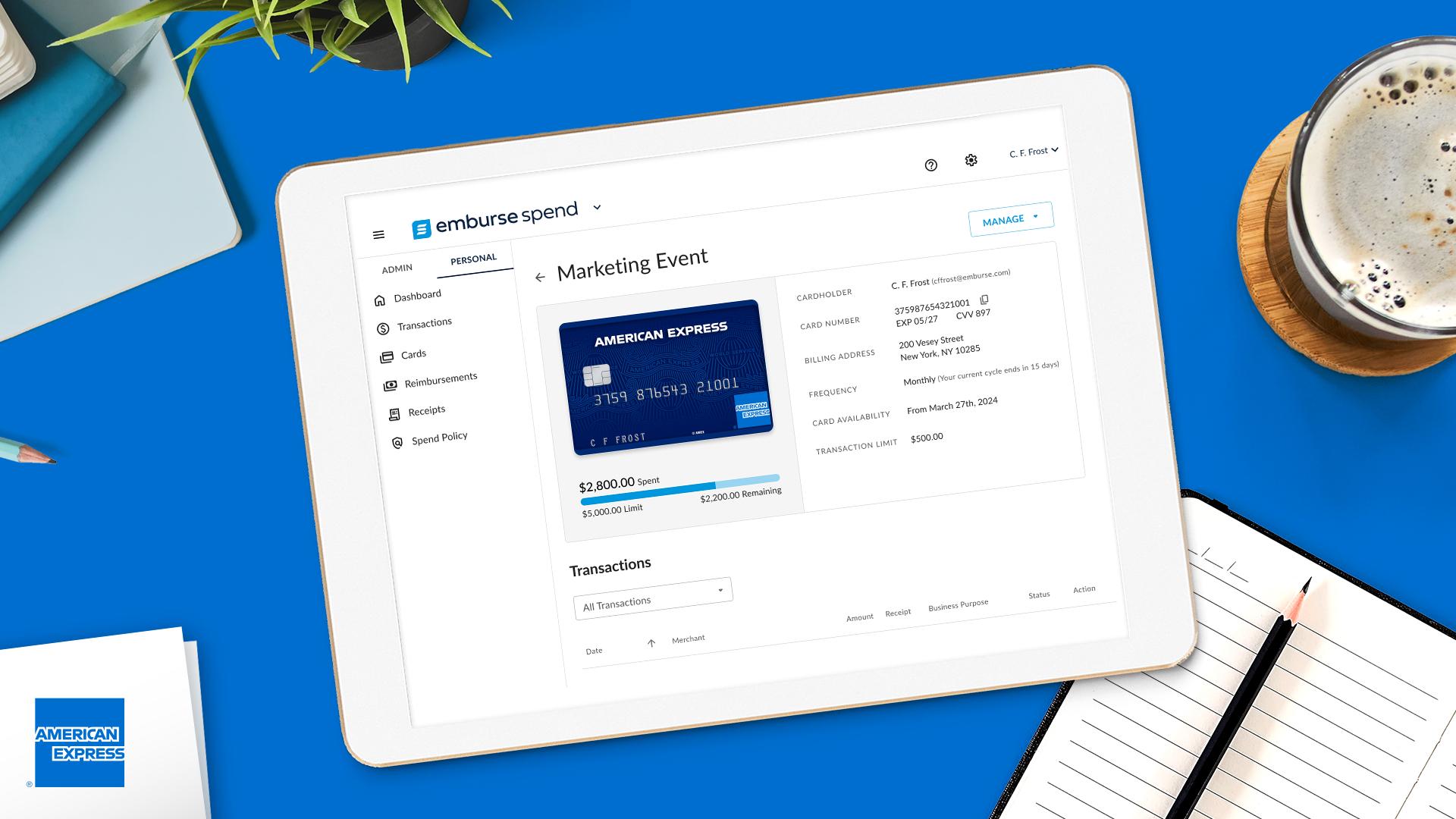
American Express says businesses can establish controls around individual Virtual Cards, including spending limits, usage timeframes and merchant-category restrictions.
These controls can give companies greater visibility over how corporate funds are used.
For example, a business could create a Virtual Card for a specific supplier payment or business expense and set parameters around its use.
That approach can reduce the need to share a primary corporate-card number across multiple transactions.
American Express already describes Virtual Cards as unique digital card numbers that can be used for business purchases, while its broader business-card offering supports virtual cards for eligible U.S. Business and Corporate accounts.
Virtual Cards Give Businesses More Spending Control
Corporate spending can be difficult to manage when employees and contractors need access to payment credentials for different purposes.
Virtual Cards offer a way to create payment credentials for specific spending requirements.
Instead of giving an employee access to a primary card number, a company can issue a separate virtual card with defined controls.
Those controls can include the amount that can be spent, when the card can be used and where it can be accepted.
As a result, businesses can maintain tighter control while still allowing employees to complete approved purchases.
American Express also highlights Virtual Cards as a way to help businesses track spending and manage expenses while protecting underlying card-account information.
Supplier Payments Become a Key Use Case
Supplier payments are another important use case for Virtual Cards.
Businesses regularly make payments to vendors for products, services and recurring expenses. Managing those transactions through virtual payment credentials can provide greater control over individual payments.
American Express already offers business customers Virtual Card capabilities for supplier payments through its broader business-payment ecosystem. Its current U.S. business materials describe Virtual Cards as an option alongside ACH and checks for eligible supplier payments.
The latest expansion therefore fits into a broader strategy of making digital payment tools more accessible within business workflows.
For finance teams, the potential benefit is greater control over payments without adding another physical card to manage.
American Express Expands Virtual Cards for Business Travel
The second part of the expansion focuses on Business Travel Account customers.
Through its relationship with Conferma, eligible BTA customers can create Virtual Cards through the Conferma mobile app.
These cards can be used for a range of business-related expenses, including meals, retail purchases, car rentals and rideshares.
That creates a digital payment option for employees and travelers who need to make purchases while away from the office.
Conferma’s platform is specifically designed around corporate travel payments. Its current offering supports virtual card creation, transaction monitoring and controls over spending limits, expiry dates and merchant restrictions.
Conferma Adds a Mobile Layer to Business Payments
The relationship with Conferma is significant because it moves Virtual Card access closer to the point of purchase.
Through the Conferma mobile app, users can request and access virtual cards when they need to make business payments. The platform also provides transaction visibility and expense information.
For business travelers, that can reduce the need to use personal cards and later request reimbursement.
Instead, companies can provide controlled digital payment credentials for approved expenses.
This can also simplify expense management for finance teams.
When payment data is captured digitally, businesses have more information available for reconciliation and reporting.
From Corporate Cards to Digital Payment Credentials
The expansion reflects a broader change in how businesses manage corporate payments.
Physical corporate cards remain important, but digital payment credentials can offer additional flexibility.
A Virtual Card can be created for a particular purpose without exposing the number associated with the primary account.
That makes the technology useful for different spending scenarios.
A company could use one Virtual Card for a supplier, another for a recurring subscription and another for a business trip.
Each card can have controls appropriate to the transaction.
American Express says its Virtual Cards can also help businesses manage recurring expenses and track spending by project or category.
Security and Fraud Controls Are Central to the Expansion
Security is one of the main reasons businesses are adopting Virtual Cards.
A physical corporate-card number can potentially be reused across multiple transactions. A virtual credential, by contrast, can be created with specific restrictions.
Those restrictions can reduce exposure if the card information is compromised.
Spending limits can also reduce the potential impact of unauthorized transactions.
American Express and Conferma both emphasize the control and visibility provided by Virtual Cards, including restrictions around spending amount, timing and merchant acceptance.
For finance departments, this combination of security and control can be particularly useful.
Virtual Cards Can Simplify Expense Management
Expense management is another area where the expansion could have an impact.
Traditional corporate expenses can involve receipts, reimbursement requests and manual reconciliation.
Digital payment tools can capture transaction information earlier in the process.
That can give finance teams better visibility into spending while reducing administrative work.
Conferma’s platform, for example, provides transaction monitoring and expense details through its mobile experience.
American Express also positions its broader business-card technology around digital reporting, account management and expense visibility.
Consequently, Virtual Cards can become part of a wider digital workflow rather than functioning only as an alternative payment number.
U.S. Corporate Customers Are the Initial Focus
The latest @ Work functionality is being made available to select U.S.-based American Express Corporate Program customers, with broader availability planned.
That phased approach allows American Express to expand the capability while continuing to develop its corporate-payment infrastructure.
Eligibility is important because Virtual Card availability and features can vary by account and solution.
American Express currently states that Virtual Cards are available on eligible U.S. Business or Corporate Accounts through American Express or third-party Virtual Card solutions, with enrollment and features varying by solution.
Businesses therefore need to check the specific eligibility and terms applicable to their accounts.
Why the Expansion Matters for Corporate Payments
The move is significant because corporate payments are becoming increasingly digital.
Businesses want payment systems that provide flexibility without sacrificing control.
At the same time, finance teams need better visibility into spending and simpler reconciliation processes.
Virtual Cards can address several of these requirements at once.
They can provide controlled payment credentials, reduce exposure of primary card details and give businesses more information about individual transactions.
The technology can also fit into existing expense and travel-management workflows.
American Express Builds a Broader Digital Payments Ecosystem
The Virtual Card expansion is part of a wider evolution in American Express’s business-payment offering.
The company already provides digital tools for corporate-card management through @ Work. Its business offering also includes payment options and expense-management capabilities.
Meanwhile, partnerships with companies such as Conferma extend Virtual Card functionality into specialized areas such as business travel.
This combination allows American Express to connect card products with software and digital payment experiences.
For businesses, that can make corporate payments less dependent on traditional card-management processes.
What Comes Next for American Express Virtual Cards
The immediate next step will be broader availability of the @ Work Virtual Card functionality.
American Express has indicated that the capability will expand beyond the initial group of eligible U.S. Corporate Program customers.
As adoption grows, businesses could use Virtual Cards across a wider range of supplier, employee and travel payments.
The combination of spending controls, digital issuance and transaction visibility could also encourage more companies to move specific payment processes away from physical cards.
For American Express, the opportunity is to make Virtual Cards a more integrated part of its commercial-payment ecosystem.
Conclusion
American Express is expanding Virtual Card access for U.S. businesses, giving eligible commercial customers more control over how corporate payments are created, managed and monitored.
Through @ Work, select U.S. Corporate Program customers can create and manage Virtual Cards with controls covering spending limits, usage timeframes and merchant categories. Meanwhile, the company’s relationship with Conferma expands Virtual Card functionality for eligible Business Travel Account customers through a mobile experience.
The development reflects a broader shift toward digital corporate payments. Businesses increasingly want payment credentials that are easier to control, safer to distribute and simpler to reconcile.
For finance teams, Virtual Cards can help separate payments by purpose while improving spending visibility. For employees and business travelers, they can provide a convenient alternative to using physical cards or paying out of pocket.
Ultimately, American Express’s expansion strengthens its position in the growing digital corporate-payments market. As Virtual Cards become more closely connected with expense management, supplier payments and business travel, they are moving from a specialized payment tool toward a broader part of modern business-finance infrastructure.
Comments
No comments yet. Be the first to share your thoughts.
Leave a comment