
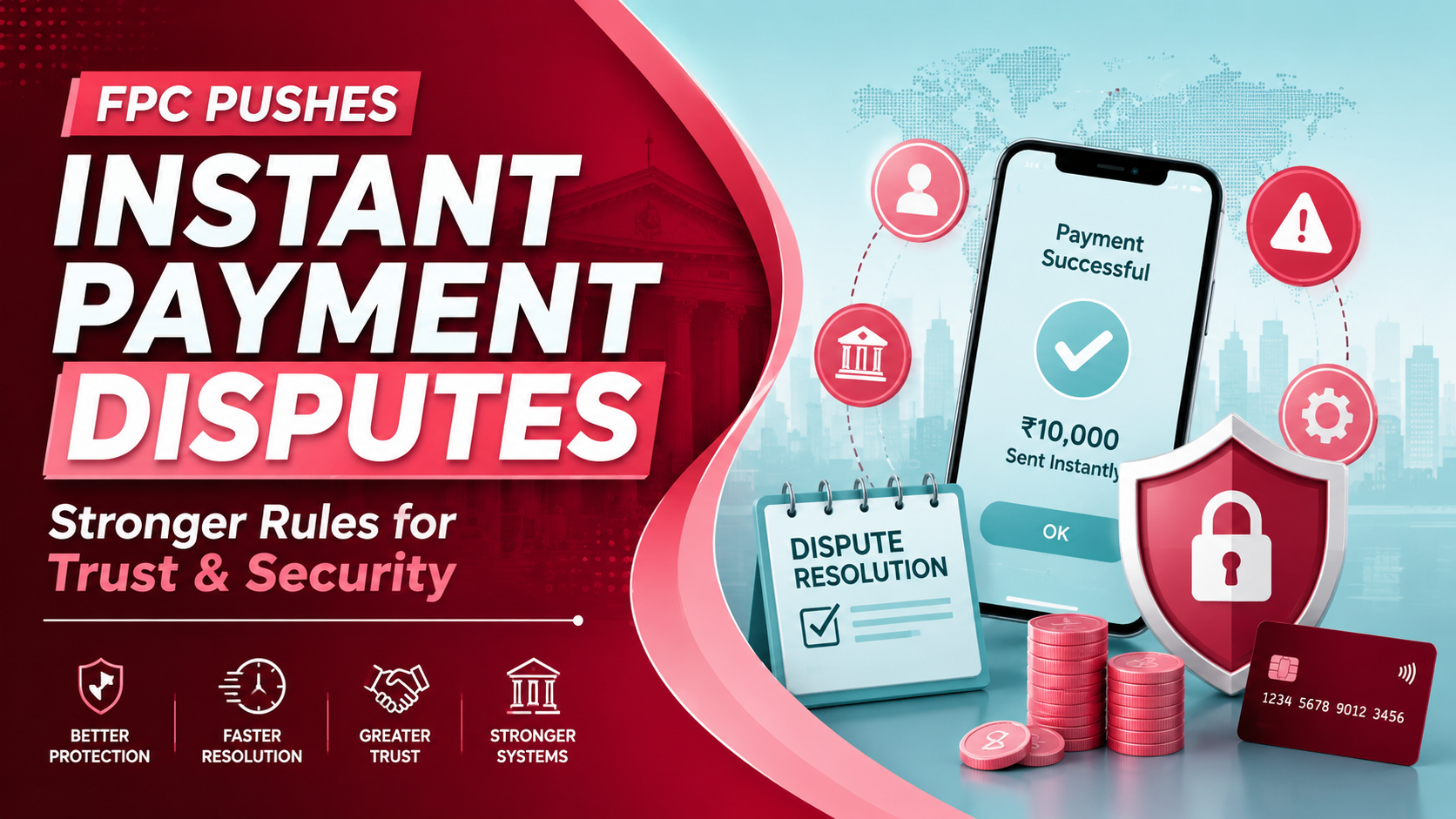
Instant payment disputes are becoming a key focus for regulators as the Financial Policy Committee (FPC) emphasises clear rules to strengthen trust in digital financial systems. Moreover, as real-time payment networks continue to expand globally, authorities are increasingly prioritising not only speed but also security, fraud protection, and accountability.
In particular, the FPC has highlighted that without strong systems for handling instant payment disputes, users may lose confidence in instant transfer platforms. Therefore, building trust is now considered just as important as enabling faster financial transactions. As digital payments evolve, dispute resolution frameworks are becoming a core pillar of financial stability.
Instant payment disputes in modern payment systems
Instant payment systems have transformed global finance. As a result, money now moves between accounts within seconds.
However, this speed creates new risks. For example, fraud, wrong transfers, and unauthorised payments often become difficult to reverse in real-time systems. Consequently, instant payment disputes play a critical role in maintaining financial safety.
Additionally, traditional banking systems rely on chargebacks and delayed settlements. In contrast, instant systems demand faster and clearer dispute processes.
Why instant payment disputes matter
Regulators like the FPC now focus heavily on instant payment disputes for several key reasons.
1. Consumer trust protection
Firstly, users need quick solutions when errors occur. Therefore, strong dispute systems help increase confidence in digital payments.
2. Fraud prevention and accountability
Secondly, clear rules reduce confusion among banks, fintechs, and payment providers. In addition, fraudsters find fewer gaps to exploit when rules stay clear.
3. Faster resolution systems
Moreover, time-bound processes help financial institutions resolve complaints efficiently. This improves user satisfaction and system trust.
FPC approach to instant payment disputes
The FPC actively promotes stronger frameworks for instant payment disputes across financial institutions.
Furthermore, the committee focuses on three main priorities:
Standardisation of rules
All banks and fintech companies must follow the same dispute handling standards for instant payments.
Clear liability structure
Regulators define responsibility clearly when fraud or errors occur. Banks, merchants, or payment providers must take accountability based on the case.
Improved coordination
Financial institutions now improve communication channels so they can resolve instant payment disputes faster and more efficiently.
Impact on banks and fintech companies
Stronger rules for instant payment disputes affect both banks and fintech companies significantly.
Banks now upgrade their systems to handle real-time fraud detection and dispute tracking. Meanwhile, fintech firms adjust their platforms to match regulatory requirements.
In addition, payment processors play a key role in connecting different systems and ensuring smooth dispute resolution across networks.
Consumer benefits of instant payment disputes
Strong frameworks for instant payment disputes deliver clear benefits to users.
- Users gain stronger protection against fraud
- Financial refunds happen faster
- Transparency improves across transactions
- Trust in digital payments increases
As a result, more users adopt instant payment systems confidently.
Challenges in implementing instant payment disputes
Financial institutions face several challenges when they implement instant payment dispute systems.
Different technologies across banks make standardisation difficult. Moreover, cross-border transactions create additional regulatory complexity.
At the same time, fraud tactics continue to evolve, which forces institutions to constantly improve security systems.
Therefore, financial organisations invest continuously in upgrades, monitoring, and innovation.
Future of instant payment disputes
The role of instant payment disputes will grow stronger in the future of digital finance.
We can expect:
- Global regulatory alignment across countries
- AI-based fraud detection systems
- Faster dispute resolution tools
- Stronger collaboration between fintechs and banks
As these changes take place, financial systems will become more transparent, secure, and efficient.
Conclusion
In conclusion, the FPC’s focus on instant payment disputes shows a major shift in digital finance regulation. While payment speed remains important, trust and security now play an equally critical role.
Therefore, financial institutions must build stronger frameworks, improve accountability, and resolve disputes faster. As a result, instant payment dispute systems will support safer and more reliable global payments.
Comments
No comments yet. Be the first to share your thoughts.
Leave a comment