
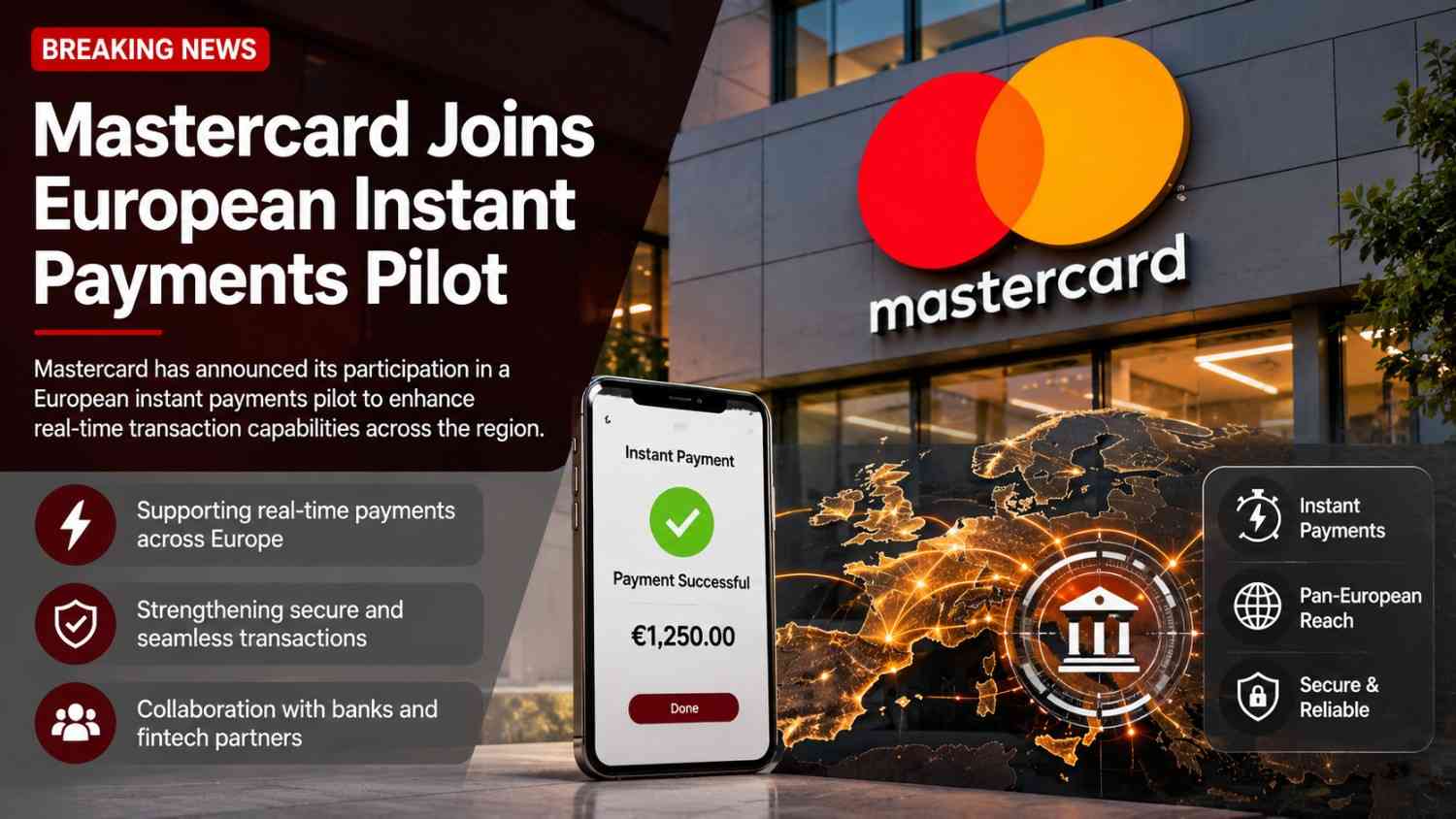
The Cross-Border Instant Payments Pilot has gained momentum after Mastercard joined a European initiative designed to improve the speed, efficiency, and accessibility of international payments.
Moreover, the pilot aims to support faster cross-border transactions by connecting payment systems and financial institutions more effectively. As a result, businesses and consumers could benefit from quicker settlement times and improved payment experiences.
Furthermore, demand for real-time payment services continues growing across global markets. Consequently, the Cross-Border Instant Payments Pilot represents another step toward modernising international payment infrastructure.
Cross-Border Instant Payments Pilot focuses on faster transfers
A key objective of the Cross-Border Instant Payments Pilot is reducing delays commonly associated with international payments.
Several expected benefits include:
- Faster transaction processing
- Improved payment transparency
- Enhanced customer experience
- Greater payment efficiency
- Reduced settlement delays
Moreover, traditional cross-border transfers often involve multiple intermediaries. Because payments can pass through several financial institutions, settlement times may increase.
Furthermore, instant payment infrastructure can help simplify these processes. As a result, financial institutions continue investing in real-time payment capabilities.
Mastercard strengthens payment innovation efforts
The latest Cross-Border Instant Payments Pilot reflects Mastercard’s continued focus on payment innovation.
Moreover, payment providers are working to improve connectivity between domestic and international payment systems. Because customers increasingly expect real-time services, payment companies are expanding infrastructure investments.
Furthermore, faster payments can support both consumer and business transactions. Consequently, innovation within payment networks remains a strategic priority.
Additionally, digital payment adoption continues accelerating worldwide.
European payments market continues evolving
The Cross-Border Instant Payments Pilot highlights broader changes within Europe’s payment ecosystem.
Key industry trends include:
- Real-time payments
- Digital banking growth
- Cross-border payment modernisation
- Open banking development
- Financial technology adoption
Moreover, regulators and industry participants are encouraging improvements in payment efficiency. Because businesses increasingly operate internationally, faster payment systems have become more important.
Furthermore, consumers expect seamless payment experiences across borders. As a result, payment infrastructure upgrades continue attracting investment.
Cross-Border Instant Payments Pilot supports financial connectivity
The development of the Cross-Border Instant Payments Pilot may strengthen connectivity between participating financial institutions.
Moreover, improved interoperability can help payment systems communicate more effectively. Because international commerce depends on reliable transactions, connectivity remains a critical objective.
Furthermore, payment modernisation efforts can reduce friction within the financial system. Consequently, businesses may experience smoother payment operations.
Additionally, enhanced connectivity may help support future financial innovation.
Instant payments gain global momentum
The growth of the Cross-Border Instant Payments Pilot reflects increasing global interest in instant payment services.
Several factors driving adoption include:
- Faster settlements
- Growing e-commerce activity
- Digital transformation
- Customer expectations
- Technology improvements
Moreover, instant payments provide immediate transaction confirmation and quicker access to funds. Because speed has become a competitive advantage, financial institutions continue adopting real-time capabilities.
Furthermore, payment technology providers are developing solutions that support international transactions. As a result, instant payment networks continue expanding.
Comparison between traditional and instant cross-border payments
| Feature | Traditional Payments | Instant Payments |
|---|---|---|
| Settlement Speed | Slower | Faster |
| Transparency | Moderate | Improved |
| Processing Time | Hours or Days | Near Real-Time |
| Customer Experience | Standard | Enhanced |
| Payment Tracking | Limited | Better Visibility |
Moreover, this comparison demonstrates why instant payment solutions are attracting significant attention.
Payment modernisation remains a priority
The ongoing Cross-Border Instant Payments Pilot supports wider payment modernisation efforts across the financial industry.
Moreover, financial institutions are seeking ways to improve efficiency and reduce operational complexity. Because payment systems play a critical role in economic activity, modernisation remains essential.
Furthermore, technology advancements continue creating opportunities for innovation. Consequently, payment providers are investing heavily in infrastructure upgrades.
Additionally, modern systems can help support future growth in digital commerce.
Cross-Border Instant Payments Pilot may influence future developments
The success of the Cross-Border Instant Payments Pilot could influence future payment initiatives.
Moreover, pilot programs often provide valuable insights into system performance and customer needs. Because financial institutions seek proven solutions, successful pilots may encourage wider adoption.
Furthermore, lessons learned from implementation can help shape future payment frameworks. As a result, industry stakeholders are monitoring developments closely.
Additionally, collaboration between payment providers and financial institutions may continue expanding.
Future outlook for Cross-Border Instant Payments Pilot
The future of the Cross-Border Instant Payments Pilot appears promising as demand for faster international payments continues increasing.
Moreover, businesses and consumers are expected to place greater importance on speed and convenience. Because global commerce relies on efficient payment systems, investment in payment innovation is likely to continue.
Furthermore, real-time payment capabilities may become a standard feature of international transactions. Consequently, cross-border payment infrastructure could undergo significant transformation.
Additionally, payment providers are expected to continue exploring new opportunities for collaboration and expansion.
Final Thoughts
The expansion of the Cross-Border Instant Payments Pilot through Mastercard’s participation highlights the ongoing transformation of international payments.
Moreover, the initiative aims to improve transaction speed, efficiency, and connectivity across Europe. As a result, businesses and consumers may benefit from more seamless payment experiences.
Ultimately, the Cross-Border Instant Payments Pilot reflects the broader industry movement toward real-time, technology-driven payment solutions that support global commerce.
PYMNTS | Mastercard Joins European Cross-Border Instant Payments Pilot
Comments
No comments yet. Be the first to share your thoughts.
Leave a comment