
Introduction
In today’s digital commerce environment, payment disputes have become one of the biggest challenges facing merchants. While online transactions create opportunities for businesses to reach customers globally, they also expose merchants to risks such as fraud, friendly fraud, unauthorized transactions, and customer disputes.When a customer files a chargeback with their card issuer, merchants often face financial losses, operational costs, and reputational risks. Excessive chargebacks can even threaten a business’s ability to process payments through card networks.To combat these challenges, many businesses are turning to chargeback alerts. These proactive notification systems provide merchants with advance warnings about potential disputes before they become formal chargebacks.
By enabling merchants to respond quickly, chargeback alerts help reduce losses, improve customer satisfaction, and strengthen payment risk management strategies.
What Are Chargeback Alerts?
Chargeback alerts are early warning notifications that inform merchants when a cardholder has raised a dispute or complaint regarding a transaction.
Instead of waiting for the formal chargeback process to begin, merchants receive an alert shortly after the customer contacts their issuing bank.
This early notification creates an opportunity to investigate the transaction and potentially resolve the issue before it escalates into a chargeback.
Chargeback alert systems act as a bridge between merchants and financial institutions, helping both parties address disputes more efficiently.
Why Chargeback Alerts Matter
Chargebacks can be expensive.
Beyond losing the disputed transaction amount, merchants may also face:
- Chargeback fees
- Operational expenses
- Increased fraud monitoring requirements
- Higher processing costs
- Reputational damage
A high chargeback ratio can trigger additional scrutiny from payment processors and card networks.
Chargeback alerts help merchants identify potential issues earlier and take corrective action before formal disputes occur.
This proactive approach reduces both financial and operational risks.
How Chargeback Alerts Work
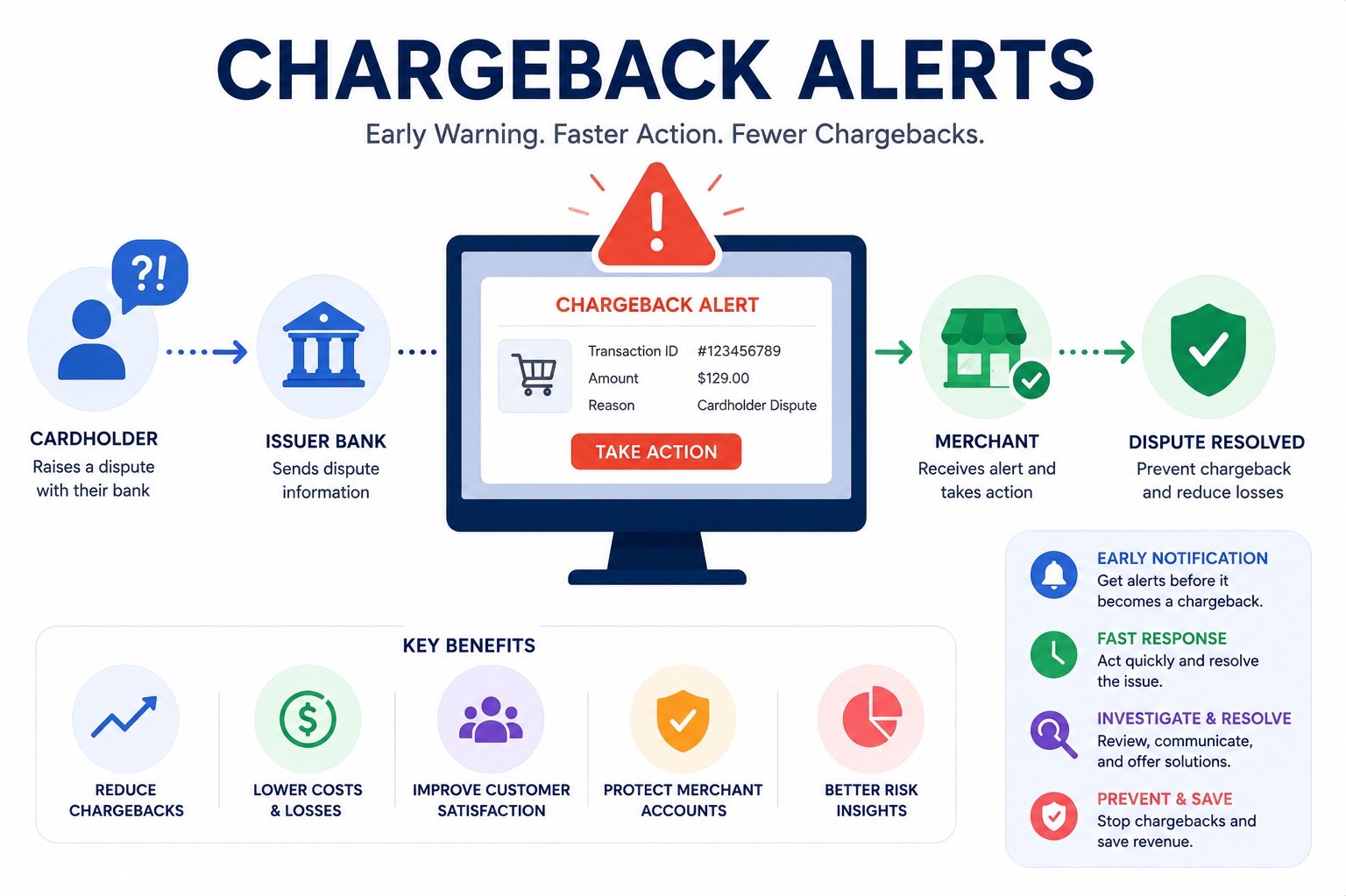
The process begins when a customer contacts their card issuer regarding a transaction.
Instead of immediately initiating a chargeback, participating financial institutions share dispute information through alert networks.
The merchant receives a notification containing transaction details and information about the potential dispute.
The business can then:
- Review the transaction
- Contact the customer
- Issue a refund
- Investigate potential fraud
- Resolve misunderstandings
If the issue is addressed promptly, a formal chargeback may be avoided entirely.
This early intervention is the primary value of chargeback alert programs.
Common Causes of Chargebacks Alerts
Understanding why chargebacks occur helps merchants reduce dispute volumes.
Common causes include:
Friendly Fraud
Customers may dispute legitimate purchases they no longer recognize or remember.
Unauthorized Transactions
Fraudulent activity involving stolen payment credentials can trigger disputes.
Subscription Confusion
Customers may forget recurring billing arrangements and initiate chargebacks.
Product or Service Issues
Delayed shipments, damaged products, or unmet expectations often lead to complaints.
Billing Errors
Duplicate charges or incorrect transaction amounts can create disputes.
Chargeback alerts help merchants address these issues before they become costly chargebacks.
Key Benefits of Chargeback Alerts
Chargeback alerts provide several important advantages.
Reduced Chargeback Rates
Early intervention helps prevent disputes from escalating.
Lower Financial Losses
Merchants can issue refunds before chargeback fees are incurred.
Improved Customer Relationships
Fast resolution often improves customer satisfaction.
Better Risk Management
Alerts provide valuable insight into transaction risks and dispute patterns.
Enhanced Payment Performance
Lower chargeback ratios contribute to healthier payment processing relationships.
These benefits make chargeback alerts an important component of modern payment risk management.
Protecting Merchant Accounts
Payment processors and acquiring banks closely monitor merchant chargeback levels.
Excessive disputes may result in:
- Higher processing fees
- Additional compliance requirements
- Increased monitoring
- Account restrictions
- Account termination
Chargeback alerts help merchants maintain healthier dispute ratios by resolving issues proactively.
This protection is particularly important for businesses operating in high-risk industries.
Maintaining a stable merchant account is critical for long-term business success.
Supporting Fraud Prevention Strategies
Chargeback alerts can also contribute to broader fraud prevention initiatives.
Patterns identified through alerts may reveal:
- Fraudulent transaction trends
- Emerging attack methods
- Vulnerable customer segments
- Operational weaknesses
Businesses can use these insights to strengthen fraud detection systems and improve transaction monitoring.
As fraud techniques continue evolving, chargeback alert data becomes increasingly valuable.
Improving Customer Experience
Many chargebacks result from communication issues rather than malicious intent.
Customers may simply misunderstand a billing description, forget a purchase, or experience difficulty contacting customer support.
Chargeback alerts create an opportunity for direct communication before disputes escalate.
By addressing customer concerns quickly, merchants can preserve relationships and improve overall customer satisfaction.
A positive customer experience often reduces future dispute risks.
Chargeback Alerts vs Chargebacks
It is important to understand the difference between a chargeback alert and a formal chargeback.
A chargeback alert is an early warning notification.
A chargeback is a formal dispute process initiated through card networks.
With a chargeback alert:
- Merchants can respond proactively.
- Resolution options remain flexible.
- Costs are typically lower.
With a formal chargeback:
- Additional fees often apply.
- Resolution becomes more complex.
- Recovery rates may decline.
The earlier a merchant receives dispute information, the greater the opportunity to resolve the issue efficiently.
Challenges of Managing Chargeback Alerts
While chargeback alerts offer significant advantages, they also require effective operational processes.
Merchants must:
- Monitor alerts continuously
- Respond quickly
- Investigate transactions efficiently
- Coordinate customer support efforts
- Maintain accurate records
Delayed responses may reduce the effectiveness of alert programs.
Organizations should establish clear workflows to ensure alerts are handled promptly and consistently.
Technology and Automation
Modern payment technologies are making chargeback alert management more efficient.
Many businesses now integrate alerts into:
- Fraud management systems
- Customer support platforms
- Payment dashboards
- Risk monitoring tools
Artificial intelligence and automation can help prioritize alerts, identify patterns, and recommend appropriate actions.
These technologies improve response times while reducing manual workloads.
Automation is expected to play an increasingly important role in future dispute management strategies.
The Future of Chargeback Alerts
As digital commerce grows, chargeback management will become even more important.
Future developments may include:
- Real-time dispute notifications
- AI-driven dispute analysis
- Predictive fraud detection
- Automated refund workflows
- Enhanced payment ecosystem collaboration
These innovations will help merchants respond faster and reduce dispute-related losses.
Organizations that invest in proactive dispute prevention strategies will be better positioned to maintain healthy payment operations.
Conclusion
Chargeback alerts serve as a powerful early warning system that helps merchants identify and resolve payment disputes before they become formal chargebacks. By providing advance notice of potential issues, these solutions reduce financial losses, protect merchant accounts, improve customer relationships, and strengthen fraud prevention efforts.
As payment ecosystems become increasingly complex, proactive dispute management is no longer optional. Businesses that leverage chargeback alerts effectively can improve operational efficiency, reduce risk exposure, and create more resilient payment infrastructures for long-term growth.
Comments
No comments yet. Be the first to share your thoughts.
Leave a comment