
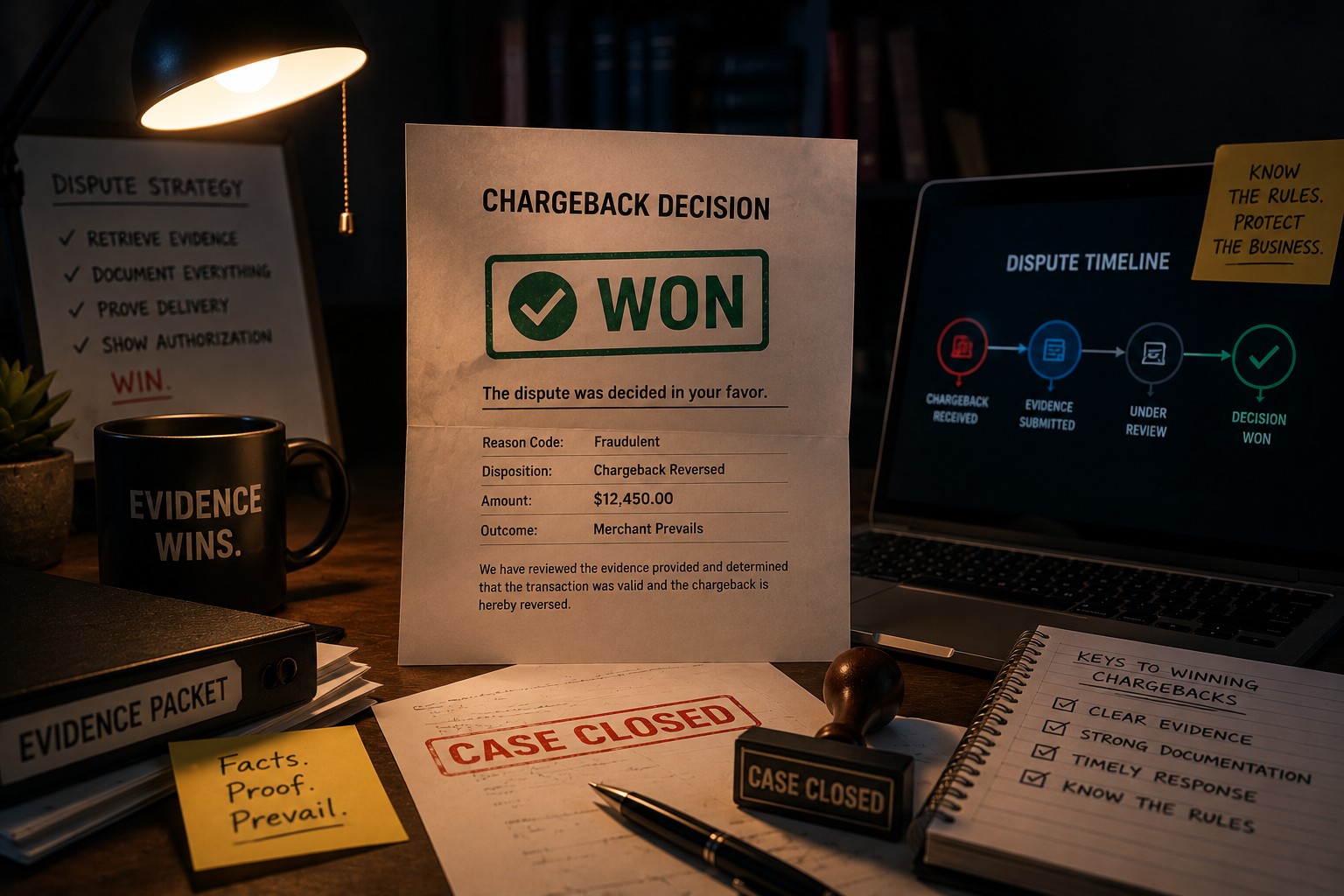
Somewhere, right now, a transaction is dying a very slow, very bureaucratic death — and almost nobody involved understands the process well enough to know who’s about to win.
Here’s the transaction in question: $89.99, charged to a Visa card at 11:47pm on a Tuesday, for a monthly subscription to a fitness app. Three weeks later, the cardholder looks at her statement, doesn’t recognize the charge — she forgot she signed up, forgot the free trial converted, forgot the app even exists on her phone anymore — and taps “dispute” in her banking app. That single tap just started a process most merchants never see clearly, even when it’s happening to their own money.
Act One: The Tap Nobody Thinks About
The cardholder’s bank doesn’t investigate anything yet. It doesn’t need to. It files something called a chargeback — not a request, not a complaint, but a reversal. The $89.99 gets pulled back out of the merchant’s account immediately, before anyone on the merchant’s side has said a single word in their own defense. This is, structurally, the single strangest thing about the entire chargeback system: the penalty happens before the trial.
The reason this exists at all traces back to a genuinely reasonable idea from decades ago — protect consumers from fraud, from merchants who disappear, from charges nobody actually authorized. But “genuinely reasonable idea” and “extremely blunt instrument” can both be true about the same system at once, and the chargeback process is a masterclass in exactly that tension.
The merchant — the fitness app — finds out about all of this via a notification that lands in a dashboard somewhere, usually with a reason code attached. Something like “10.4” or “13.1,” numbers that sound like they belong to a tax form, each one mapping to a specific dispute category: fraud, not-as-described, duplicate processing, subscription canceled. The entire, messy human reality of “I forgot I signed up for this” gets compressed into a four-digit code, and that code is now the only language the rest of this story gets told in.
Act Two: The Evidence Nobody Reads Twice
Here’s where it gets genuinely interesting, because this is the part almost nobody outside the industry ever sees: the merchant gets a window — usually somewhere between a few days and a few weeks, depending on the card network — to fight back. This is called representment, and it is, without exaggeration, one of the most under-appreciated skills in all of commerce.
The fitness app pulls its records. Signup timestamp. IP address at signup. Terms of service, with the free-trial-conversion language highlighted. Email confirmations sent, with open receipts if they have them. Login activity showing the app was actually used three separate times after the subscription converted. Every scrap gets bundled into a formal response and sent back into the system.
And then — this is the part that should bother everyone a little — a human being, somewhere, at an issuing bank, looks at this evidence for what is often measured in seconds, not minutes, and makes a call. Not a judge. Not a jury. An employee in a dispute-resolution queue with a stack of cases and a shift that ends at 5pm, deciding whether $89.99 goes back to the merchant or stays with the cardholder.
This is not a criticism of that employee. It’s an honest description of the actual mechanism deciding, right now, millions of dollars a day across every merchant on earth: mountains of documentation, funneled through very human, very finite attention.
Act Three: The Numbers That Actually Matter
Here’s the twist that changes how you should think about this whole story: winning the case is almost beside the point.
What actually matters to the merchant isn’t whether this one $89.99 charge comes back. It’s the ratio. Every card network tracks chargebacks as a percentage of total transaction volume, and if a merchant crosses a threshold — often somewhere around 0.65% to 1%, depending on the network and program — that merchant gets flagged for a monitoring program. Miss the threshold badly enough, for long enough, and the consequence isn’t a fine. It’s the loss of the ability to process cards at all, sometimes permanently, sometimes industry-wide via a shared blacklist.
Which means the fitness app isn’t really fighting for $89.99. It’s fighting to keep a number below a line. Every single dispute, won or lost, is a data point in a formula that determines whether this business gets to keep existing in its current form. The stakes of one tiny chargeback are, quietly, existential — not because of the dollar amount, but because of what it does to a ratio nobody outside the finance team is watching.
The Ending Nobody Gets to Choose
So who wins? In this particular case, the merchant does — the evidence was clean, the dispute reason didn’t hold up, the $89.99 comes back. Cue a small, silent victory that nobody celebrates because nobody outside a chargeback-management dashboard even knows it happened.
But here’s the honest ending: it doesn’t actually matter, not in the way it feels like it should. One win doesn’t move the ratio. One loss doesn’t break it either. The real story was never about this transaction. It’s about the thousand others just like it, happening in parallel, all being decided by the same overworked queue, the same four-digit reason codes, the same blunt instrument built decades ago to solve a problem that’s evolved considerably since — while the tool meant to solve it mostly hasn’t.
Somewhere, right now, another transaction just got disputed. Nobody involved knows yet whether it’ll win.
Comments
No comments yet. Be the first to share your thoughts.
Leave a comment