
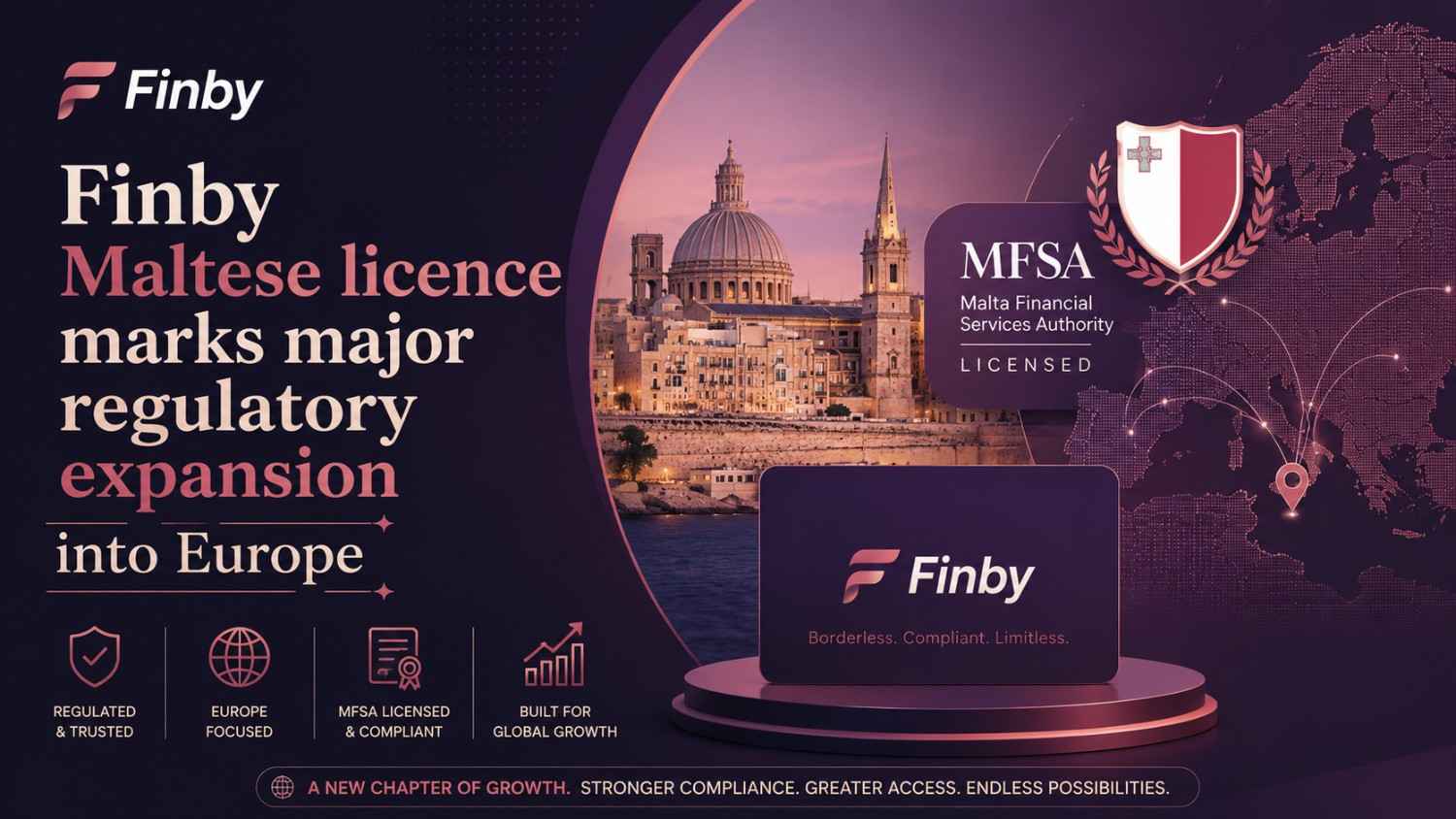
The Finby Maltese licence acquisition represents a significant milestone in the company’s international expansion strategy. Importantly, this regulatory approval allows Finby to operate fully within Malta’s financial ecosystem.
Moreover, Malta’s position as a regulated EU financial hub makes this development strategically important. As a result, Finby is now better positioned to scale its fintech operations across European markets.
In addition, this move reflects a broader trend of fintech companies seeking regulated entry points into the European Union.
What the Finby Maltese licence means for operations
The approval of the Finby Maltese licence enables the company to offer regulated financial services under Malta’s financial authority framework.
Previously, Finby’s operations were limited in scope across certain jurisdictions. However, with this licence, the company can now operate legally within Malta and potentially expand into other EU markets under passporting rules.
Furthermore, this regulatory approval strengthens trust among users, partners, and financial institutions.
Key operational capabilities now include:
- Fully regulated fintech service offerings
- EU-compliant financial operations
- Expanded cross-border transaction support
- Increased institutional trust
Therefore, Finby’s operational capacity has significantly improved.
Why Malta is important for Finby Maltese licence strategy
Malta has emerged as a key financial hub for fintech and digital financial services in Europe.
Importantly, the regulatory framework in Malta is aligned with EU financial standards, making it attractive for fintech firms.
Moreover, companies licensed in Malta often gain access to broader European markets through regulatory passporting.
As a result, the Finby Maltese licence is not just a local approval but a gateway to wider EU expansion.
In addition, Malta offers a stable regulatory environment that supports fintech innovation.
Finby becomes fully operational in Malta.
Following the approval of the Finby Maltese licence, the company has officially become fully operational in Malta.
This means Finby can now actively onboard customers, offer financial products, and engage in regulated transactions within the jurisdiction.
Furthermore, operational readiness includes compliance systems, risk management frameworks, and customer onboarding infrastructure.
Operational milestones include:
- Regulatory approval completion
- Local compliance integration
- Infrastructure deployment
- Service activation in Malta
Consequently, Finby transitions from the preparation phase to full operational status.
Impact of Finby Maltese licence on the European fintech ecosystem
The entry of Finby into Malta’s regulated market contributes to the evolving European fintech landscape.
Firstly, it increases competition among fintech providers. Secondly, it encourages innovation in digital financial services.
Moreover, regulated entry enhances consumer trust in fintech platforms.
Key industry impacts:
- Increased fintech competition in EU markets
- Stronger compliance-driven innovation
- Enhanced cross-border financial connectivity
- Improved regulatory transparency
Therefore, Finby’s expansion supports broader fintech ecosystem development.
Regulatory significance of the Finby Maltese licence
The Finby Maltese licence also carries strong regulatory importance.
Financial regulators in Malta ensure that licensed entities comply with strict EU-aligned financial laws.
In addition, compliance requirements include:
- Anti-money laundering (AML) frameworks
- Know Your Customer (KYC) processes
- Transaction monitoring systems
- Data protection standards
As a result, Finby must maintain high operational transparency and compliance standards.
Moreover, this regulatory oversight builds credibility within the European financial system.
Business opportunities created by the Finby Maltese licence
The acquisition of the Finby Maltese licence opens several strategic opportunities for the company.
Firstly, Finby can now target European customers more effectively. Secondly, it can form partnerships with banks and financial institutions across the EU.
In addition, the company can expand its product portfolio under regulatory protection.
Key opportunities include:
- EU market expansion
- Cross-border payment services
- Institutional partnerships
- Fintech product scaling
Therefore, Finby is now positioned for long-term growth.
Risks and challenges in Malta expansion
Although the Finby Maltese licence is a major achievement, certain challenges remain.
For example, operating in a regulated EU environment requires continuous compliance updates.
Additionally, competition in European fintech markets is highly intense.
Key challenges:
- Strict regulatory compliance obligations
- High competition in the EU fintech space
- Operational scaling costs
- Cross-border regulatory complexity
However, with strong governance, these challenges can be effectively managed.
Future outlook for Finby in Europe
Looking ahead, the Finby Maltese licence could serve as a foundation for broader European expansion.
Moreover, Malta can act as a strategic hub for scaling into multiple EU jurisdictions.
As fintech adoption continues to grow, Finby may introduce new digital financial products tailored for European users.
Therefore, this development marks the beginning of a long-term expansion strategy.
Final Thoughts
In conclusion, the Finby Maltese licence represents a major step forward in the company’s global growth journey.
Not only does it enable full operational status in Malta, but it also opens doors to the wider European fintech market.
Ultimately, this move strengthens Finby’s position in the competitive global fintech ecosystem.
Comments
No comments yet. Be the first to share your thoughts.
Leave a comment