
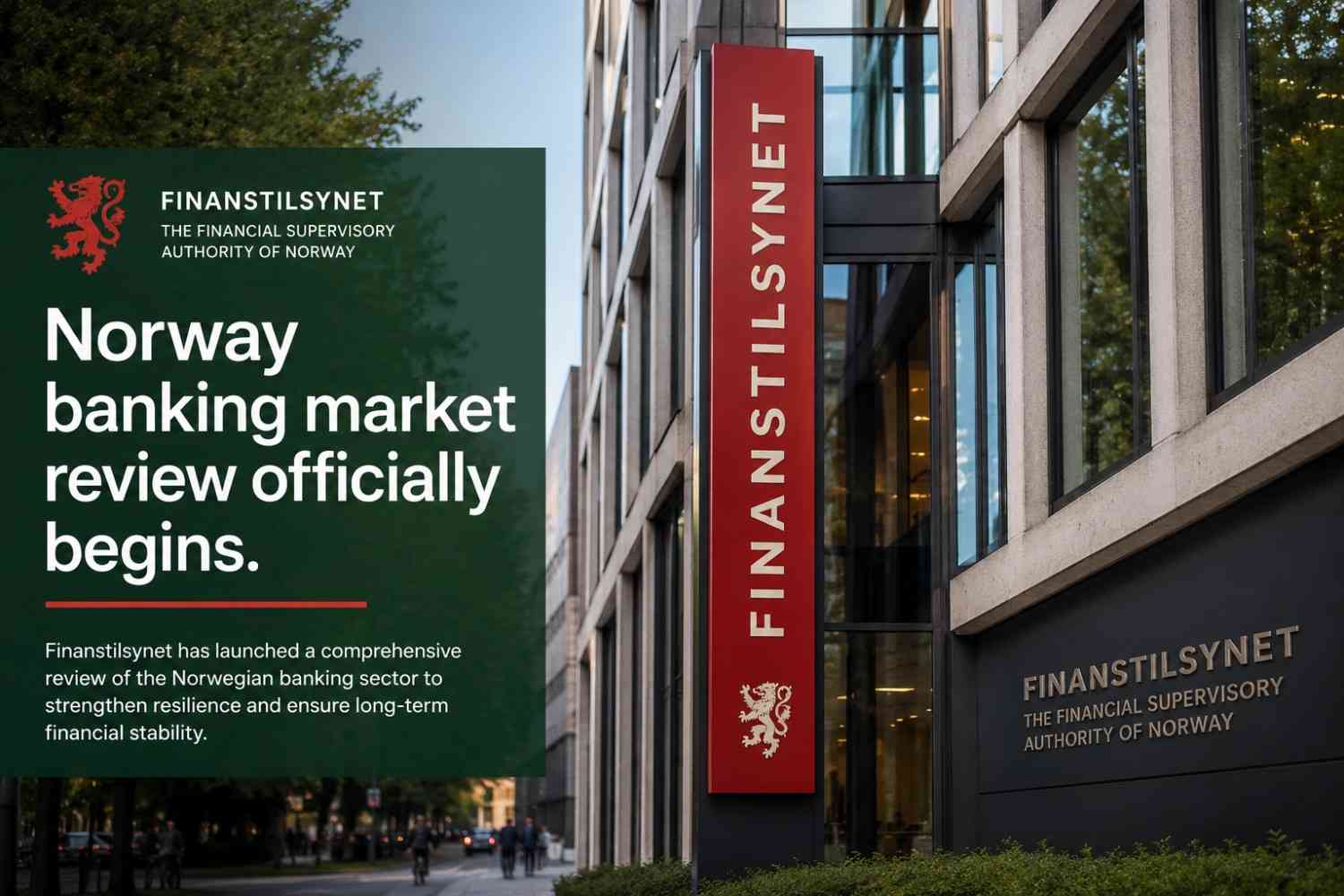
The Norway banking market review has officially started as the country’s competition authority begins examining market conditions within the financial sector.
The review will reportedly focus on banking competition, customer mobility, pricing structures, and overall market dynamics across Norway’s banking industry.
Moreover, regulators globally are increasing scrutiny of financial competition as digital banking and fintech services continue reshaping the sector.
As a result, authorities are paying closer attention to whether consumers have sufficient access to competitive financial products and services.
Furthermore, the latest review highlights growing regulatory interest in maintaining fair competition within Nordic banking markets.
Why the Norway banking market review matters
The Norway banking market review could influence future banking regulation, pricing transparency, and consumer protection measures.
Several areas are expected to receive attention:
- Loan pricing practices
- Banking fees
- Consumer switching barriers
- Market concentration levels
Because banking competition directly affects consumer costs and financial accessibility, regulators are increasingly examining how financial markets operate.
Consequently, banks may face stronger pressure to improve transparency and customer flexibility.
Moreover, reviews of banking competition can shape long-term financial policy decisions.
Competition in banking remains a major regulatory focus
Financial regulators globally continue evaluating competition within banking systems.
Authorities are monitoring:
- Market dominance risks
- Consumer access to financial products
- Digital banking competition
- Financial service pricing
Because concentrated banking sectors can limit competition, regulators often review whether consumers receive fair pricing and sufficient choice.
As a result, banking market investigations are becoming more common across Europe and other major financial regions.
Furthermore, fintech growth is reshaping how regulators evaluate competition in financial services.
Norway’s banking sector continues evolving.
Norway’s banking industry has experienced a major digital transformation in recent years.
Several trends continue shaping the sector:
- Growth in mobile banking
- Expansion of fintech services
- Increased digital payments
- Rising customer expectations
Because customers increasingly prefer digital financial services, banks are investing heavily in technology and automation.
Consequently, traditional banking models are evolving rapidly.
Moreover, digital competition may influence how regulators assess market fairness and accessibility.
Consumer banking choice under review
The Norway banking market review is expected to examine whether consumers can easily switch between financial providers.
Key consumer concerns may include:
- Account switching complexity
- Loan refinancing barriers
- Pricing transparency
- Access to digital services
Because customer mobility is essential for healthy competition, regulators often focus on barriers that limit financial choice.
As a result, banks may need to improve service transparency and simplify switching processes.
Furthermore, digital banking tools could help increase market competition.
Comparison between highly competitive and concentrated banking markets
| Feature: Competitive | e Banking Markets Concentrated | d Banking Markets |
|---|---|---|
| Consumer choice | Wider | Limited |
| Pricing pressure | Higher | Lower |
| Innovation speed | Faster | Moderate |
| Service flexibility | Stronger | Limited |
| Market entry opportunities | Easier | Harder |
This comparison explains why regulators closely monitor competition within financial systems.
Fintech growth changes banking competition.
The rise of fintech firms continues to affect traditional banking markets globally.
Fintech companies increasingly offer:
- Digital payment solutions
- Online lending services
- Mobile banking apps
- Automated financial tools
Because fintech innovation creates new competition, regulators are reassessing how banking markets operate.
Consequently, competition reviews may increasingly include digital financial services providers.
Moreover, technology-driven competition can improve customer experiences and lower costs.
Risks linked to concentrated banking markets
The Norway banking market review may also focus on risks associated with limited market competition.
Main concerns include:
- Higher banking fees
- Reduced consumer choice
- Slower innovation
- Market dominance issues
Because concentrated financial markets can reduce competitive pressure, regulators often monitor pricing and customer outcomes carefully.
Furthermore, banking concentration may affect small businesses and retail consumers differently.
As a result, competition authorities continue expanding oversight across financial sectors.
Regulatory oversight continues to increase globally
Financial regulators worldwide are strengthening oversight of banking practices and market behaviour.
Several priorities continue shaping regulation:
- Consumer protection
- Financial stability
- Fair competition
- Market transparency
Because banking systems are essential to economic stability, regulators remain focused on maintaining balanced and competitive financial markets.
Consequently, banks face growing compliance and reporting requirements.
Moreover, transparency expectations continue to increase across the financial sector.
Future outlook for the Norwegian banking market review
The future impact of the Norway banking market review may depend on the findings released by the competition authorities.
Several developments could emerge:
- New competition measures
- Increased pricing transparency
- Easier account switching systems
- Greater fintech participation
Additionally, banking reviews could influence future regulatory reforms across Nordic financial markets.
As a result, financial institutions may need to adapt strategies and customer engagement models.
However, regulators will also seek to maintain financial stability while encouraging competition.
Final Thoughts on the Norway Banking Market Review
The launch of the Norway banking market review highlights growing regulatory focus on competition, transparency, and customer choice within financial services.
As banking systems continue evolving through digital transformation and fintech expansion, regulators are increasingly assessing whether markets remain fair and competitive.
Moreover, stronger oversight could influence pricing structures, consumer mobility, and future financial regulation across Norway’s banking sector.
Ultimately, the review may shape how banks and fintech firms compete within one of Europe’s most digitally advanced financial markets.
Comments
No comments yet. Be the first to share your thoughts.
Leave a comment