
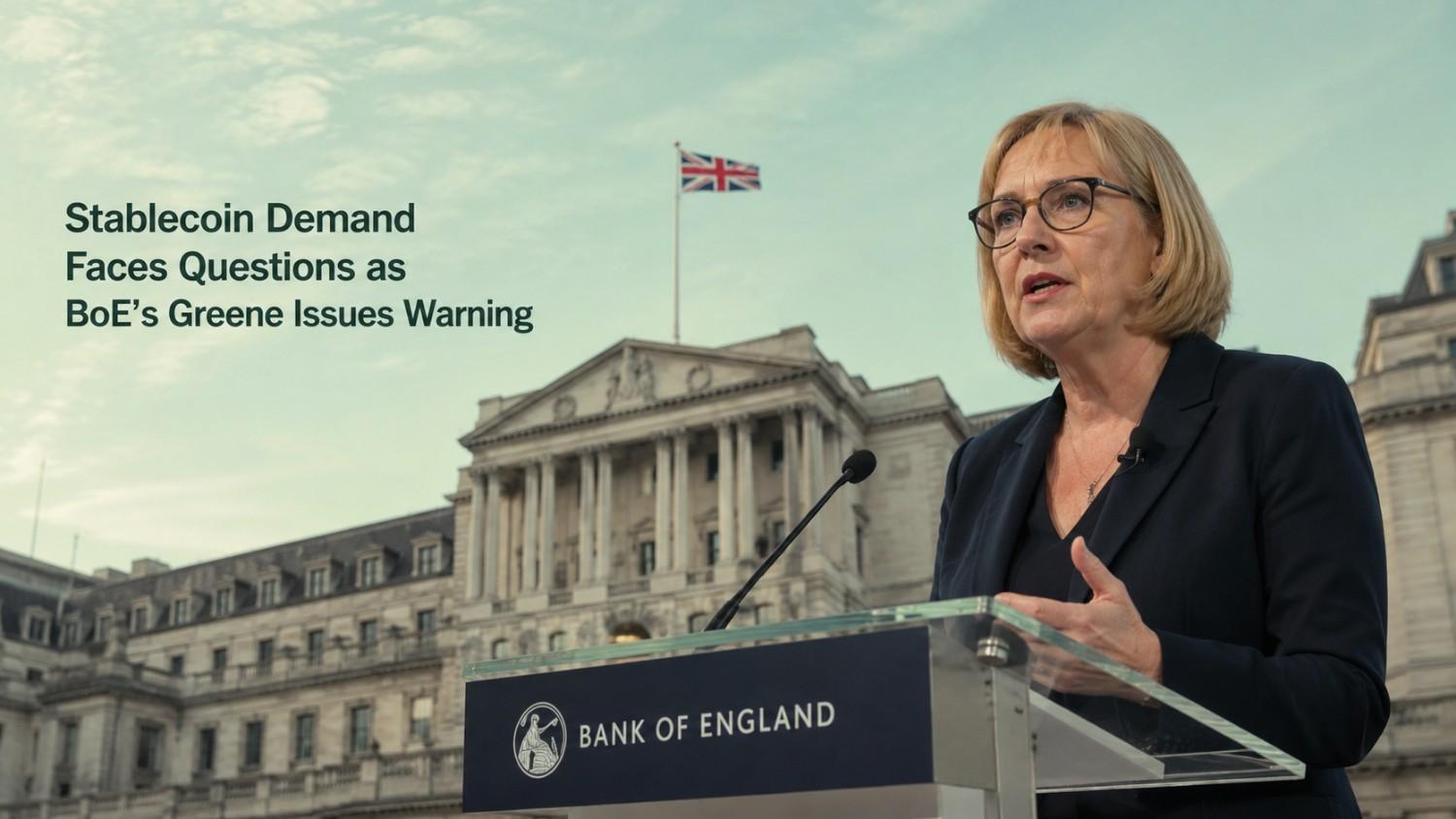
Stablecoin Demand may fade over time, says Bank of England’s Greene
Stablecoin Demand has come under fresh scrutiny after Bank of England policymaker Megan Greene suggested that interest in stablecoins may eventually decline despite their growing popularity within the digital asset sector.
Moreover, Greene noted that stablecoins have gained attention because they offer digital transactions while maintaining a value linked to traditional currencies. However, she indicated that long-term adoption is not guaranteed as financial markets and payment technologies continue evolving.
Furthermore, the comments come at a time when regulators worldwide are assessing the role of stablecoins within the broader financial system. Consequently, the future trajectory of Stablecoin Demand remains a key topic for policymakers and industry participants.
Stablecoin Demand benefits from digital payment growth
The rise in Stablecoin Demand has been closely linked to the expansion of digital finance and online payment services.
Key factors supporting adoption include:
- Faster transactions
- Cross-border payments
- Digital asset trading
- Settlement efficiency
- Blockchain-based transfers
Moreover, stablecoins provide a bridge between traditional currencies and digital asset ecosystems. Because they are designed to maintain stable value, many users view them as practical transaction tools.
Furthermore, businesses and investors continue exploring stablecoin applications. As a result, adoption has increased across several financial sectors.
BoE official highlights long-term uncertainties
Concerns surrounding future Stablecoin Demand reflect broader questions about the sustainability of current growth trends.
Moreover, Greene suggested that consumer preferences, regulatory developments, and technological innovation could influence future demand patterns. Because payment technologies continue evolving rapidly, today’s popular solutions may not necessarily dominate tomorrow’s financial landscape.
Furthermore, competition from central bank digital currencies, traditional payment networks, and emerging fintech products could reshape market dynamics. Consequently, stablecoins may face increasing competitive pressures.
Additionally, policymakers continue evaluating potential risks and benefits associated with digital currencies.
Regulation remains a major factor
The future of Stablecoin Demand may depend heavily on regulatory developments.
Key regulatory considerations include:
- Consumer protection
- Financial stability
- Reserve transparency
- Anti-money laundering compliance
- Market oversight
Moreover, regulators are working to establish frameworks that support innovation while reducing risks. Because stablecoins are becoming more integrated into financial services, oversight remains a priority.
Furthermore, clear regulations could encourage broader adoption among businesses and financial institutions. As a result, regulatory decisions may play a significant role in shaping future market growth.
Stablecoins continue attracting industry attention
Despite concerns about future Stablecoin Demand, stablecoins remain a major component of the digital asset ecosystem.
Moreover, many market participants view stablecoins as useful tools for payments, trading, and settlement activities. Because they combine blockchain functionality with price stability, they continue attracting interest from users and businesses.
Furthermore, financial institutions are increasingly exploring digital asset strategies that include stablecoin applications. Consequently, industry engagement remains strong.
Additionally, technological improvements may continue expanding potential use cases.
Comparison between stablecoins and traditional payment systems
| Feature | Stablecoins | Traditional Payment Systems |
|---|---|---|
| Settlement Speed | Fast | Moderate |
| Cross-Border Access | Strong | Variable |
| Blockchain Integration | Yes | Limited |
| Regulatory Framework | Developing | Established |
| Digital Asset Compatibility | High | Low |
Moreover, this comparison helps explain why Stablecoin Demand has grown despite ongoing regulatory and market discussions.
Competition may influence Stablecoin Demand
The future of Stablecoin Demand could be shaped by increasing competition within digital finance.
Moreover, central bank digital currencies and advanced payment platforms are being developed across multiple markets. Because consumers often choose solutions based on convenience and trust, competition may intensify.
Furthermore, financial institutions are investing heavily in payment innovation. As a result, stablecoin providers may need to continue improving products and services.
Additionally, market evolution could create both challenges and opportunities for the sector.
Future outlook for Stablecoin Demand
The outlook for Stablecoin Demand remains uncertain but important for the future of digital finance.
Moreover, adoption may continue growing if stablecoins deliver efficiency, transparency, and regulatory compliance. However, changing consumer behaviour and new technologies could alter market trends over time.
Furthermore, policymakers and industry leaders will continue monitoring developments closely. Consequently, stablecoins are expected to remain a central topic in discussions about the future of money and payments.
Additionally, innovation and regulation will likely shape the next phase of market development.
Final Thoughts
The debate around Stablecoin Demand highlights the uncertainty surrounding the future of digital financial products.
Moreover, Megan Greene’s comments underscore the possibility that stablecoin popularity may not continue indefinitely. Nevertheless, stablecoins remain an influential part of the digital asset ecosystem today.
Ultimately, Stablecoin Demand will depend on regulation, competition, innovation, and user adoption as the global financial system continues evolving.
Stablecoin demand may soon fade, BoE’s Greene says | Reuters
Comments
No comments yet. Be the first to share your thoughts.
Leave a comment