
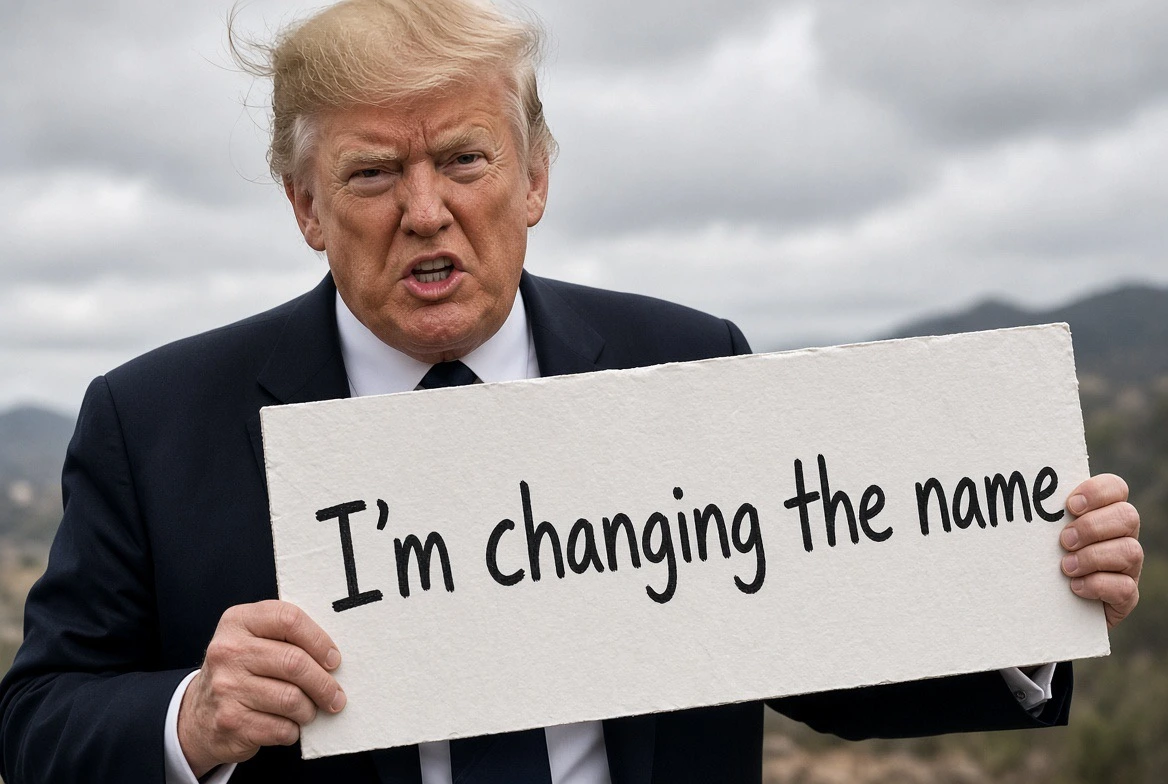
President Donald Trump has signed an executive order directing the U.S. executive branch to replace the terms “Artificial Intelligence” and “AI” with “Super Intelligence” and “SI” in federal communications.
This September 29 order says the new terminology is intended to reflect the capabilities of modern frontier AI systems, which the White House says have moved beyond simply imitating or automating individual aspects of human intelligence.
But the order doesn’t immediately rewrite every federal law or regulation that refers to artificial intelligence. Instead, it initially changes how the executive branch refers to the technology in official correspondence, public communications, websites, reports, policy documents, and other non-statutory materials.
That distinction is central to understanding what this order actually changes.
What the executive order changes
Under the order, federal departments and agencies are instructed, to the maximum extent permitted by law, to use “Super Intelligence” and “SI” instead of “Artificial Intelligence” and “AI” in official executive-branch communications.
The White House describes this move as a response to the rapid development of frontier AI. The order argues that today’s systems can increasingly amplify human capabilities and unlock applications that weren’t possible when the term “artificial intelligence” was first introduced decades ago.
This terminology therefore becomes part of the administration’s official language for discussing the technology going forward. However, previously issued regulations, presidential actions, contracts, grants, and historical documents don’t need to be altered under the order.
The legal definition of AI has not been replaced yet.
One of the most important details sits buried in the order’s implementation section. For now, “Super Intelligence” and “SI” are defined by reference to the existing statutory definition of artificial intelligence already in federal law.
The order then gives the Assistant to the President for Science and Technology 60 days to propose a federal definition of “Super Intelligence” and “SI.” That review must consider whether the new definition should modify, expand, or supersede the existing statutory definition of artificial intelligence.
The adviser must also recommend any changes to existing statutory references, along with any additional executive action that could be required. So at this stage, the order changes federal terminology more directly than it changes the underlying legal framework itself.
Why the White House wants the term “Super Intelligence”
The White House argues that “artificial intelligence” no longer adequately describes the capabilities of today’s most advanced systems. Its fact sheet says the term “super intelligence” is intended to convey the capabilities and potential of technologies being developed by U.S. companies and research institutions.
The administration also links this terminology change to its broader technology strategy. The White House says the United States should remain a leader in advanced AI development and points to more than $5 billion announced for the Genesis Mission, which aims to use advanced AI technologies in areas including science, medicine, energy, and manufacturing.
The administration’s 2025 AI Action Plan and 2026 National Super Intelligence Policy Framework are also cited by the White House as part of that wider strategy.
Existing documents do not automatically change.
The practical impact here is narrower than the headline might suggest. Federal agencies must use the new terminology in covered communications and documents going forward. But the order specifically says agencies don’t have to revise previously issued regulations, presidential actions, contracts, grants, or historical documents simply because those materials contain the terms “artificial intelligence” or “AI.”
That means this transition won’t instantly replace every reference to AI across the U.S. government. Existing statutory language also remains relevant and unchanged for now. Any broader change to federal law would require action well beyond simply changing terminology in executive-branch communications.
The definition question could become more important.
This 60-day review could end up being the more consequential part of the order. The science and technology adviser has been asked to examine whether “super intelligence” should eventually replace, modify, or expand the existing statutory definition of artificial intelligence.
That determination could decide whether the terminology remains primarily an executive-branch communications policy or becomes part of a broader federal legal framework instead. Until that process wraps up, the order doesn’t by itself establish a new statutory category covering all advanced AI systems.
The move comes as AI safety remains a policy issue.
This terminology change came shortly after Trump met with senior technology executives at the White House. Executives from companies including OpenAI, Anthropic, Meta, Google, and Nvidia participated in discussions around AI safety and signed a voluntary agreement covering controls and independent auditing. Reuters reported that the agreement included commitments intended to reduce risks from advanced AI systems.
These two developments put terminology and AI governance alongside each other in the administration’s current technology agenda. The executive order addresses how the federal government describes advanced AI. The separate voluntary agreement focuses on how participating companies say they’ll manage certain risks. Those are genuinely different mechanisms and shouldn’t be treated as the same policy.
What “Super Intelligence” Means for Businesses
For businesses working with the U.S. government, the immediate impact is largely terminology. Federal agencies are being instructed to use the new language in their communications, websites, reports, and policy documents going forward.
Companies interacting with agencies may therefore begin seeing “SI” and “Super Intelligence” appear more frequently in federal materials. However, businesses shouldn’t assume that every existing legal requirement referring to AI has automatically disappeared or been replaced. The executive order preserves existing statutory definitions, unless and until they’re changed through a legally authorized process.
What happens next?
The next major milestone is the administration’s 60-day definition proposal. That process could clarify whether “super intelligence” remains purely a communications term or becomes part of a broader effort to modify federal terminology and legislation around advanced AI.
For now, the immediate change is clear: the executive branch has been directed to use “Super Intelligence” and “SI” instead of “Artificial Intelligence” and “AI” in covered official communications. The broader legal consequences remain to be determined.
The most important takeaway here isn’t simply that AI has been renamed. It’s that the U.S. government has begun a formal process to redefine how it describes, and potentially regulates, the technology as its capabilities continue to advance.
Trump Signs Executive Order Renaming AI to ‘Super Intelligence’—Here’s What It Changes
Comments
No comments yet. Be the first to share your thoughts.
Leave a comment