
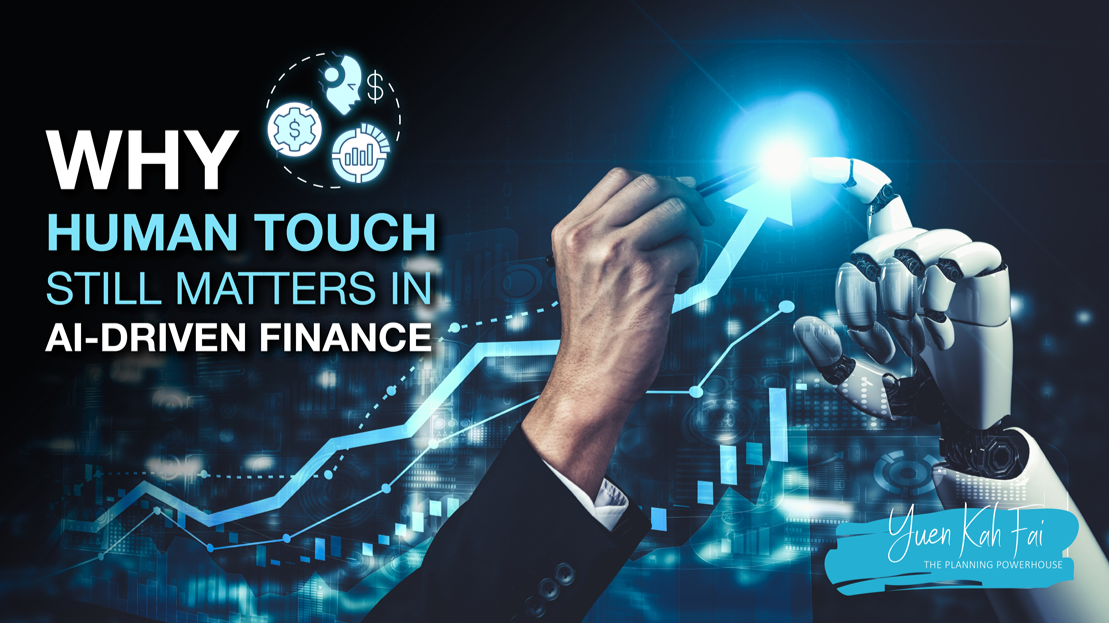
AI adoption in financial services will depend on more than deploying new tools. It will require employees to stay engaged, skeptical, and involved in the work, according to Chiraag Swaly, head of data and technology curriculum at Kaplan.
Swaly, who oversees data and technology training at the international education services company, said organizations often confuse AI adoption with AI engagement. A company can introduce AI across its operations without ensuring that employees understand how to use it effectively.
That distinction is becoming increasingly important across financial services, where banks and other institutions are adding AI to everyday workflows.
AI Adoption Is Not the Same as AI Engagement
According to Swaly, adoption refers to the organizational decision to introduce AI into operations. Engagement goes further.
Employees need to understand where AI adds value and where human judgment still matters. Without that engagement, AI can become another technology layer rather than a tool that genuinely improves how people work.
Swaly noted that some retail banks are already appointing AI engagement officers and managers to help employees navigate the transition.
Leadership plays a major role in that process. Senior leaders can set expectations around AI use, while middle managers help employees apply those principles in day-to-day work.
Training, therefore, cannot operate separately from leadership.
Employees need practical guidance alongside a clear understanding of why their organization is introducing AI in the first place.
The Rise of the “Copilot Brain”
One of Swaly’s biggest concerns is what he calls “Copilot brain.”
The term describes a situation where people rely on AI so heavily that they gradually stop exercising skills they once used regularly.
AI tools can handle repetitive administrative work with speed. That can save employees time and reduce routine workloads.
The risk appears when people start delegating tasks that require judgment, understanding, and critical thinking.
Swaly pointed to activities such as summarizing information and editing documents. These tasks may look simple, yet they often require context and human review.
Skills can weaken when people stop practicing them.
That creates a particular challenge for financial services. Employees often work with sensitive information, complex decisions, and regulated processes. Blindly accepting AI-generated output can introduce errors that a human reviewer might otherwise catch.
The solution is not to reject AI.
Instead, organizations need to teach employees how to use AI without surrendering their own expertise.
Why Human Oversight Still Matters
Swaly argues that organizations should maintain a human in the loop when employees use AI for important tasks.
That approach gives workers a role in checking, challenging, and improving AI-generated output.
He also recommends maintaining a level of “professional skepticism” toward AI systems.
The idea is simple. Employees should treat AI as a tool rather than an unquestionable source of truth.
That mindset becomes particularly important when AI produces convincing but inaccurate information.
Human oversight can also help employees identify when a task needs deeper reasoning. Not every process should move directly from a human request to an automated answer.
Swaly’s advice reflects a broader principle: AI should enhance human capabilities rather than replace the thinking behind the work.
“Never Give Your First Draft to AI”
One of Swaly’s more practical recommendations is to “never give your first draft to AI.”
His point goes beyond writing.
Starting a task yourself can force you to think through the problem before AI enters the process. That initial effort can help employees develop their own understanding, identify the important details, and establish a baseline for evaluating AI-generated work.
This connects to Swaly’s emphasis on friction in learning.
“Friction in learning is important,” he said. Removing every difficult step can also remove the opportunity to understand how something works.
For organizations designing AI training, that has important implications.
Training should not simply teach employees which buttons to press or which prompts to type. It should also teach them when to use AI, when to question it, and when to complete a task themselves.
AI Training Needs Leadership and Context
Swaly also sees AI as an HR issue, rather than simply a technology issue.
Employees need support during the transition. That includes clear communication, practical training, and leadership that explains how AI fits into their roles.
The emotional and behavioral side of adoption also matters.
Workers may worry about changing responsibilities, new performance expectations, or the possibility of losing skills. Leaders need to address those concerns while showing employees where AI can make their jobs more productive.
Middle managers can play a particularly important role.
They often sit closest to operational teams. That position allows them to translate company-wide AI strategies into practical workflows.
Effective training should therefore involve more than technical specialists.
HR teams, managers, technology leaders, and employees all have a role in building an AI-ready organization.
Training Should Go Beyond Prompts
Another issue Swaly highlights is the industry’s focus on prompts and tools.
Learning how to write effective prompts has value. However, it does not answer the larger question of why an organization should use AI for a particular task.
Employees need to understand the purpose behind the technology.
What can AI actually improve?
Which part of a workflow should it support?
What should remain with a human?
How should employees check its output?
Those questions can produce better outcomes than focusing only on prompt engineering.
Financial institutions, in particular, need to connect AI training with business context. Employees should understand how AI affects their specific role, workflow, and responsibilities.
That approach can make training more practical and improve engagement.
Protecting Creativity and Curiosity
Swaly also emphasizes the importance of preserving what he describes as “people skills.”
Creativity and curiosity remain critical in work that requires judgment, exploration, and problem-solving.
AI can generate content and process information quickly. It does not remove the need for people to ask the right questions.
Employees still need to challenge assumptions, investigate unusual results, and connect information in meaningful ways.
That becomes especially important when financial institutions use AI across complex operations.
Technology can accelerate processes. Human curiosity can determine whether the organization is solving the right problem.
Training should therefore help employees work with AI while strengthening their own capabilities.
What Financial Services Companies Can Learn
The message from Swaly is not that financial institutions should slow AI adoption.
Instead, organizations should rethink what successful adoption looks like.
A system can be deployed quickly and still fail to create meaningful engagement.
Successful AI integration requires employees to understand the technology, question its output, and apply their own expertise.
That means training should combine technical skills with critical thinking, professional judgment, and practical experience.
Leadership should reinforce those behaviors. Managers should create room for employees to experiment while maintaining appropriate oversight.
Organizations also need to recognize that learning takes effort.
Removing every step from a workflow may increase efficiency in the short term. It can also weaken the underlying skill if employees never practice it.
AI Adoption Is Ultimately a People Challenge
The financial services industry is investing heavily in AI. Banks are using the technology across customer service, operations, compliance, data analysis, and other areas.
But technology alone will not determine the success of those investments.
According to Swaly, the human side of adoption deserves equal attention.
Employees need context. They need training. They need leadership. Most importantly, they need to remain active participants in the work.
The rise of the “Copilot brain” highlights what can happen when AI becomes a substitute for thinking rather than an extension of it.
For financial institutions, the goal should therefore be more than simply getting employees to use AI.
The larger opportunity lies in building a workforce that knows when AI helps, when human judgment matters, and how the two can work together.
That could prove to be one of the most important parts of AI adoption as financial services organizations move from experimentation toward everyday use.
Comments
No comments yet. Be the first to share your thoughts.
Leave a comment