
Alibaba Shares Rise 5% as Alipay Launches AI-Powered Merchant Platform
Alibaba Group shares rose as much as 5% in Hong Kong after Alipay launched a new AI-powered platform for merchants. The platform is designed to help businesses automate tasks through artificial intelligence agents.
The move adds momentum to Alibaba’s broader push into agentic commerce. It also comes just before the company’s latest quarterly earnings report.
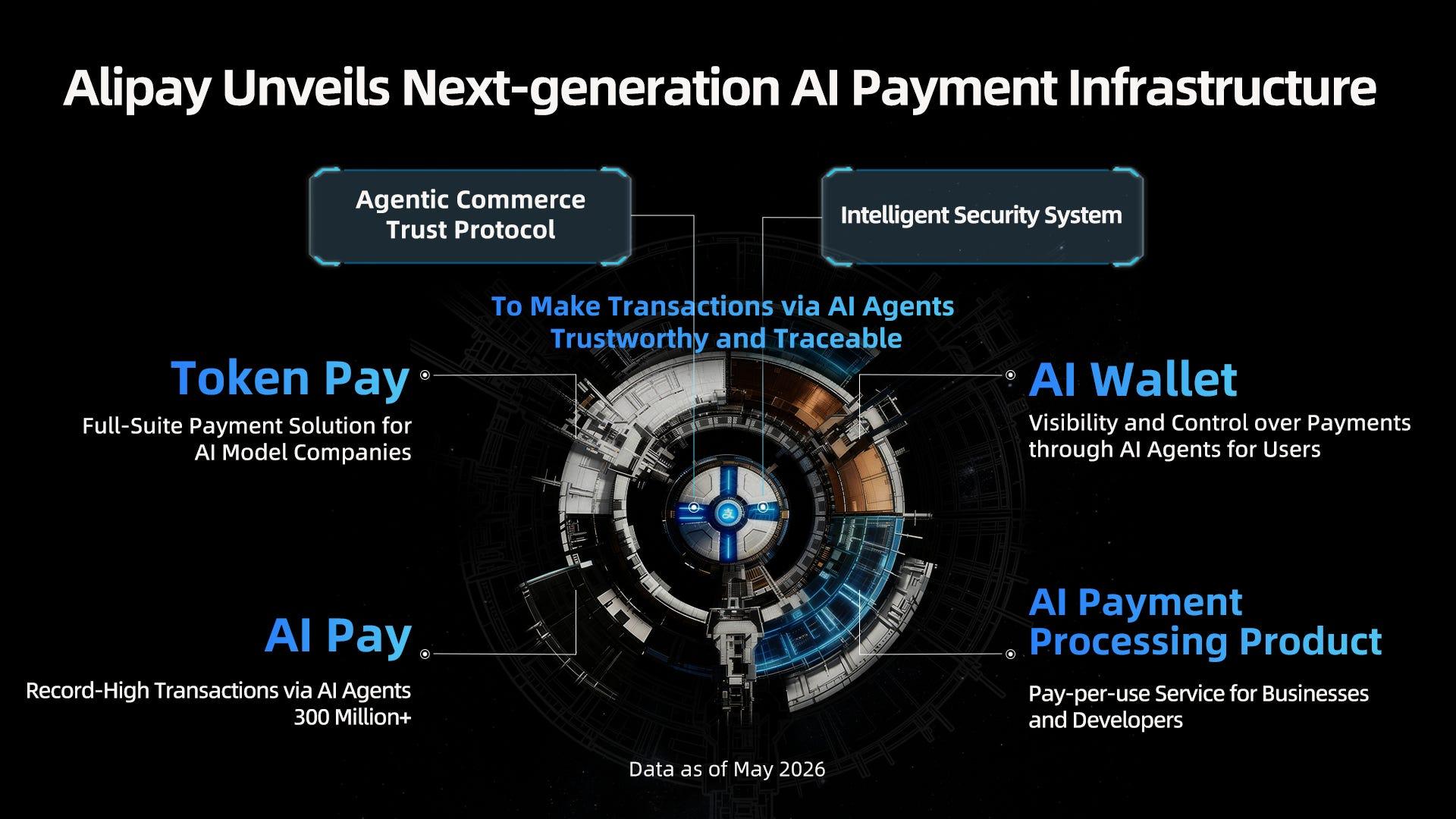
The new Alipay platform gives businesses access to an all-in-one environment built around AI agents. These tools are intended to help merchants automate parts of their daily operations.
Ant Group CEO Cyril Han said Alipay would help build a new generation of AI-powered services. He also highlighted the company’s goal of supporting the growth of agentic commerce.
Alipay Brings AI Agents to Merchants
The new platform focuses on businesses rather than consumers. Its main purpose is to help merchants use AI to automate operational tasks.
AI agents can perform more than basic question-and-answer functions. Depending on how they are deployed, they can analyze information, coordinate activities and interact with digital services.
For merchants, this could reduce the amount of manual work involved in everyday operations. It may also help businesses respond faster to customers and manage digital commerce more efficiently.
Alibaba has been developing similar capabilities across its wider ecosystem. The company has already introduced AI tools aimed at helping merchants with store analysis, content creation and customer service.
That strategy suggests the Alipay launch is part of a much broader AI expansion.
Alibaba Pushes Further Into Agentic Commerce
Alibaba is increasingly positioning AI agents as an important part of its future commerce strategy.
Traditional online shopping requires customers to search for products, compare options and complete purchases themselves. Agentic commerce could change that process.
Instead, an AI agent could understand a customer’s request and help complete several steps. With appropriate authorization, such systems could eventually search, compare, recommend and transact on behalf of users.
Alibaba has been building the technology needed for that model across its ecosystem. Its AI initiatives span consumer applications, enterprise tools, cloud infrastructure and digital payments.
Alipay is particularly important because it connects these AI capabilities with transactions.
Qwen Shows Alibaba’s Consumer AI Strategy
Alibaba’s Qwen platform provides another example of the company’s AI ambitions.
The company has expanded Qwen beyond basic conversational capabilities. Its AI tools are being developed to help users complete practical tasks.
Those tasks can include shopping, ordering services, planning activities and making payments.
Alibaba has also connected Qwen with parts of its commerce ecosystem. This creates a pathway between AI-powered discovery and real-world transactions.
Such integration is important for Alibaba’s agentic-commerce strategy. AI becomes more useful when it can move from providing information to helping users complete actions.
The Merchant Side Is Just as Important
Consumer AI receives much of the attention. However, merchant-focused AI could be equally important for Alibaba.
Businesses manage many repetitive processes every day. These include customer service, product information, marketing, sales and other operational tasks.
AI agents could automate parts of these workflows. They could also connect different services within a merchant’s digital environment.
Alibaba has already been working on this model through Wukong, its enterprise AI agent platform. The company says Wukong can connect with services across its ecosystem.
That includes commerce, payments and cloud capabilities.
Consequently, the new Alipay platform could strengthen Alibaba’s relationship with merchants. It could also create additional opportunities for its AI and payment businesses.
Why Alipay Matters to Alibaba’s AI Strategy
Alipay occupies an important position in China’s digital economy. The platform connects businesses and consumers with payment infrastructure.
An AI system can recommend a product. However, completing the purchase requires access to a payment system.
This makes Alipay an important part of Alibaba’s agentic-commerce ambitions.
Alibaba has already demonstrated how AI and payments can work together through its Qwen initiatives. Users can access certain services and complete approved payments within the broader AI experience.
The latest merchant platform takes this concept in another direction.
Instead of helping only consumers, AI agents can now become part of merchant operations.
Alibaba’s AI Push Comes Before Earnings
The timing of the announcement is also important for investors.
Alibaba is preparing to report its latest quarterly results. At the same time, the company continues to invest heavily in artificial intelligence and cloud infrastructure.
Investors therefore face an important question. Can Alibaba’s large AI investments eventually generate stronger growth?
The new Alipay platform could become part of that answer.
If businesses adopt AI-powered services at scale, Alibaba could create new sources of revenue. It could also strengthen the value of its existing commerce and payment ecosystem.
Alibaba Shares Have Rebounded
Alibaba’s share performance shows that investors are paying close attention to its AI and cloud strategy.
The company’s stock has recovered strongly from its June low. Bloomberg reported that shares had gained more than 40% from that level before Tuesday’s latest move.
Investor interest has also shifted within China’s technology sector. Some funds have moved toward Alibaba following weaker-than-expected results from Tencent.
Analysts have pointed to Alibaba Cloud as another potential source of growth.
The company’s AI expansion therefore comes at an important moment. Investors are looking for evidence that these investments can support long-term earnings.
AI Could Reshape Digital Payments
The Alipay announcement also has wider implications for fintech.
Digital payments traditionally require a customer to select a product or service before completing a transaction. Agentic commerce could introduce a different model.
A user could tell an AI system what they want. The system could then search for suitable options and help complete the transaction after receiving approval.
This could make payment infrastructure even more important.
Alibaba’s integration of AI, commerce and Alipay gives it a foundation for this type of model. The company can potentially connect discovery, recommendation and payment within a single ecosystem.
For fintech companies, that could signal a major shift in how digital transactions are initiated.
AI Is Becoming Central to Alibaba’s Strategy
The latest Alipay launch should not be viewed as an isolated product announcement.
Alibaba is building AI capabilities across several layers of its business. These include foundation models, cloud infrastructure, consumer applications and enterprise solutions.
Qwen focuses heavily on consumer AI. Wukong targets enterprise use cases.
Alipay adds another important component by connecting AI capabilities with payments.
Together, these businesses could create an ecosystem where AI agents help users and companies discover products, manage tasks and complete transactions.
That is the broader vision behind Alibaba’s push into agentic commerce.
What the New Platform Could Mean for Merchants
The long-term value of the platform will depend on how effectively merchants use its AI capabilities.
Businesses are increasingly looking for technology that delivers measurable results. Lower operating costs, faster service and better customer engagement are all important goals.
An integrated AI platform could help merchants reduce the need to manage multiple disconnected tools.
For example, an AI agent could assist with customer interactions while also accessing relevant commerce and payment services.
If that model works at scale, Alibaba could deepen its relationship with merchants.
It could also strengthen the role of Alipay within the wider Alibaba ecosystem.
Conclusion
Alibaba’s latest Alipay launch marks another step in the company’s move toward agentic commerce.
The new AI merchant platform is designed to bring AI agents into business workflows. Meanwhile, Alibaba is continuing to connect AI with commerce, cloud computing and digital payments.
Alipay provides an important transaction layer for that strategy. Its position within Alibaba’s ecosystem gives the company a potential advantage as AI moves closer to real-world commerce.
The bigger test will be whether these investments translate into sustainable growth. Investors will be watching Alibaba’s earnings, cloud performance and AI monetization closely.
Comments
No comments yet. Be the first to share your thoughts.
Leave a comment