
TL;DR
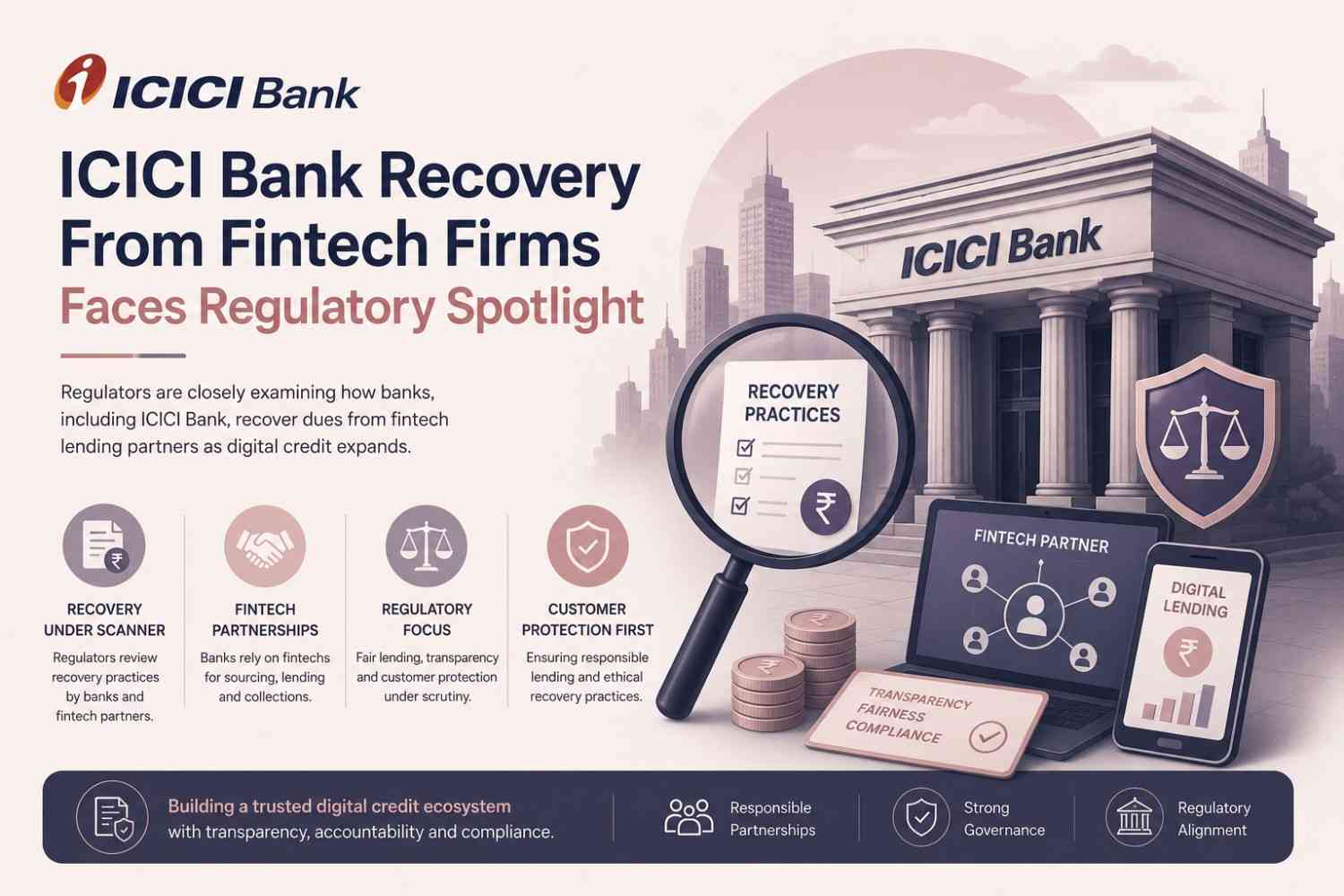
ICICI Bank’s recovery efforts against fintech firms are drawing significant attention across India’s financial sector as the bank reportedly seeks at least ₹100 crore linked to operational and compliance concerns. Moreover, the ICICI Bank fintech recovery case highlights rising regulatory pressure, stricter oversight of digital lending partnerships, and growing focus on risk management within India’s rapidly expanding fintech ecosystem.
Furthermore, the situation reflects broader tensions between traditional banks and fintech companies as regulators increase supervision across payments, lending, and embedded finance ecosystems. As a result, banks are becoming more cautious about partnership structures, financial exposure, and compliance accountability.
Featured Snippet Paragraph
ICICI Bank recovery efforts involving fintech firms are drawing industry attention as the bank reportedly seeks at least ₹100 crore linked to operational and compliance-related issues. Furthermore, the case highlights growing scrutiny around fintech partnerships, digital lending, and financial risk management in India.
ICICI Bank recovery actions against fintech firms are emerging as another major sign of tighter oversight within India’s rapidly growing fintech market. Moreover, reports suggest the bank is seeking at least ₹100 crore from fintech partners amid operational and compliance concerns.
Furthermore, the situation reflects broader tensions between traditional banks and fintech companies as regulators increase supervision across digital lending, payments, and embedded finance ecosystems. As a result, banks are becoming more cautious about partnership structures, financial exposure, and compliance accountability.
At the same time, India’s fintech sector continues expanding despite rising regulatory pressure and operational scrutiny.
Why the Recovery Action Matters
The bank’s recovery action matters because it highlights the growing financial and compliance risks linked to bank-fintech partnerships. While fintech companies have helped accelerate innovation across lending and digital payments, banks remain responsible for managing regulatory exposure and operational safeguards.
Therefore, financial institutions are now placing greater focus on:
- Compliance monitoring
- Partner due diligence
- Risk management controls
- Customer protection
- Lending oversight
- Financial accountability
Moreover, the ICICI Bank fintech recovery case reflects how traditional banks are reassessing relationships with fintech platforms operating in highly regulated financial segments.
Consequently, the development could influence future partnership structures across India’s fintech ecosystem.
ICICI Bank Recovery Highlights Fintech Compliance Risks
ICICI Bank Recovery Raises Digital Lending Concerns
ICICI Bank’s recovery efforts arrive at a time when India’s regulators are closely monitoring fintech and digital lending activities. Furthermore, the Reserve Bank of India (RBI) has introduced stricter rules covering:
- Digital lending operations
- Customer data handling
- Loan disbursement practices
- Third-party partnerships
- Compliance reporting
As a result, banks are increasingly strengthening internal compliance systems and partner oversight frameworks.
Meanwhile, fintech companies operating in lending and financial services continue facing pressure to improve governance standards and operational transparency.
ICICI Bank Fintech Recovery Could Impact Partnerships
The fintech repayment dispute could influence how banks structure future fintech partnerships. Traditionally, banks partnered aggressively with fintech firms to expand digital reach and customer acquisition. However, rising compliance concerns are changing that approach.
For example, banks may now:
- Increase due diligence checks
- Tighten operational controls
- Reduce exposure to high-risk fintechs
- Strengthen audit requirements
- Improve transaction monitoring
Consequently, fintech firms may face stricter onboarding and partnership conditions moving forward.
At the same time, banks are expected to prioritise regulatory compliance more aggressively as financial oversight continues to increase.
ICICI Bank Recovery Reflects Rising Regulatory Pressure
Bank-Fintech Compliance Issues Continue Growing
India’s fintech industry remains one of the fastest-growing digital finance markets globally. However, rapid growth has also created operational and regulatory challenges.
Key concerns include:
- Digital lending compliance
- Customer protection
- Fraud prevention
- Data privacy
- Third-party risk exposure
- Financial transparency
Because of this, regulators and banks are increasing scrutiny across fintech ecosystems.
Moreover, the bank-fintech compliance issue involving the recovery move could encourage additional regulatory discussions around accountability within fintech partnerships.
ICICI Bank Recovery Pushes Stronger Risk Management
Banks across India are increasingly prioritising stronger operational controls and compliance systems. Furthermore, financial institutions are becoming more selective when forming fintech partnerships.
As a result, fintech firms may need to demonstrate:
- Strong governance standards
- Regulatory compliance readiness
- Secure technology systems
- Financial stability
- Transparent operations
Meanwhile, the repayment issue could push more financial firms to strengthen internal monitoring systems and partnership agreements.
| Key Area: Potential | l Industry Impact |
|---|---|
| Digital Lending | Increased regulatory oversight |
| Fintech Partnerships | Stricter compliance requirements |
| Risk Management | Higher operational controls |
| Banking Collaboration | More cautious partnership strategies |
| Financial Oversight | Greater regulatory scrutiny |
Operational Impact on Fintech Firms
ICICI Bank Recovery Could Increase Industry Pressure
The recovery process may create additional pressure for fintech firms already navigating a highly competitive and regulated market.
Potential operational impacts include:
- Increased compliance costs
- Stricter banking partnerships
- Higher reporting obligations
- More detailed audits
- Reduced operational flexibility
Consequently, smaller fintech firms could face greater challenges securing and maintaining banking relationships.
At the same time, stronger compliance practices may improve long-term market stability across India’s fintech ecosystem.
Fintech Growth Opportunities Still Remain Strong
Despite regulatory pressure, India’s fintech market continues to offer major growth opportunities across:
- Digital payments
- Embedded finance
- SME lending
- Wealth technology
- Banking infrastructure
- Financial inclusion
Therefore, banks and fintech companies are still expected to collaborate extensively, although under tighter compliance frameworks.
Furthermore, the bank-fintech dispute may encourage healthier operational standards across the fintech industry.
Industry Impact on Fintech Partnerships
The recovery move reflects broader changes shaping India’s financial services sector. Moreover, regulators, banks, and fintech firms are increasingly focused on balancing innovation with operational discipline and customer protection.
As digital finance adoption continues expanding, demand for:
- Strong compliance systems
- Transparent fintech partnerships
- Better governance controls
- Responsible digital lending
is expected to increase significantly.
Meanwhile, India’s fintech ecosystem is likely to remain one of the world’s most active innovation markets despite rising regulatory scrutiny.
Frequently Asked Questions
What is the ICICI Bank recovery case?
ICICI Bank is reportedly seeking at least ₹100 crore recovery from fintech firms linked to operational and compliance-related concerns.
Why is the recovery effort important?
The case highlights rising regulatory pressure, partnership risks, and compliance challenges within India’s fintech sector.
How could the recovery impact fintech firms?
Fintech firms may face stricter compliance checks, tighter banking partnerships, and increased operational oversight.
Why are banks becoming more cautious with fintech partnerships?
Banks remain responsible for regulatory compliance and risk management, making oversight more important as fintech ecosystems grow.
Does the case affect India’s fintech growth outlook?
Although regulatory pressure is increasing, India’s fintech sector continues showing strong long-term growth potential.
Final Thoughts on the Fintech Dispute
Overall, the recovery process against fintech firms underlines the growing importance of compliance, governance, and operational accountability within digital finance ecosystems. Moreover, the development highlights how banks are becoming increasingly cautious about managing fintech partnership risks.
Although tighter oversight may create short-term pressure for fintech firms, stronger governance standards could improve long-term market stability and investor confidence. Furthermore, the ICICI Bank fintech recovery case reflects broader shifts toward responsible fintech growth across India’s rapidly evolving financial sector.
Ultimately, the future of bank-fintech collaboration in India will likely depend on balancing innovation with stronger compliance and operational safeguards.
CTA Section
Explore leading fintech platforms, digital lending providers, banking infrastructure firms, compliance solutions, and payment technologies shaping the future of financial services on TheFinRate.
Comments
No comments yet. Be the first to share your thoughts.
Leave a comment