
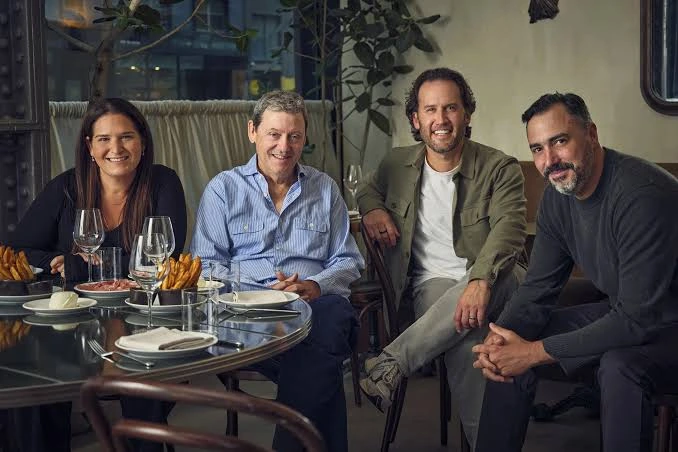
Union Square Ventures has closed $900 million in new capital, and the firm is using the moment to rethink how it invests. The New York venture capital firm, known for early bets on Twitter, Coinbase, Etsy, Twilio, and MongoDB, announced the funds on October 8, 2026. In doing so, it set out a strategy built around artificial intelligence, robotics, manufacturing, and energy, areas it says will define the next phase of technology investing.
The raise is split into two parts. A $500 million early-stage Core Fund will back new companies from the start, while a $400 million Opportunity Fund will support later-stage deals and follow-on investments in existing portfolio companies. Together, they mark a sharp jump from USV's previous core fund, which stood at $275 million. The firm says founders building in the AI era need investors who can support larger rounds and longer company-building journeys, and it wants to be one of them.
Why USV Is Raising $900 Million Now
USV's reasoning starts with a simple observation: artificial intelligence is changing both the cost of building products and the amount of capital it takes to turn those products into lasting businesses.
The firm draws a direct comparison to the early internet. In 2004, founders Fred Wilson and Brad Burnham argued that USV could generate strong returns by backing early-stage companies built on widely available internet infrastructure. That thesis paid off, helping the firm identify businesses that became central to the modern internet economy.
More than two decades later, USV sees a similar opening in AI. Powerful models, development tools, and programmable intelligence are now within reach of small teams and even individual founders. People can build products today that once required much larger engineering staffs and far more time.
That ease of building, however, cuts both ways. As more founders launch products quickly, competition intensifies. Companies have to differentiate themselves, win customer trust, and build defensible advantages before rivals copy their features. Established players, meanwhile, often respond quickly when new entrants threaten their markets.
USV's answer to this pressure is more capital behind its strongest bets. Larger funds give the firm room to lead rounds, keep supporting companies as they scale, and invest in businesses that need physical infrastructure or longer development timelines.
USV Expands Beyond Its Historically Smaller Funds
USV has long treated fund size as a deliberate choice rather than a race to raise more money. The firm has argued that staying smaller encourages discipline, keeps its interests aligned with founders and limited partners, and stops it from deploying capital into deals that do not fit its thesis.
The new $900 million fund cycle marks a clear departure from that approach. The $500 million Core Fund nearly doubles the firm's previous $275 million vehicle, while the separate $400 million Opportunity Fund gives USV a dedicated pool for later-stage support.
That distinction matters because venture investing rarely ends with the first check. A company may need several rounds to build its technology, enter new markets, hire specialized talent, and establish a real commercial footing. In sectors like robotics, advanced manufacturing, and energy, deploying physical systems can demand far more capital than launching a piece of software ever would.
Even so, USV says it expects to make roughly the same number of investments as in prior funds. The firm is not planning to back dramatically more startups. Instead, it wants more room to support the companies it already believes in, at the scale founders increasingly expect. That keeps USV's emphasis on conviction and selectivity intact while giving it the financial flexibility its portfolio companies now need.
Four Investment Theses Define USV's AI Era Strategy
USV's announcement lays out four connected investment themes, and together they show the firm's AI strategy reaches well beyond chatbots or generative features bolted onto existing software.
AI applications that transform markets
USV calls its first thesis "obliterate, don't automate." The idea is that the most valuable AI businesses will not simply speed up an existing process. They will change how an entire market functions.
Traditional automation tends to make an existing workflow faster. AI applications, by contrast, can reorganize the workflow altogether, cut out conventional intermediaries, or make once expensive services available to far more people. AI could reshape how businesses deliver professional services, manage customer relationships, conduct research, or process complex information. The real opportunity, in USV's view, lies with companies that redesign the product itself rather than simply inserting AI into an existing one.
This distinction grows more important as competition in AI software increases. When several companies can build similar features on the same underlying models, long-term advantage tends to come down to distribution, proprietary data, customer relationships, and workflow integration, not the model alone.
Data at the edge and physical intelligence
USV's second thesis, which it calls "Data at the Edge," focuses on information that has historically been hard to collect or interpret. This includes data generated through sensors, machines, industrial systems, and robotics, much of which has never been neatly organized into digital databases.
AI systems paired with sensors and robotics could help convert that physical world information into usable data, opening opportunities in manufacturing, industrial automation, logistics, and other sectors where software must interact directly with physical operations.
The implications for investors go beyond conventional enterprise software. A company building robotic systems or industrial intelligence may need hardware, testing facilities, and specialized engineering, all of which stretch out development timelines and raise financing needs. USV's larger fund base gives it more capacity to back these businesses as they move from prototype to commercial deployment.
The Rebel Alliance: intelligence with aligned incentives
USV's third thesis holds that both consumers and enterprises will want increasingly capable AI while demanding stronger guarantees around trust, security, memory, and cost. The firm calls this idea "The Rebel Alliance."
As AI tools become more deeply woven into daily life and business operations, customers will need to weigh more than a model's raw capability. They will also want to know how their information is handled, whether a system can be trusted, what it costs, and whether its incentives actually align with their own.
Enterprises tend to prioritize security, reliability, and predictable costs. Consumers, meanwhile, often care more about privacy, personalization, and whether a service truly works in their favor. These differing needs create openings for companies that offer more than access to a powerful model, namely products built around trusted relationships and strong data practices. For investors, the real challenge is spotting businesses with lasting advantages in a market where model capabilities and prices shift constantly.
Energy as a core investment priority
USV's fourth thesis centers on energy. The firm says it began investing through a dedicated energy fund in 2021 and will now fold that thesis into its core fund strategy.
The shift reflects a tight relationship between AI adoption and physical infrastructure. AI systems need computing power, and large-scale deployment depends on reliable electricity, data centers, and cooling systems. At the same time, robotics and advanced manufacturing can demand substantial power and industrial capacity of their own.
As a result, energy is not simply an adjacent sector in USV's strategy. It functions as a foundational requirement for the broader technology transition the firm is betting on. The firm also recognizes that energy businesses often carry different capital needs and timelines than software startups, since projects involving power generation or storage typically require physical assets, engineering validation, and regulatory approval before they reach scale. Bringing energy into the core strategy gives USV a wider framework for backing the companies that could support AI's underlying infrastructure.
USV Changes Its Partnership Around Product Building
The fund announcement also brings changes to the people guiding USV's portfolio. Michael Mignano, cofounder of Anchor, joins as a new general partner. Jared Hecht, cofounder of GroupMe and Fundera, comes on as a venture partner, and Scott Belsky, cofounder of Behance and former chief product officer at Adobe, joins as a product advisory partner.
The firm's core investment team now includes Mignano alongside Fred Wilson, Rebecca Kaden, Nick Grossman, and Nikhil Raman, while Andy Weissman, Albert Wenger, John Buttrick, and Brad Burnham will continue supporting USV and its portfolio companies.
These additions reflect the firm's growing emphasis on product development. USV argues that AI has made it easier to build products but harder to make them stand out. When competitors can launch new features in a matter of weeks, product quality, customer understanding, and market positioning carry more weight than ever. Experienced founders and product leaders can help the firm judge whether a startup is solving a meaningful problem, whether customers will actually adopt it, and whether its advantages will hold up as the market shifts. Even with more capital on hand, USV's small, cohesive partnership suggests it has no plans to abandon its preference for focused decision-making.
What the $900 Million Raise Means for Startups
For founders, the announcement signals that USV intends to stay active in early-stage investing while building more capacity to support companies as they grow. That structure could matter most to startups in categories where capital needs are rising fast. AI applications often require investment in talent, computing power, data access, and customer acquisition, while robotics and manufacturing businesses need equipment, facilities, supply chains, and testing before they can scale at all.
USV says it wants to lead more rounds and support companies for longer stretches, an approach that may appeal to founders who prefer working with investors capable of staying involved across multiple financing stages rather than relying on new backers at every milestone.
Still, a bigger fund does not guarantee an easier path for every AI startup. USV plans to make roughly the same number of investments and will keep evaluating companies based on the business, the team and the product. That suggests the firm intends to stay just as selective as before. Founders will still need to show a strong market opportunity, a capable team and a product that can stand out in an increasingly crowded field.
The Risks Behind USV's Bigger AI Era Funds
USV's strategy rests on a significant bet: that AI will create major new markets and that the startups it backs will capture durable value within them. That bet carries real risks.
Lower development costs could push competition to grow faster than demand does. If too many companies launch similar products, pricing pressure and rising customer acquisition costs could weaken returns across the board. Access to AI models alone may not be enough to build a defensible business, either, since startups often depend on third party providers whose capabilities, pricing and terms can shift without warning. Lasting advantage tends to come from elsewhere, such as proprietary data, strong distribution or deep customer trust.
Robotics, manufacturing and energy bring their own operational risks that rarely show up in software only companies. Hardware failures, supply chain constraints, heavy capital expenditure and long commercialization timelines can all weigh on growth. And larger venture funds, by their nature, must deploy more capital while still holding to disciplined investment standards. USV's stated plan to keep its number of investments roughly steady fits with its historic focus on selectivity, but the real performance of these new funds will depend on the companies it ultimately backs and the returns they produce. The firm's announcement lays out its thesis and its intentions. It does not guarantee the opportunities will unfold as expected.
What Comes Next for Union Square Ventures
USV's $900 million fund announcement marks a significant shift in how the firm plans to invest through the next wave of technological change. The firm is holding onto its thesis driven approach while expanding its ability to finance companies across AI applications, hard to access data, consumer and enterprise intelligence, robotics, manufacturing and energy.
At the core of USV's argument is the idea that AI changes both sides of startup creation. It hands founders more powerful tools to build products, yet it also raises the bar for building a business that lasts. Meanwhile, the next generation of technology companies may need far more capital as they move beyond software and into physical systems and infrastructure. The jump from a $275 million core fund to a $500 million early stage fund, paired with a new $400 million Opportunity Fund, reflects USV's belief that its strategy has to evolve along with the market.
The broader venture capital question is whether easier product development will ultimately produce more category defining companies, or simply more competition chasing the same customers. USV is betting on the former, and it is positioning itself to give deeper financial support to the founders it believes can reshape major markets.
The $900 million raise, then, is more than a fund size increase. It is a statement about where USV believes the next generation of technology value will come from: not just automating existing work, but using AI and physical intelligence to transform markets and build entirely new businesses.
Comments
No comments yet. Be the first to share your thoughts.
Leave a comment