
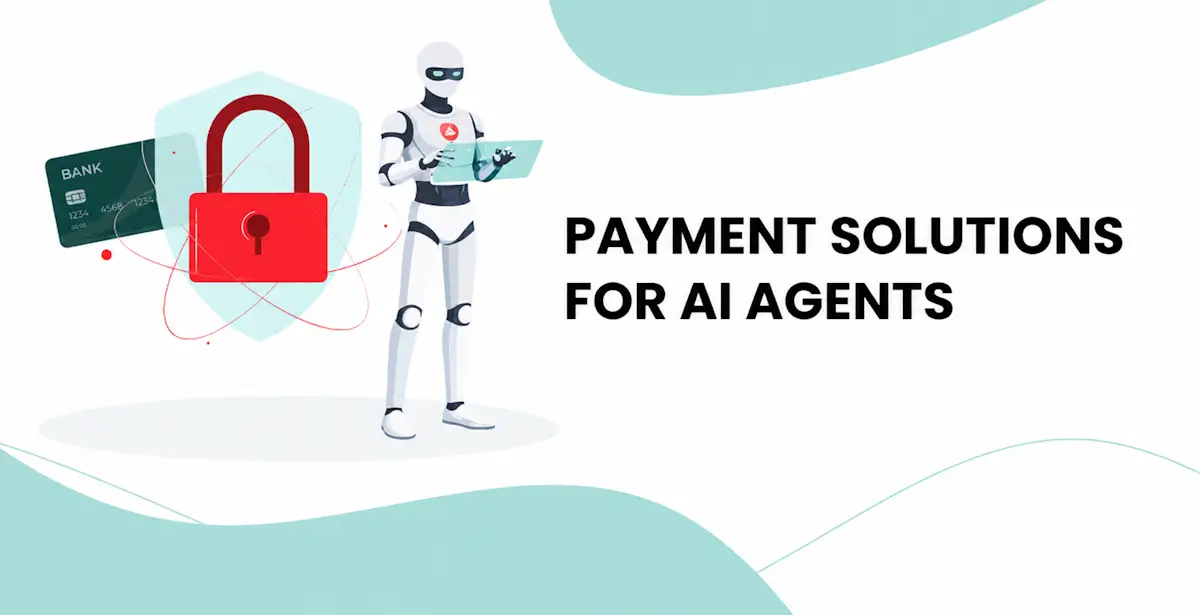
Payment orchestration platform Akurateco has opened its payment API documentation to AI coding assistants through the Model Context Protocol (MCP), giving developers a way to query live technical documentation directly from the development environments they already use.
The new capability connects Akurateco’s documentation to AI tools, including Claude Code, Codex, Cursor, and other MCP-compatible clients. Instead of relying on an AI model’s training data to answer questions about payment endpoints, parameters, or integration flows, developers can let the assistant search and retrieve the current Akurateco documentation directly.
The move comes as AI-assisted software development becomes increasingly common across fintech and payments. For payment platforms, where APIs can involve complex authentication, transaction states, callbacks, acquirer routing, and alternative payment methods, access to current technical documentation can be as important as the code-generation capability itself.
Akurateco is positioning MCP as a way to reduce that information gap.
How Akurateco’s MCP integration works
The technology is based on the Model Context Protocol, an open standard designed to connect AI assistants with external sources of information and tools. Anthropic introduced MCP as a way to make it easier for AI systems to access relevant external data rather than operating only from information embedded in model training.
Akurateco has implemented its documentation as an MCP server available at https://docs.akurateco.com/mcp.
According to Akurateco’s developer documentation, the server is public and read-only. It exposes two principal capabilities: docs_search it finds relevant documentation pages and snippets and retrieves an individual page in full Markdown format.
That means an AI assistant can search the actual documentation and retrieve information such as API parameters, permitted values, constraints, responses, error references, and integration instructions.
The distinction matters because payment APIs change over time.
A general-purpose AI assistant may remember an older endpoint or generate a parameter that looks plausible but does not exist in the current API. With the MCP connection, Akurateco’s assistant workflow is designed to use the published documentation itself rather than relying only on what a model learned previously.
Developers can query payment APIs in natural language.
The practical benefit is that developers do not need to leave their development workflow every time they need to check an API detail.
Akurateco’s documentation shows examples of questions that can be sent through an MCP-connected coding assistant, including which parameters are required for an S2S CARD sale, how a particular hash should be calculated, what information appears in a payment callback, and how different payment integration options compare.
For developers working with payments, those are often the kinds of questions that slow down an integration.
The underlying API is not limited to a single payment flow. Akurateco’s developer platform documents checkout, server-to-server card payments, server-to-server alternative payment methods, and hosted payment fields, alongside capabilities such as recurring payments, tokenization, refunds, and multi-acquirer routing.
By making that documentation accessible to AI assistants, Akurateco is effectively turning its technical documentation into a resource that both human developers and coding agents can query.
The integration is designed for existing developer tools.
Akurateco has attempted to keep the setup relatively simple.
Its documentation provides ready-made configuration examples for a range of AI development environments, including Claude Code, Codex CLI, Cursor, VS Code, Gemini CLI, JetBrains AI Assistant, Junie, OpenCode, Windsurf, and other MCP-compatible tools. The company says its documentation portal can provide configurations for around 20 MCP clients.
For example, the Codex configuration can be added directly through the command:
codex mcp add --url https://docs.akurateco.com/mcp payments-docs
A similar connection is available for Claude Code and other supported tools.
The approach reflects a broader shift in software development: instead of asking developers to move between separate documentation portals, browser tabs, and AI assistants, companies are increasingly making documentation accessible directly to the tools developers already use.
Akurateco keeps the MCP server separate from payment credentials.
Security is an important distinction in the implementation.
Akurateco says the MCP endpoint provides documentation only and does not involve payment credentials, transactions, or account data. The server is read-only, and its purpose is to expose technical information rather than give an AI assistant access to a merchant’s payment environment.
That means the new capability is not an autonomous payments agent.
An AI coding assistant can use the documentation to understand how Akurateco’s API works, but the MCP connection does not give it the authority to initiate transactions or access a merchant account.
That separation could be particularly important in financial services, where AI systems increasingly sit inside development and operational workflows but should remain isolated from sensitive credentials and production payment activity.
Why machine-readable documentation matters in payments
Payment integrations are often more complicated than simply sending a basic API request.
Developers may need to understand authentication methods, payment protocols, required fields, transaction states, 3DS flows, callbacks, error codes, PCI considerations, and the differences between multiple payment methods.
Akurateco’s API documentation, for example, distinguishes between hosted Checkout integrations and server-to-server implementations. It also documents different transaction operations, authentication requirements, and callback behavior.
That complexity creates plenty of opportunities for mistakes.
A developer can understand the general business objective but still lose time checking whether a parameter is required, whether a field supports a particular value, or whether a callback represents a final payment state.
Akurateco’s MCP implementation is designed to reduce that lookup friction by putting the documentation directly inside the AI-assisted workflow.
For payment teams, that could shorten the gap between reading the specification and getting an initial integration working.
AI-assisted coding is moving deeper into fintech
Akurateco’s move is part of a wider transition in how financial technology companies think about documentation.
For years, API documentation was written primarily for human developers. Today, it increasingly needs to work for both humans and AI coding systems.
That does not necessarily mean replacing engineers.
Instead, the value is in allowing coding assistants to retrieve authoritative technical information before generating or explaining code.
The same principle is becoming increasingly relevant as financial APIs grow more sophisticated and as fintech developers rely on agentic coding tools to navigate large documentation sets.
MCP provides a standardized way to connect those assistants with external information sources. Anthropic describes it as a universal, open standard intended to reduce fragmented integrations between AI systems and external data.
Akurateco is applying that model to a very specific and operationally important use case: payment integration documentation.
A step toward AI-native payment development
The announcement also reflects how payment infrastructure companies are adapting to the rise of AI-native development.
Akurateco operates as a payment orchestration platform, allowing merchants and payment businesses to connect with multiple acquirers, networks, and alternative payment methods through its infrastructure. Its documentation currently covers card payments, alternative payments, wallets, bank transfers, crypto on/off-ramps, recurring transactions, tokenization, and multi-acquirer routing.
That makes documentation especially important.
A platform that connects multiple payment rails has to explain not only its own API but also the integration flows around different payment methods and providers. Giving AI coding assistants direct access to that information can make it easier for developers to navigate those layers.
For PSPs, acquiring banks and enterprise merchants using Akurateco’s white-label infrastructure, the potential benefit is therefore less about flashy AI features and more about reducing the time spent searching for technical information during integration work.
What this means for payment developers
For developers, the immediate impact is straightforward.
Instead of asking an AI assistant to rely on its general knowledge of Akurateco’s API, they can connect the assistant to the company’s live documentation and ask it to retrieve the relevant specification.
That provides a stronger foundation for tasks such as
- Finding required API parameters
- Comparing integration methods
- Checking authentication requirements
- Understanding callback structures
- Reviewing error codes
- Verifying payment-operation details
- Navigating documentation across multiple payment flows
The AI still needs to be used carefully. Akurateco’s own documentation tells users to explicitly reference the available documentation tools when they want the assistant to retrieve authoritative pages rather than answer from general knowledge.
That reinforces an important principle for AI-assisted development: better answers depend not only on better models but also on giving those models access to the right source material.
The bigger shift: APIs designed for AI agents
Akurateco’s move points to a broader evolution in fintech infrastructure.
As AI coding assistants become part of normal software-development workflows, documentation itself is becoming a programmable resource.
The next generation of payment APIs will increasingly need to be understandable not only to developers reading reference pages but also to AI systems that can search, interpret, and apply those specifications during development.
That creates a new layer in payment infrastructure: documentation that is machine-readable, current, and directly accessible to development agents.
Akurateco’s MCP server does not give AI agents control over financial transactions. Instead, it creates a controlled bridge between those agents and the technical information required to build payment integrations.
For the payments industry, that may prove to be the more practical early role for AI: not replacing integration teams, but giving them faster access to the exact information they need to build and troubleshoot complex financial software.
With its documentation now available through MCP, Akurateco is positioning its payment API for a development environment in which AI assistants are becoming part of the integration team itself.
Comments
No comments yet. Be the first to share your thoughts.
Leave a comment