
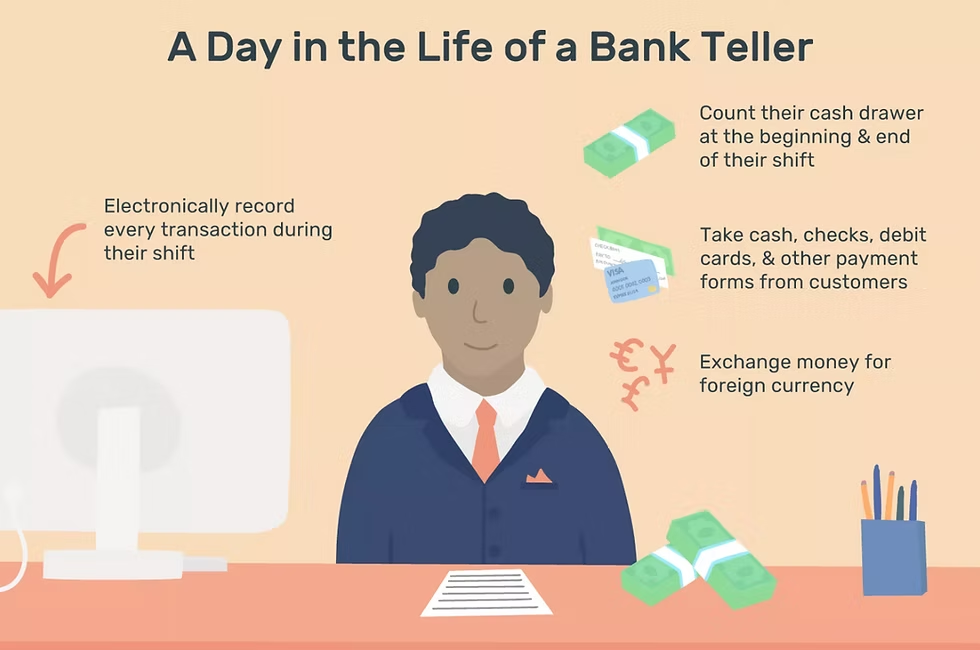
Fraud detection becomes a key task for bank tellers
Bank teller fraud prevention is becoming an increasingly important responsibility for bank tellers as financial institutions face a rise in scams, account fraud, and financial crime.
Bank Teller Fraud Prevention Starts at the Branch Level
The growing importance of fraud detection highlights the role bank tellers play in identifying potential risks.
Several warning signs may include:
- Unusual withdrawal requests
- Suspicious account activity
- Signs of customer coercion
- Unexpected money transfers
- Unfamiliar transaction patterns
Moreover, tellers interact directly with customers on a daily basis. Because they often have firsthand knowledge of account behavior, they can identify changes more quickly.
Furthermore, early intervention can help prevent financial losses.
Bank Teller Fraud Prevention Supports Customer Protection
The rise in fraud detection efforts reflects the banking sector’s focus on customer safety.
Moreover, fraud schemes have become more sophisticated in recent years. Because criminals continue developing new tactics, financial institutions are strengthening front-line defenses.
In addition, customer education remains an important part of fraud prevention.
Furthermore, bank staff frequently assist customers who may be targeted by scams.
Banking Fraud Protection Helps Reduce Financial Crime
Strong fraud detection procedures can help banks identify and stop suspicious activities before losses occur.
Several goals include:
- Protecting customer funds
- Preventing scams
- Reducing financial losses
- Supporting compliance efforts
- Improving security measures
Moreover, financial institutions continue investing in fraud prevention technologies and staff training. Because fraud can affect both customers and banks, prevention remains a major priority.
Furthermore, effective monitoring can improve trust in financial services.
Technology strengthens fraud detection efforts
Modern fraud detection systems often combine human observation with advanced technology.
Moreover, banks increasingly use data analytics, artificial intelligence, and transaction monitoring tools to identify suspicious activity. Because technology can process large amounts of information quickly, it supports teller observations.
In addition, automated systems can flag unusual transactions for review.
Furthermore, technology helps improve response times.
Comparison between traditional and modern fraud prevention
| Feature | Traditional Prevention | Modern Prevention |
|---|---|---|
| Monitoring | Manual Reviews | Automated Monitoring |
| Risk Alerts | Limited | Real-Time Alerts |
| Data Analysis | Basic | Advanced Analytics |
| Fraud Identification | Slower | Faster |
| Security Support | Moderate | Stronger |
Moreover, this comparison shows how fraud prevention has evolved alongside technology.
Fraud Prevention Training Gains Importance
The increasing focus on fraud detection has encouraged banks to expand employee training programs.
Several training areas include:
- Scam awareness
- Customer communication
- Transaction monitoring
- Risk identification
- Reporting procedures
Moreover, well-trained staff can help identify potential fraud before it escalates. Because criminals frequently change their methods, continuous learning remains essential.
Furthermore, training supports stronger customer protection.
Financial scams continue to evolve
The attention on fraud detection comes as financial scams become more complex.
Moreover, criminals often use social engineering, impersonation, and digital tactics to target victims. Because fraud methods continue changing, banks must adapt their prevention strategies.
In addition, public awareness campaigns remain important.
Furthermore, collaboration between banks and regulators supports prevention efforts.
Fraud detection supports trust in banking
Strong fraud detection measures help maintain confidence in financial institutions.
Moreover, customers expect banks to provide secure services and safeguard deposits. Because trust is central to banking relationships, effective fraud prevention remains critical.
In addition, security investments can improve customer confidence.
Furthermore, strong protection measures may reduce fraud-related losses.
Future outlook for fraud detection
The future of fraud detection is likely to involve greater use of technology and stronger cooperation between bank staff and automated systems.
Moreover, financial institutions are expected to continue investing in tools that improve security and risk management. Because fraud threats remain a challenge, prevention efforts will likely expand further.
In addition, employee training programs may become more advanced.
Furthermore, customer education is expected to remain a key focus.
Final Thoughts
The growing role of bank tellers in bank teller fraud prevention demonstrates how important front-line employees are in the fight against financial crime.
Moreover, by combining personal interaction with modern technology, banks can strengthen customer protection and improve security. As a result, tellers continue serving as an important line of defense against fraud.
Ultimately, bank teller fraud prevention remains essential for maintaining trust, protecting customers, and supporting the stability of the financial system.
PYMNTS | Bank Tellers Play Detective in Face of Rising Fraud
Comments
No comments yet. Be the first to share your thoughts.
Leave a comment