
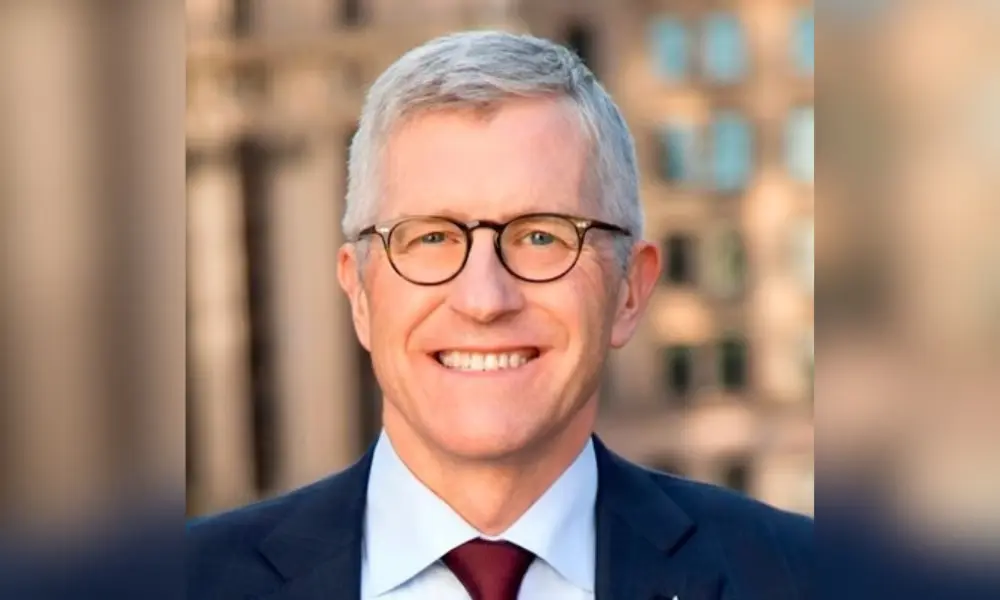
Wells Fargo chief risk officer Derek Flowers will retire from the bank in mid-January 2027, ending a career of nearly three decades with the U.S. banking group. Current chief operating officer Scott Powell will succeed him as chief risk officer, giving Wells Fargo an internal transition for one of its most important control and risk-management functions.
Flowers joined Wells Fargo in 1995 as a loan officer and went on to hold a series of senior positions across credit, debt, and market risk. He became Wells Fargo’s chief risk officer in January 2022. In that role, he has overseen the company’s independent corporate risk function, covering financial and non-financial risks, including compliance risk management.
Nearly three decades at Wells Fargo
Flowers has spent most of his professional career at Wells Fargo. Before becoming CRO, he served as head of the bank’s Strategic Execution and Operations Office, where he worked on transformation and operational priorities. Earlier still, he was chief credit and market risk officer, with responsibility for credit, counterparty, and market risk across the company.
His career also included leadership of credit functions covering Wells Fargo Securities and Corporate Banking. That experience gave Flowers a broad view of the risks facing the bank across lending, capital markets, and other wholesale businesses.
As CRO, Flowers has been responsible for the governance of Wells Fargo’s risk programs. Notably, the bank’s corporate risk structure includes chief risk officers for its business groups, along with leaders responsible for different categories of risk.
Wells Fargo CEO and Chairman Charlie Scharf said Flowers played an important role in strengthening the company’s risk and control framework. For his part, Flowers said he was proud of what the team had accomplished and expressed confidence in the bank’s risk culture and leadership transition.
Scott Powell steps into the CRO role.
Scott Powell, Wells Fargo’s current COO, will take over as chief risk officer once Flowers retires. Powell has served as Wells Fargo’s chief operating officer since December 2019. His current responsibilities span global operations, control management, corporate properties, corporate security, strategic sourcing, resiliency, customer complaints and remediation, and regulatory relations.
His previous career also gives him substantial risk-management experience. Specifically, Powell spent about 14 years at Citigroup in various risk roles before joining JPMorgan Chase, where he held senior positions, including chief risk officer for consumer banking. He later served as CEO of Santander Holdings USA and CEO of Santander Consumer USA.
As a result, Powell will move into the CRO role with experience spanning both operational leadership and financial risk management. Wells Fargo’s announcement also notes that Powell worked closely with Flowers on the bank’s risk and control priorities.
Keeping risk leadership within the senior team
This succession comes as Wells Fargo continues maintaining a senior management structure built around dedicated risk and control functions. The bank’s current leadership framework places the CRO on the Wells Fargo Operating Committee, alongside the COO, chief financial officer, general counsel, head of technology, and leaders of the company’s major business segments. Flowers currently serves on that committee, as does Powell.
Consequently, moving Powell from COO to CRO will shift one senior executive from an enterprise operations role into the bank’s independent corporate risk function. Wells Fargo has said that Powell’s successor as COO will be named in the near future, an appointment that will complete the second part of the management transition.
What the role actually covers
The CRO role at Wells Fargo extends well beyond traditional credit risk. According to the bank, the corporate risk organization oversees financial and non-financial risks across the company, including compliance. The function works across the bank’s business groups and risk categories, making its leadership relevant to areas such as credit, market risk, operational risk, and regulatory compliance.
Powell’s previous responsibilities also include control management, resiliency, and regulatory relations. Therefore, his move into the risk function brings together experience from several areas that already sit close to enterprise risk management.
An internal transition, not an outside hire
Flowers’ retirement represents a substantial personnel change, given his long tenure and progression through multiple risk leadership roles at Wells Fargo. He has been CRO since 2022, following years spent in senior credit and market risk positions.
Powell, meanwhile, has spent nearly seven years at Wells Fargo and has held the COO position since 2019. Before joining the bank, his experience included senior roles at Citigroup, JPMorgan Chase, and Santander.
Wells Fargo has not announced whether the new CRO structure will involve broader changes to its risk organization. For now, the immediate change is straightforward: Flowers will retire in January, Powell will become CRO, and Wells Fargo will subsequently appoint a new COO.
What happens next?
The first major milestone will be Flowers’ retirement in mid-January 2027, at which point Powell will assume the CRO position. Wells Fargo still has one senior appointment left to announce: the executive who will replace Powell as chief operating officer. Until that announcement, Powell remains the bank’s COO while preparing for his transition into the risk role.
For Wells Fargo, this change keeps the incoming CRO within its existing senior leadership team and brings an executive with extensive risk-management experience into the role. Flowers’ nearly three decades at the bank, meanwhile, will come to an end after a career that included some of Wells Fargo’s most senior credit and risk positions.
Wells Fargo CRO Derek Flowers to retire, COO Scott Powell to succeed
Comments
No comments yet. Be the first to share your thoughts.
Leave a comment