
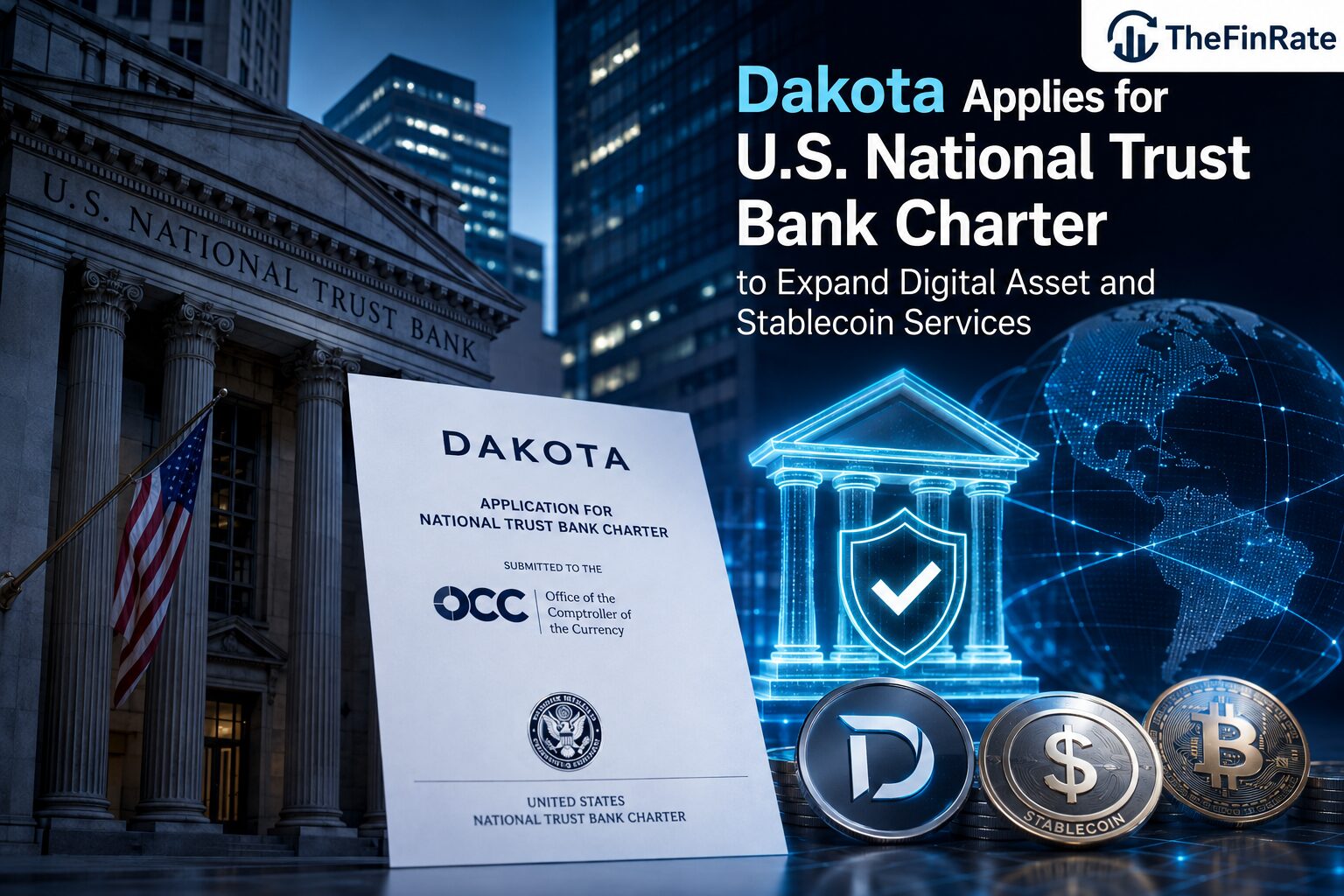
Dakota Applies for US National Trust Bank Charter to Expand Digital Asset and Stablecoin Services
Dakota has taken a major step toward becoming a federally regulated trust bank in the United States. The company has applied to the Office of the Comptroller of the Currency (OCC) for a national trust bank charter, which would allow it to operate under a single federal regulatory framework if regulators approve the application.
Dakota CEO Ryan Bozarth announced the application on July 31, 2026. If the OCC grants the charter, Dakota could expand its digital asset custody and stablecoin infrastructure services across the United States. The announcement gained wider industry attention on August 3, 2026.
However, the OCC has not approved the application. Dakota has only submitted its charter request, and regulators are still reviewing the proposal.
Why the Dakota National Trust Bank Charter Matters
A national trust bank charter differs from a traditional commercial banking license. Instead of offering the full range of commercial banking services, a trust bank focuses on trust, custody, and fiduciary services under federal supervision.
For Dakota, the charter could simplify its regulatory structure. Rather than obtaining licenses in multiple states, the company could operate under one federal framework supervised by the OCC. As a result, Dakota could expand its services more efficiently across the country.
What Dakota Wants to Offer
If regulators approve the application, Dakota National Trust Bank would provide services that are becoming increasingly important in the digital asset industry.
The proposed charter would support:
- Digital asset custody
- Stablecoin infrastructure services
- Nationwide operations under OCC supervision
Digital asset custody involves securely holding cryptocurrencies and other digital assets on behalf of clients. Institutional investors and corporate customers often rely on regulated custody providers to protect their assets.
A Push Toward Federal Regulation
Dakota’s application reflects a broader trend in the U.S. fintech and digital asset industry. Many crypto and fintech companies are seeking federal regulatory frameworks instead of navigating a patchwork of state licensing requirements.
A national trust bank charter offers a more consistent regulatory approach. In addition, federal oversight can strengthen a company’s credibility with institutional clients and business partners.
Stablecoins Are Becoming a Key Focus
One of the most significant aspects of Dakota’s application is its focus on stablecoin infrastructure. Stablecoins are digital tokens designed to maintain a stable value, usually by being linked to a currency such as the U.S. dollar.
Financial institutions and technology companies are showing growing interest in stablecoin-based payment and settlement systems. By pursuing a national trust bank charter, Dakota is positioning itself to participate directly in that expanding ecosystem.
Why the OCC Charter Is Important
The Office of the Comptroller of the Currency supervises national banks and federal trust banks. An OCC-regulated trust bank must meet strict standards for governance, risk management, compliance, and fiduciary operations.
Because Dakota wants to handle digital assets and customer funds, federal supervision could provide an important layer of regulatory oversight. Nevertheless, the approval process can take time, and the OCC does not automatically approve every application.
What Happens Next
Dakota’s filing marks the beginning of the regulatory process rather than the final outcome. The OCC will review the company’s application, evaluate its proposed business model, and determine whether it meets federal trust banking requirements.
Until regulators make a decision, Dakota will continue operating under its existing structure. Meanwhile, investors, fintech companies, and digital asset firms will likely monitor the application closely.
The Bigger Picture
Dakota’s application comes at a time when digital assets are becoming more integrated with mainstream financial infrastructure. Banks, payment companies, and fintech firms are increasingly exploring blockchain-based systems, tokenized assets, and stablecoin payments.
As the market evolves, regulated custody and trust services are becoming increasingly important. Consequently, a successful national trust bank charter could give Dakota a stronger position in the growing regulated digital asset market.
The Bottom Line
Dakota has applied for a U.S. national trust bank charter with the Office of the Comptroller of the Currency. If the OCC approves the application, Dakota could provide digital asset custody and stablecoin infrastructure services under a single federal regulatory framework. Although the charter has not been approved, the application represents an important step in Dakota’s effort to expand its role in the regulated digital asset and stablecoin ecosystem.
Stablecoin Firm Dakota Joins Race for U.S. National Trust Bank Charter
Comments
No comments yet. Be the first to share your thoughts.
Leave a comment