
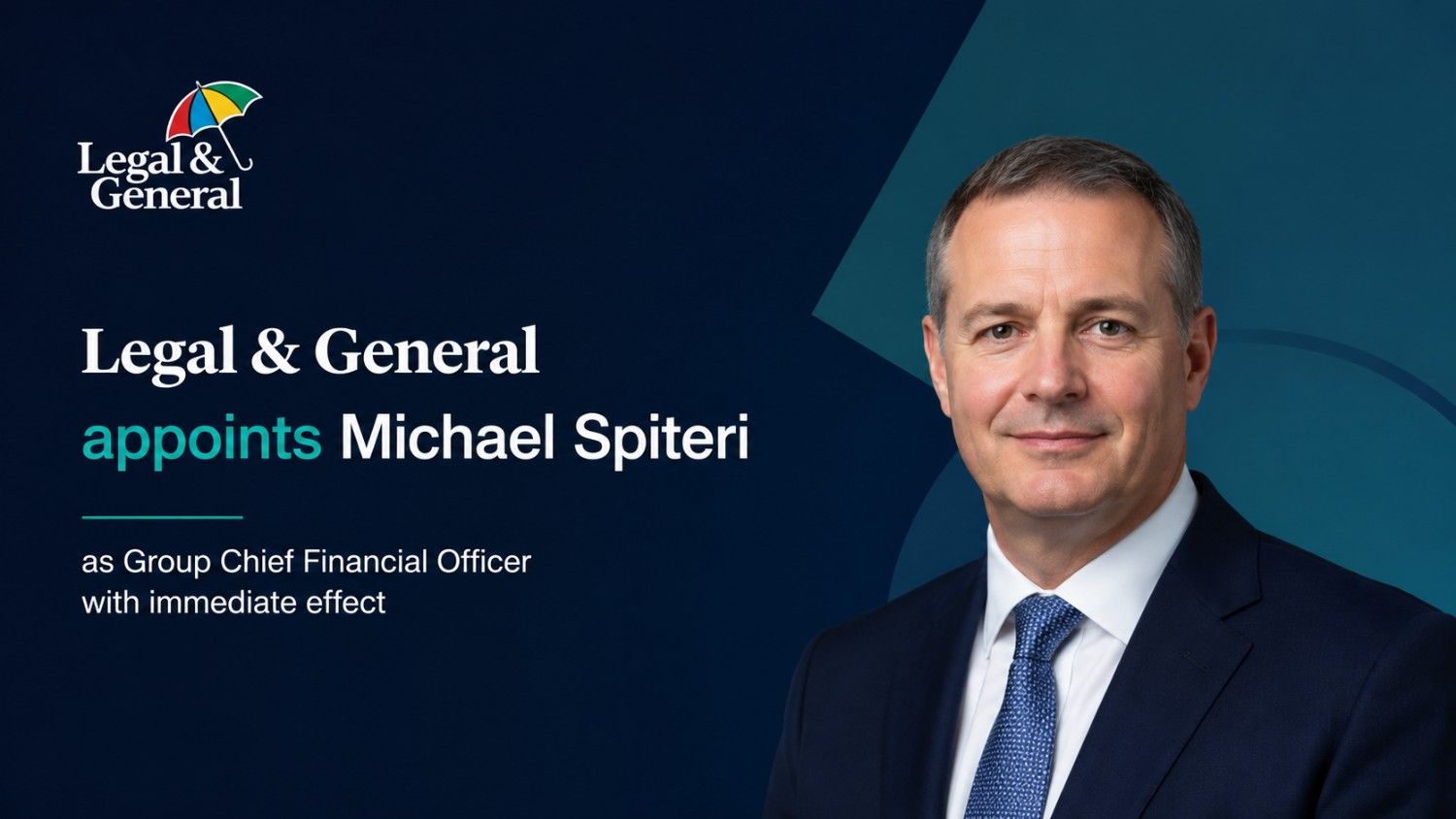
Legal & General has confirmed the Michael Spiteri appointment as the company’s new group chief technology officer.
The leadership move comes as financial institutions continue investing heavily in digital transformation, cloud infrastructure, and technology modernisation.
Moreover, firms across banking, insurance, and wealth management are increasingly strengthening technology leadership teams to improve digital operations and customer services.
As a result, executive technology appointments are becoming more important within the financial services industry.
Furthermore, the latest appointment reflects the growing role of technology in shaping long-term business strategy and operational growth.
Why the Michael Spiteri appointment matters
The Michael Spiteri appointment highlights the rising importance of technology leadership across financial services.
Today, financial companies are rapidly expanding investments in:
- Digital banking systems
- Cloud infrastructure
- Cybersecurity tools
- Data management platforms
Because customer expectations continue changing, financial institutions need stronger digital systems and faster technology development.
Consequently, CTO roles are becoming central to long-term business planning and operational strategy.
Moreover, technology leaders are increasingly responsible for balancing innovation, security, and compliance requirements.
Technology leadership becomes a key priority.
Financial firms globally are focusing more on technology leadership as digital competition intensifies.
Several trends are driving this shift:
- Growth in digital financial services
- Rising cybersecurity risks
- Expansion of cloud computing
- Increased automation
As financial systems become more technology-driven, companies require experienced executives capable of managing large-scale digital operations.
As a result, leadership changes in technology departments are gaining stronger industry attention.
Furthermore, CTOs now play a major role in shaping customer experience and operational efficiency.
Legal & General continues digital transformation efforts
The Michael Spiteri appointment also reflects Legal & General’s broader digital transformation strategy.
Financial services companies today are under pressure to improve:
- Customer digital experiences
- Internal technology systems
- Operational efficiency
- Data security measures
Consequently, many firms are investing heavily in technology modernisation projects.
Moreover, digital platforms are becoming critical for insurance, wealth management, and financial planning services.
As a result, companies are strengthening leadership teams to manage long-term digital growth.
Cloud and digital systems reshape financial services
Technology infrastructure is changing rapidly across the financial industry.
Today, companies are increasingly adopting:
- Cloud-based systems
- AI-powered tools
- Digital customer platforms
- Automated operations
Because digital services now play a central role in finance, technology leaders must oversee both innovation and operational stability.
Consequently, firms are searching for executives with experience in large-scale technology management.
Moreover, strong technology leadership can help financial firms respond faster to market changes and customer needs.
Comparison between traditional and modern financial technology leadership
| Area Traditional | l Technology Focus Modern | n CTO Priorities |
|---|---|---|
| Infrastructure | Internal systems | Cloud-based systems |
| Customer service | Limited digital focus | Digital-first experience |
| Security | Basic protection | Advanced cybersecurity |
| Operations | Manual-heavy | Automation-driven |
| Innovation | Slower updates | Faster digital growth |
This comparison shows how technology leadership roles have expanded across financial services.
Digital transformation remains a major industry trend
The financial sector continues moving toward technology-driven business models.
Many firms are investing in:
- Digital customer onboarding
- Mobile financial services
- Cloud infrastructure
- Data analytics systems
Because competition in digital finance continues to grow, firms must improve speed and efficiency.
As a result, experienced technology leaders are becoming increasingly valuable.
Furthermore, digital transformation is no longer viewed as optional for large financial institutions.
Risks linked to financial technology transformation
Although digital transformation creates many opportunities, it also introduces several risks.
Main challenges include:
- Cybersecurity threats
- System integration issues
- Regulatory compliance demands
- Rising technology costs
Because financial institutions manage sensitive customer data, security and operational resilience remain critical priorities.
Moreover, technology failures can damage customer trust and business performance.
Therefore, companies must carefully manage digital transformation projects and infrastructure upgrades.
Technology leadership impacts customer experience.
Strong technology leadership can directly affect customer satisfaction and business growth.
Modern financial customers increasingly expect:
- Faster digital services
- Secure online platforms
- Smooth mobile experiences
- Real-time support tools
Consequently, CTOs now play a major role in improving customer-facing technology systems.
Moreover, digital innovation can help financial firms compete more effectively in crowded markets.
As a result, leadership decisions around technology strategy are becoming more important than ever.
Future outlook after the Michael Spiteri appointment
The future outlook following the Michael Spiteri appointment will likely focus on continued technology investment and digital growth at Legal & General.
Several industry trends may shape future priorities:
- Expansion of cloud systems
- Greater automation
- Improved cybersecurity tools
- AI-driven financial services
Additionally, financial firms are expected to continue increasing technology spending in the coming years.
As a result, experienced technology executives will remain in high demand across the industry.
Furthermore, digital transformation strategies are expected to become even more important for long-term competitiveness.
Final Thoughts on the Michael Spiteri appointment
The Michael Spiteri appointment as group CTO at Legal & General highlights the growing importance of technology leadership in financial services.
As companies continue modernising operations and improving digital services, experienced technology executives are becoming critical to long-term business success.
Moreover, cloud systems, cybersecurity, and automation are reshaping how financial institutions operate and compete.
Ultimately, strong technology leadership will play a major role in helping firms manage innovation, security, and customer expectations in the years ahead.
Comments
No comments yet. Be the first to share your thoughts.
Leave a comment