
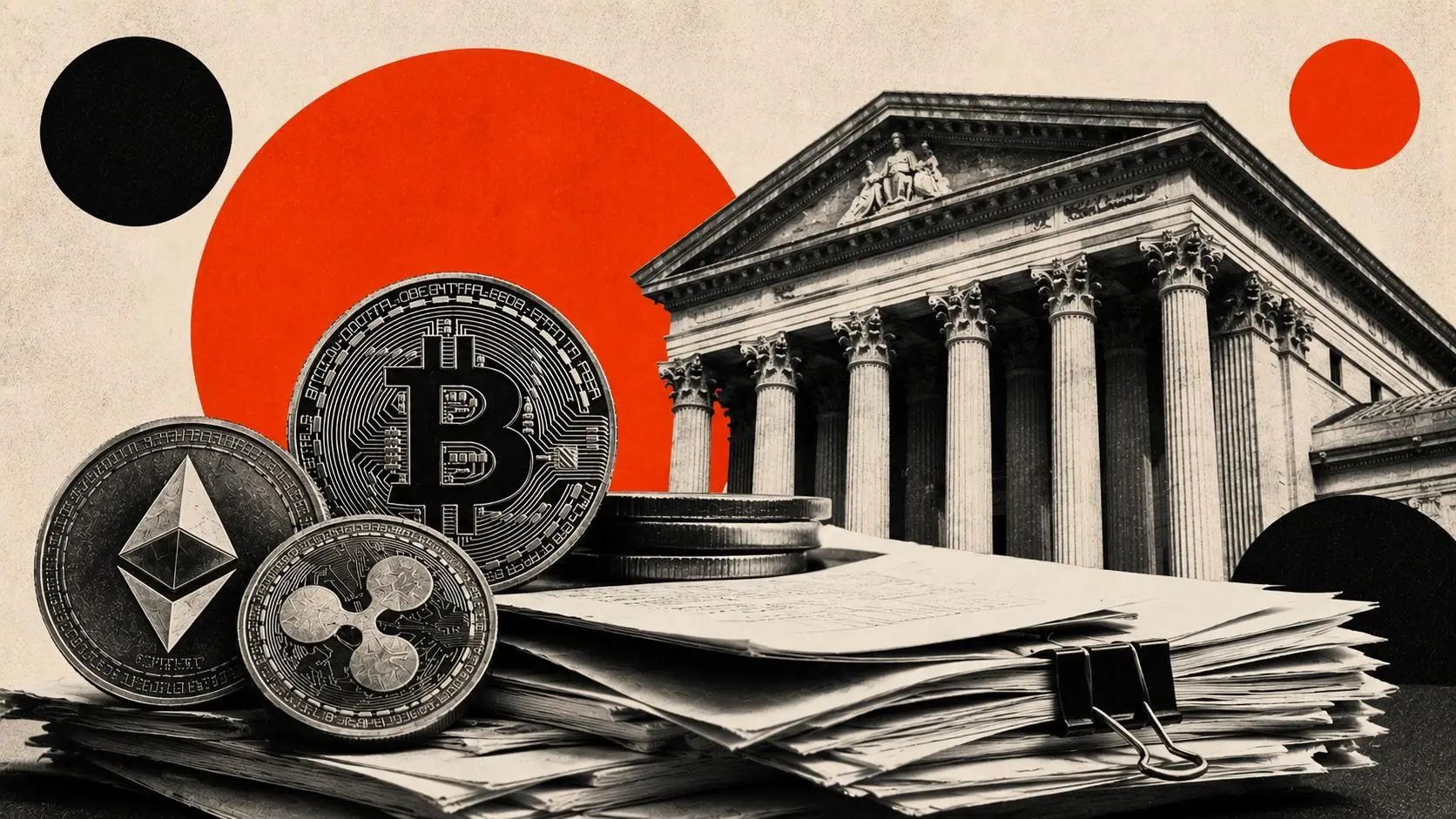
The SEC has given the crypto and traditional finance worlds what they’ve been asking for: a clear legal path to trade tokenised U.S. stocks on-chain. On September 17, 2026, the agency issued what it’s calling an “Innovation Exemption,” a temporary, five-year window of conditional relief for qualifying Tokenized Securities Venues, or TSVs, and certain liquidity providers.
Practically speaking, the order does two things. It carves out qualifying venues from the definition of an “exchange” under the Securities Exchange Act of 1934, and it gives certain liquidity providers—the ones using their own capital in automated market-maker pools—temporary relief from having to register as securities dealers.
The upshot is a defined framework for secondary trading of tokenized National Market System stocks on blockchain infrastructure. That said, it’s not a free-for-all—the SEC attached a fair number of conditions around investor rights, who can access these venues, transparency requirements, and trading volume limits.
SEC Chairman Paul Atkins has framed this as a way to let on-chain trading of certain tokenized stocks happen while the Commission figures out whether it actually needs to change the rules more permanently. The agency’s also asking for public comment on how the exemption should work going forward.
What this actually lets people do
The core of the new framework is letting qualifying TSVs match buyers and sellers through permissioned automated market makers and liquidity pools without tripping the usual exchange registration requirements that would normally kick in for anything performing exchange-like functions.
But this relief has an expiration date. It runs out five years after the order’s publication, giving the SEC time to collect feedback and see how the framework actually performs in practice. Galaxy Research, which dug through the full 60-page order, pegs the window as running from September 17, 2026, to September 17, 2031, assuming everyone stays within the order’s conditions.
So this is really more of a sandbox, a controlled test environment for tokenized equity markets, than any kind of permanent rewrite of U.S. securities law.
Tokenized stocks have to actually act like stocks
One of the SEC’s bigger requirements: a tokenized version of an NMS stock has to give holders the same rights as owning the real thing—economic rights, governance rights, all of it. And a TSV has to actually verify that before it lets the token trade.
That single requirement draws a hard line between this framework and a lot of the tokenized products already floating around that just track a stock’s price without conferring any real ownership. Galaxy Research pointed out that things like SPV interests, synthetic exposure products, and security-based swaps—anything that merely references a stock rather than representing it—don’t qualify here. The exemption is built specifically for tokens that stand in for the actual underlying security and its rights, not price mimics.
That distinction is going to matter a lot as tokenized equity products keep multiplying across both crypto platforms and traditional finance.
Third-party tokenization gets a check-and-balance.
Interestingly, the SEC didn’t limit this to tokens created by the company whose stock is being tokenized; third parties can do it too. But there’s a catch built in for that scenario.
If an unaffiliated third party creates a tokenized version of a company’s stock, the TSV has to give that company written notice and a chance to object before the token goes live for trading. So there’s now a built-in mechanism for a company to push back before someone else starts trading a tokenized version of its shares.
Galaxy Research described this as a middle path, not requiring every tokenized stock to have the issuer’s blessing, but not letting third parties do it completely unchecked either. For financial firms looking at tokenization, that nuance could end up shaping which companies and securities actually make it onto these platforms.
Public blockchain, but access is still gated.
There’s a structural tension the SEC had to resolve here: public, permissionless blockchain infrastructure versus controlled access to securities trading. Their answer was a hybrid.
Smart contracts used by a qualifying TSV have to be auditable, public, and running on a public, permissionless ledger. But who actually gets to participate in trading is still controlled by the venue’s own permissioning rules. Galaxy Research summed it up well: transparent, auditable blockchain infrastructure underneath, with access restrictions layered on top at the pool or asset level.
It’s a way to keep the onchain infrastructure visible and verifiable while still maintaining the kind of access controls regulators expect from securities markets.
There are real limits on volume and trading activity.
This isn’t unlimited trading, either. The SEC capped how many symbols a TSV can support and how much trading volume it can handle, and eligible venues have to publish information about their operations and trading activity.
There’s also a tether-to-reality clause: if trading in the underlying stock gets halted on its primary exchange, the TSV has to halt trading in the tokenized version too. That keeps the on-chain market from drifting away from what’s happening with the actual security.
Beyond that, Galaxy Research flagged a bunch of additional requirements around transaction reporting, operational disclosures, cybersecurity incident reporting, recordkeeping, and market-integrity controls. Notably, the framework blocks certain activities outright, like lending, credit extension, and rehypothecation, within this exempted structure. All of which suggests the SEC is testing the waters here, not throwing out the traditional rulebook.
Liquidity providers get a break too.
The order also addresses liquidity provision specifically. Liquidity providers using their own capital in a TSV’s automated market-maker pools, quoting prices, committing capital, that kind of thing—can get a temporary conditional exemption from having to register as dealers under federal law.
That’s meaningful, because it could let these venues build deeper, more liquid markets without forcing every participating market maker through the full dealer-registration process during this five-year test period. The relief still comes with strings attached, per the order’s conditions.
Why this matters beyond the fine print
Tokenization has been the industry’s pitch for years now—take traditional assets, put them on blockchain rails, and unlock things like longer trading hours, programmable settlement, more transparency, and easier integration with digital financial infrastructure.
Reuters reported that this move could help tie blockchain-based securities more closely to traditional U.S. equity markets while still holding onto the investor protections and market-integrity requirements regulators care about.
The real headline here isn’t “stocks can now be blockchain tokens”; people have been doing versions of that for a while. It’s that the SEC has now laid out an actual legal pathway for certain platforms to run secondary trading of qualifying tokenized NMS stocks under a specific set of rules.
This lands while Congress is stuck on crypto legislation.
The timing here is notable. This announcement came just two days after the Senate failed to advance the CLARITY Act, the big digital-asset market-structure bill that’s been working its way through Congress.
On September 15, the Senate couldn’t get the votes to invoke cloture on the bill, falling short of the 60 needed. Reuters reported the final count as 49-50.
To be clear, that legislative stall isn’t what’s giving the SEC its authority here—the Commission’s order rests on its own existing statutory powers, independent of whatever Congress does or doesn’t pass. But the timing does put two very different approaches side by side: Congress is still hashing out broad digital-asset legislation, while the SEC just goes ahead and uses the authority it already has to build a narrower, targeted framework.
What comes next
From here, the ball’s mostly in the market’s court. Would-be operators need to actually meet the SEC’s conditions, build out permissioned trading environments, handle the required disclosures, and prove their tokenized securities genuinely preserve the rights tied to the underlying stock.
The SEC’s also collecting public comment, which gives issuers, exchanges, investors, and other stakeholders a chance to weigh in on how the framework is working and whether it needs adjusting.
This five-year stretch is shaping up to be a real testing ground for blockchain-based equity markets—not a replacement for traditional exchanges overnight, but a bounded space where tokenized trading venues get to prove the concept under defined rules.
For U.S. capital markets right now, the immediate change is simple: permission to experiment. What it actually means long-term depends on how issuers, banks, trading platforms, and investors put that permission to use and what the SEC decides to do with what it learns along the way.
Comments
No comments yet. Be the first to share your thoughts.
Leave a comment