
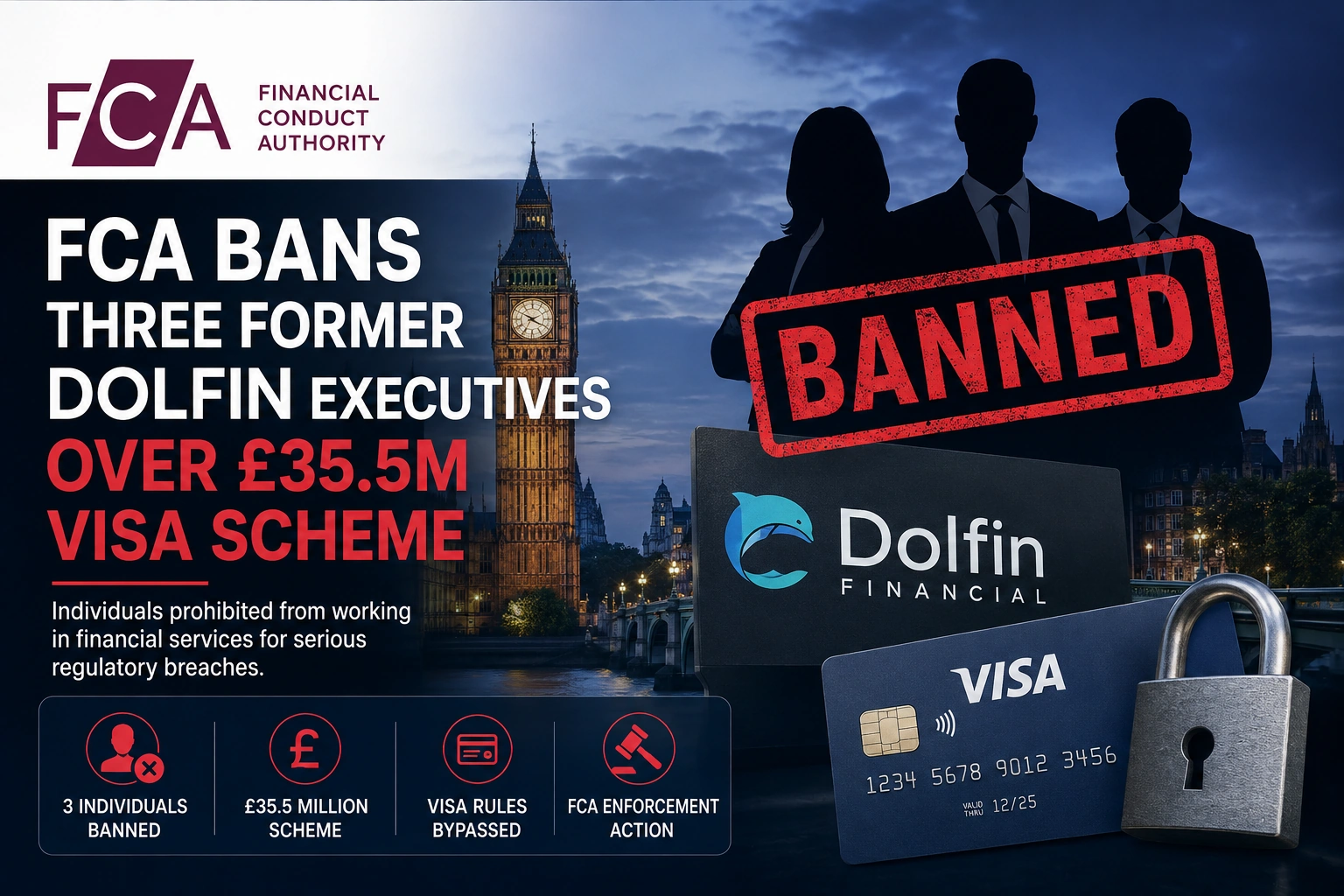
FCA bans Dolfin trio over £35.5m visa scheme
The Dolfin visa scheme has led the UK Financial Conduct Authority (FCA) to take action against three former senior figures at Dolfin Financial (UK) Ltd after finding that the firm helped clients bypass investor visa rules.
Former chief executive Denisz Nagy was fined £324,800, while former finance director Sanjay Maraj was fined £122,000. Both men have also been banned from performing regulated financial services functions.
The FCA has separately issued a prohibition Decision Notice against Dolfin co-founder Roman Joukovski. However, Joukovski has referred the matter to the Upper Tribunal, meaning the FCA’s findings against him remain provisional.
UK investor visa scheme faced deliberate abuse
The UK investor visa scheme at the center of the case operated between 2016 and 2019.
According to the FCA, most clients paid a £400,000 fee instead of investing £2 million of their own money in UK companies, as required under the Home Office rules at the time.
The regulator said the arrangement was designed to create a false impression that clients had met the investment requirement.
The scheme helped at least 99 people obtain investor visas and generated at least £35.5 million in fees for businesses connected to Dolfin and immigration agents that referred clients.
Dolfin Financial executives played different roles
The FCA found that Nagy and Joukovski played leading roles in creating and running the arrangement, while Maraj handled its financial side after it had been established.
The regulator also said Nagy and Maraj deliberately concealed the true nature of the arrangement from both the FCA and the Home Office.
In Joukovski’s case, the FCA said he concealed his involvement with Dolfin and his role in the arrangement. It also found that he acted as a shadow director without FCA approval and was a controller of the firm without notifying the regulator.
Visa rule breach raises financial conduct concerns
The visa rule breach has raised wider questions about integrity and governance within financial services.
The FCA said all three individuals were found to lack integrity and were not fit and proper to work in financial services.
Therese Chambers, the FCA’s joint executive director of enforcement and market oversight, said the regulator would continue taking action against people who undermine trust in UK financial services.
The case shows how financial firms can face serious regulatory consequences when their services are used to circumvent rules designed to support genuine investment.
FCA had previously restricted Dolfin
The latest enforcement action follows earlier regulatory intervention against Dolfin Financial.
On March 12, 2021, the FCA imposed restrictions preventing Dolfin from carrying out regulated activities. The regulator cited several concerns, including the operation of the investor visa funding arrangement.
Dolfin later entered special administration in June 2021, with insolvency proceedings still ongoing.
Comparison of regulatory actions
Individual FCA Action Status
Denisz Nagy £324,800 fine and prohibition Settled
Sanjay Maraj £122,000 fine and prohibition Settled
Roman Joukovski Prohibition Decision Notice Referred to Upper Tribunal
Nagy and Maraj agreed to settle and received a 30% discount on their penalties. Without the discount, their fines would have been £464,000 and £174,300 respectively.
Investor visa route later closed
The investor visa controversy also comes against the backdrop of wider changes to Britain’s immigration system.
The Home Office closed the Tier 1 investor visa route to new applicants on February 17, 2022.
The FCA also said the Home Office had taken action against many clients who used the arrangement by refusing applications for leave to remain and indefinite leave to remain.
FCA strengthens financial services enforcement
The case highlights the FCA’s wider focus on integrity, financial crime controls, and governance.
The regulator continues to use fines, prohibition orders, and other enforcement measures against individuals and firms that fail to meet required standards.
For financial firms, the action also underlines the importance of accurate disclosures, effective oversight, and clear separation between legitimate financial services and arrangements designed to circumvent regulatory or government rules.
Future outlook for the Dolfin visa scheme case
The regulatory consequences are likely to continue attracting attention, particularly because Joukovski’s case has been referred to the Upper Tribunal.
The Tribunal will determine the outcome of that reference, and its decision will be made public on its website. Until then, the findings and proposed action in Joukovski’s Decision Notice remain provisional.
Meanwhile, the fines and prohibitions against Nagy and Maraj represent completed FCA enforcement action.
Final Thoughts
The Dolfin visa scheme case highlights the FCA’s continued focus on integrity and accountability in financial services.
The regulator found that an arrangement linked to Dolfin helped at least 99 individuals obtain investor visas without making the required £2 million investment, while generating at least £35.5 million in fees.
The case also shows why regulatory transparency and proper oversight remain critical for financial firms operating in sensitive areas involving investment and immigration.
FCA bans trio behind £35.5m scheme designed to bypass visa rules
Comments
No comments yet. Be the first to share your thoughts.
Leave a comment