
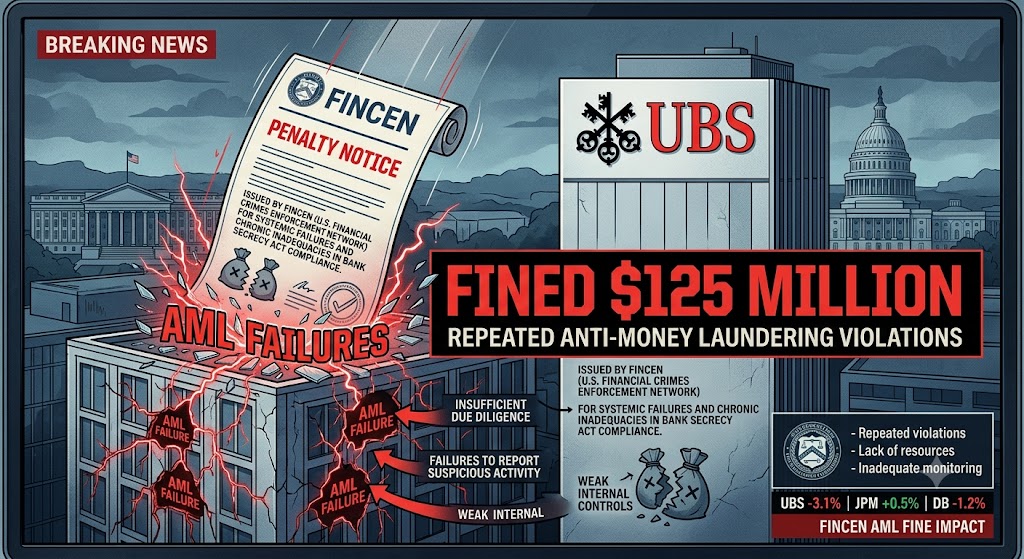
FinCEN Fines UBS $125 Million Over Repeated Anti-Money Laundering Failures
The U.S. Treasurys Financial Crimes Enforcement Network, also known as FinCEN has ordered UBS Financial Services to pay a fine of 125 million dollars. This is the fine ever given to a broker-dealer for not following the Bank Secrecy Act.
The bigger issue was that regulators had seen this before
FinCEN found out that UBS did not have a system in place to stop money laundering. The problems that FinCEN found were not new. In fact they were the problems that were found in 2018.. Ubs did not fix these problems and that is why the fine is so big.
More than $10 billion in transactions came under scrutiny
What went wrong at UBS is that the companies system for detecting and reporting activity was not good enough. UBS failed to report suspicious activities to the authorities. The company also did not keep an eye on more than 50,000 foreign currency transfers that were worth over 10 billion dollars.
Banks and broker-dealers are supposed to have systems that can detect patterns and report them to the authorities.. Ubss system was not good enough. The regulators found out that UBSs system for monitoring transactions and reporting activity was not working well.
The settlement involved several regulators
The settlement was not just handled by FinCEN. Other regulatory agencies like the Securities and Exchange Commission, the Commodity Futures Trading Commission and the Financial Industry Regulatory Authority were also involved. This shows that regulatory agencies are working together to make sure that big institutions follow the rules.
UBS says it has strengthened its controls
UBS said that it cooperated fully with the investigation and has made investments in its compliance systems. The company has improved its system for monitoring transactions. Has dedicated more resources to preventing financial crimes. UBS has also spent a lot of money on technology to detect activity and improve regulatory reporting.
Why this matters beyond one bank
This case is important because it shows that institutions that do not fix their compliance weaknesses will face consequences. The fine of 125 million dollars is a signal to the industry that compliance weaknesses must be taken seriously. Institutions that handle volumes of cross-border transactions will be watched closely by regulators.
A warning the industry is unlikely to ignore
For people who’re, in charge of compliance the UBS case is a big deal. It shows that regulators expect institutions to fix their problems once they are found. Just saying that you know about the problems is not enough. You have to fix them.
Comments
No comments yet. Be the first to share your thoughts.
Leave a comment