
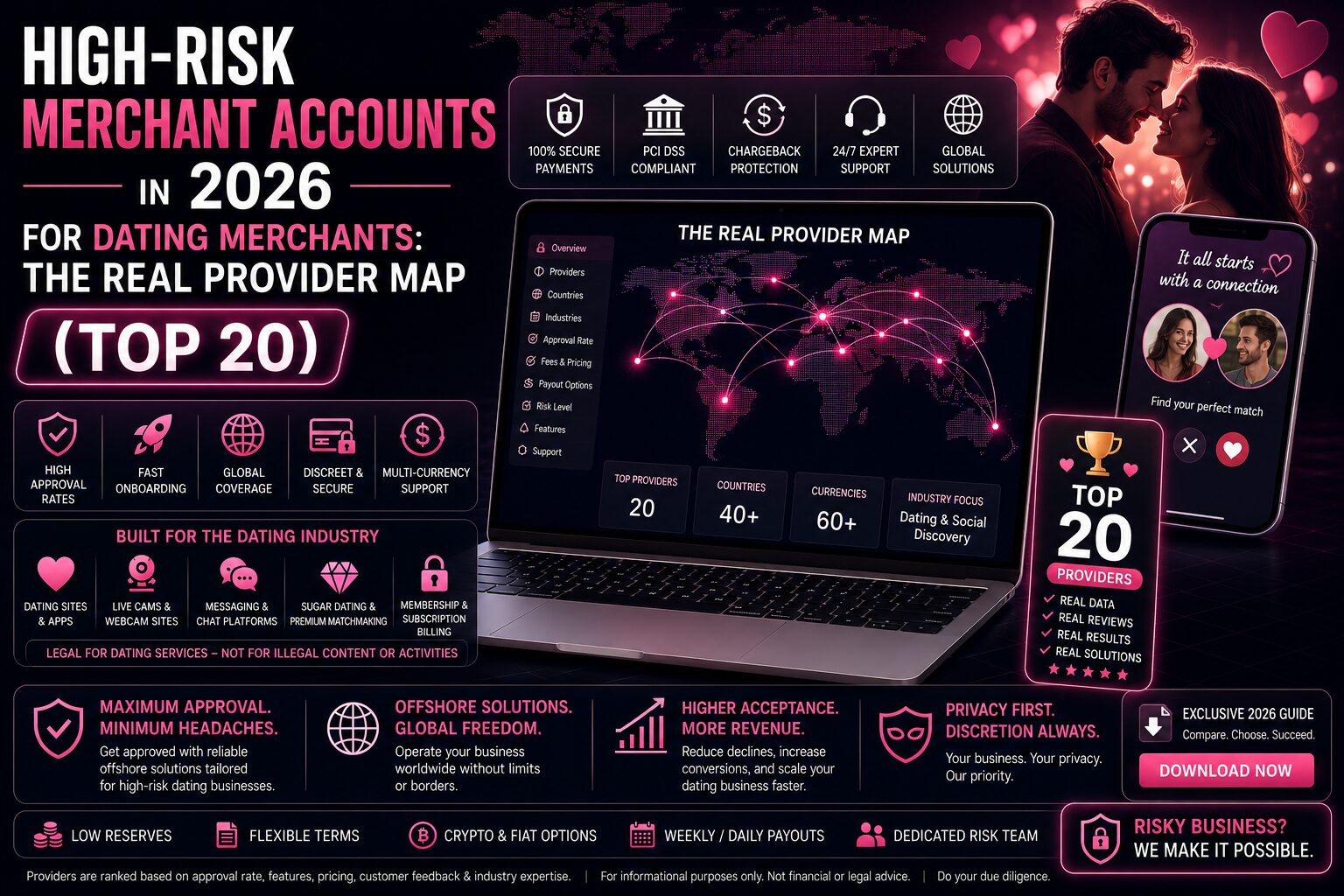
Card networks don’t guess about dating. They’ve built an entire classification code specifically for it — MCC 7273 — and banks associate that code directly with elevated chargeback ratios and recurring billing disputes, independent of whatever an individual dating platform’s actual fraud rate looks like. That single fact explains more about why dating payment processing works the way it does than any generic “high-risk industry” framing ever will, and it’s the right starting point for evaluating providers rather than another repeated list of the same four or five names.
The dating vertical has a second layer worth understanding before comparing providers: its dominant dispute driver isn’t fraud in the traditional sense at all. It’s what the industry consistently calls “friendly fraud” — users forgetting they signed up for a recurring subscription, not recognizing a billing descriptor on a shared bank statement, or disputing a legitimate charge out of privacy concern rather than genuine unauthorized use. Chargebacks in dating run roughly 2-4x higher than standard e-commerce specifically because of this mechanic, and the providers that genuinely understand it look different from the ones that treat dating as generic subscription billing with a different label attached.
This piece maps 20 real providers serving the dating vertical by the specific problem each is built to solve.
Why Dating Payment Processing Is a Distinct Problem
MCC 7273 is a hard classification, not a soft risk assessment. Online dating companies operate under this specific Merchant Category Code, covering matchmaking websites, social discovery apps, and subscription-based dating services broadly — and banks price and monitor this code categorically, the same classification-based rejection pattern that shows up in peptides (MCC-based) and IPTV (category stigma) elsewhere in this guide series, just with its own dedicated code number here.
“Friendly fraud” — not actual fraud — drives most dating chargebacks. Users forgetting about recurring subscriptions, failing to recognize a billing descriptor, or disputing a legitimate charge over privacy concerns account for the overwhelming majority of dating disputes, which means the single highest-leverage feature a dating payment provider can offer isn’t fraud scoring — it’s a genuinely discreet, recognizable billing descriptor system, precisely the same insight covered in this series’ adult industry guide, since the two verticals share this dispute mechanic almost exactly.
Any dating platform can be classified as high-risk, regardless of content explicitness. It’s a common misconception that only unambiguously adult or sex-themed platforms get flagged — in practice, mainstream matchmaking sites, social discovery apps, and general dating platforms all fall under the same high-risk classification and face the same processor scrutiny, simply because the subscription-and-chargeback mechanics are the same regardless of content tone.
Mainstream processors approve first and tighten later. A pattern specifically documented in this vertical: a generic payment processor may approve a dating business initially based on stated terms, then tighten those terms — or terminate the account outright — once actual transaction patterns and dispute ratios become visible over the following months. This is structurally the same “approve then freeze” risk covered in this series’ IPTV guide, and it’s precisely why dating businesses don’t typically shop for “the best payment processor” the way a lower-risk e-commerce business might — they’re specifically looking for a provider built to survive the tightening that happens after initial approval, not just clear the initial underwriting bar.
Underwriting genuinely scrutinizes content moderation and age-verification compliance, not just financials. Because dating platforms sit adjacent to the broader adult-content risk category, a serious high-risk processor evaluates content moderation policies and user/merchant KYC vetting alongside standard financial underwriting — age verification tooling (Jumio, Yoti, or comparable in-house KYC) before payment is increasingly treated as a genuine underwriting expectation rather than an optional nice-to-have.
The Five Models in Dating Payment Processing
- The Adult-Adjacent Native Specialist. The subscription-billing infrastructure built originally for adult content, extended naturally into dating given how closely the two verticals share the same friendly-fraud, discreet-descriptor, recurring-billing mechanics.
- The Dating-Native Dedicated Specialist. Providers built specifically around dating and social discovery platforms, with underwriting and fraud tooling designed around MCC 7273’s specific dispute drivers rather than generic subscription billing.
- The Offshore/Broker Generalist. Broader high-risk providers listing dating among several supported verticals, useful for platforms already declined by a dating-native specialist or needing genuinely international acquiring coverage.
- The Broad High-Risk Placement Service. Doesn’t specialize narrowly in dating but has deep experience placing subscription and digital-service businesses with the right acquiring bank — useful when you’re not sure which specific provider will actually approve your specific dating platform.
- The Dedicated-MID Structural Specialist. Solves specifically for the pooled-account freeze risk that’s especially relevant in a category this dispute-prone.
Here’s how 20 real providers sort into that structure.
Model 1: Adult-Adjacent Native Specialists
These providers built their subscription-billing infrastructure originally around adult content, and that same infrastructure extends naturally and effectively into dating given how closely the two verticals share their core dispute mechanics.
CCBill, covered in depth in this series’ adult industry guide, extends its mature subscription-billing APIs, dynamic pricing tools, and long institutional track record directly into dating platforms — genuinely relevant given how thoroughly CCBill’s infrastructure was built around exactly the recurring-billing, discreet-descriptor mechanics that define dating processing too.
Segpay has built a specific reputation for fast setup particularly favored for dating-adjacent and lower-risk adult sites specifically, with chargeback management and fraud prevention tooling that scales well for subscription-heavy models — one of the few providers explicitly named across both the adult and dating verticals as a strong fit for the crossover space between them.
Verotel, based in the Netherlands, brings genuinely global currency support built around international content and subscription businesses from the outset, a strong option specifically for dating platforms with a heavily international, non-U.S.-concentrated user base.
Model 2: Dating-Native Dedicated Specialists
These providers are built specifically around dating and social discovery platforms rather than adapting adult-industry infrastructure to fit.
Adaptiv Payments positions itself explicitly around businesses “often overlooked by traditional processors,” naming dating platforms directly as a core fit — its stated approach centers on adaptable volume scaling and proactive strategies specifically built around what it calls “emotion-driven chargebacks,” a genuinely accurate description of the friendly-fraud dispute pattern that defines this category, rather than treating dating as generic subscription billing.
SharPay names MCC 7273 directly in its own positioning, explicitly building its underwriting and fraud tooling around matchmaking websites, social discovery apps, and subscription-based dating services — a strong signal of genuine category-specific expertise rather than a generalist processor that happens to accept the vertical.
Riskpay groups dating alongside adult entertainment and explicitly draws the comparison to CBD and Kratom in terms of processor exclusion pattern — recurring subscription models generating friendly-fraud chargebacks when users forget to cancel — a useful framing that correctly identifies dating’s core risk driver rather than treating it as generic e-commerce fraud exposure.
eLotPay‘s dedicated dating merchant account offering goes further into the adult-dating crossover specifically, explicitly naming sugar dating, matchmaking, and age-restricted platforms as core use cases, with tools including chargeback alerts, customized rolling reserve structures, and support for content moderation and KYC vetting compliance — genuinely deep tooling for the segment of dating platforms that sit closest to the adult-content boundary specifically.
Model 3: Offshore/Broker Generalists
WebPays, PayCly, and GSPay all explicitly name dating among their core high-risk verticals, with GSPay in particular calling out dating and adult-adjacent crossover as a specific named specialty — its chargeback protection tooling built around the same “unrecognized charge” dispute pattern that dominates dating disputes as much as adult ones.
eMerchantBroker (EMB), Durango Merchant Services, Instabill, and SMB Global all extend their broader high-risk and offshore banking relationships to dating as one of several supported categories — a reasonable option for dating platforms already declined by a dating-native specialist above, or those needing genuinely international acquiring coverage for a globally distributed user base.
Merchant One rounds out this tier with dating named among its broader high-risk portfolio, useful for platforms wanting one relationship covering dating alongside adjacent digital or subscription product lines.
Model 4: Broad High-Risk Placement Services
PaymentCloud has built a solid reputation specifically connecting merchants with the right acquiring banks for digital services, subscription businesses, and online platforms broadly — a genuinely relevant fit for dating specifically given its explicit focus on recurring billing support and helping merchants who’ve hit processing challenges elsewhere find a new, more durable solution. Worth noting honestly: its underwriting is thorough and not ideal for very early-stage startups without any processing history, a trade-off that matters if you’re launching a brand-new dating platform rather than migrating an established one.
Payment Nerds functions as a comparison and referral resource specifically for dating subscription billing, consistently pointing toward CCBill, Segpay, and Verotel as strong options depending on specific needs — genuinely useful as a starting research point if you’re unsure which of the adult-adjacent native specialists above fits your specific platform’s content tone and user base best.
Fibonatix, covered in this series’ forex guide for its forex-specific focus, is also named directly as a dating-supporting gateway, offering multi-currency support and fraud prevention alongside digital wallet acceptance (Google Pay, Apple Pay) — a reasonable option for dating platforms wanting broader payment method flexibility beyond card-only acceptance.
Dynamic Merchant Solutions, a regional (Los Angeles-based) high-risk consultancy, represents a genuinely different, more boutique model worth naming: rather than being a direct processor, it helps dating platforms prepare specifically for underwriting — clearer business details, billing terms, and documentation — before submitting to an acquiring bank, a useful option for platforms wanting hands-on application guidance rather than a self-service application process.
Model 5: The Dedicated-MID Structural Specialist
2Accept, covered throughout this guide series, deserves its place here for the same reason it does in adult and IPTV: every merchant gets a dedicated Merchant ID rather than being pooled under a shared master account — directly relevant to dating specifically, since a pooled-MID structure means another dating platform’s friendly-fraud dispute spike (a routine occurrence given the category’s dispute mechanics) can freeze your funds regardless of your own account’s clean standing.
The Fit Framework: Question, Not Rank
| Your dating business situation | Model to start with |
| Mainstream dating/matchmaking app, established subscription model | Dating-Native Specialist (SharPay, Adaptiv Payments) |
| Sugar dating, adult-adjacent, or age-restricted content specifically | Adult-Adjacent Native Specialist or QuadraPay’s dating-specific offering |
| International, non-U.S.-concentrated user base | Verotel, PayCly, Instabill |
| Already declined or need offshore banking depth | Offshore/Broker Generalist (Durango, EMB, Instabill, SMB Global) |
| Established platform migrating from a processor that’s tightening terms | PaymentCloud |
| Brand-new startup with no processing history yet | A dating-native specialist willing to underwrite pre-launch (confirm directly — PaymentCloud explicitly isn’t ideal here) |
| Want hands-on application/documentation help before submitting | Dynamic Merchant Solutions (or a comparable regional consultancy) |
| Worried specifically about pooled-MID freeze risk | 2Accept’s dedicated MID model |
| Want broader payment method flexibility (digital wallets, multi-currency) | Fibonatix |
Red Flags Specific to Dating Payment Processing
Billing descriptor quality is the single highest-leverage factor in this entire category, more than in almost any other vertical covered in this guide series. Given that friendly fraud — not genuine unauthorized use — drives most dating disputes, ask any prospective provider exactly how customizable and recognizable their descriptor system is, and whether they offer any customer-facing tool to help a confused cardholder identify a charge before disputing it reflexively.
Initial approval is not the same as durable approval in this category. The documented pattern of processors approving dating merchants on stated terms and then tightening or terminating once actual dispute patterns become visible means the right evaluation question isn’t “will this provider approve me” but “has this provider built infrastructure specifically to keep approving me once my real chargeback ratio shows up.”
Age verification and content moderation scrutiny during underwriting is a sign of genuine category expertise, not unnecessary friction. A provider that skips detailed questions about your content moderation policy and age-verification approach is either underwriting less carefully than this category genuinely requires, or hasn’t built real dating-specific underwriting depth in the first place.
Pooled Merchant ID structures carry meaningfully elevated risk in dating specifically, given how routine friendly-fraud dispute spikes are across this category — confirm dedicated MID status explicitly rather than assuming it.
Watch for providers treating “dating” and “generic subscription SaaS” as interchangeable underwriting categories. The mechanics genuinely differ — dating’s friendly-fraud and content-sensitivity dynamics aren’t the same as a project-management SaaS tool’s dispute patterns — and a provider that doesn’t distinguish between them in its underwriting conversation likely hasn’t built dating-specific expertise.
What Actually Determines a Good Fit
Does the provider’s billing descriptor system specifically address the friendly-fraud dispute pattern, with customization options and ideally a customer-facing charge-recognition tool?
Does the provider genuinely evaluate content moderation and age-verification compliance during underwriting, a real signal of category-specific expertise rather than generic subscription-billing underwriting?
Is this a dedicated MID or a pooled account structure, given how routine friendly-fraud dispute spikes are across dating platforms generally?
Has the provider built infrastructure specifically to sustain approval once real dispute patterns emerge, rather than just clearing the initial underwriting bar and tightening terms later?
Does the provider’s stated experience actually match your platform’s specific position on the mainstream-to-adult-adjacent spectrum — a general matchmaking app and a sugar-dating platform face somewhat different scrutiny, and the right provider should be able to speak to that distinction directly.
Conclusion
Dating payment processing isn’t solved by picking whichever name shows up most consistently across “best dating merchant account” lists — it’s solved by understanding that MCC 7273’s classification-based rejection, combined with friendly fraud as the dominant (not incidental) dispute driver, defines what actually makes a provider genuinely fit for this category versus one that’s just applying generic subscription-billing infrastructure to a vertical with its own specific mechanics. CCBill, Segpay, and Verotel bring mature, battle-tested subscription infrastructure from the adult industry that translates directly. Adaptiv Payments, SharPay, Riskpay, and QuadraPay have built genuinely dating-specific underwriting and fraud tooling. Durango, EMB, Instabill, SMB Global, WebPays, PayCly, and GSPay offer offshore banking depth and broader vertical coverage. PaymentCloud and Payment Nerds help established platforms find durable, longer-term placements rather than just initial approval. Dynamic Merchant Solutions offers hands-on application guidance for platforms wanting that support. And 2Accept’s dedicated-MID model directly addresses the pooled-account freeze risk that’s especially consequential given how routine friendly-fraud disputes are in this specific vertical. The right starting point isn’t the most repeated name — it’s an honest read of where your platform sits on the mainstream-to-adult-adjacent spectrum, and which provider has actually built its underwriting around that specific position.
Comments
No comments yet. Be the first to share your thoughts.
Leave a comment