
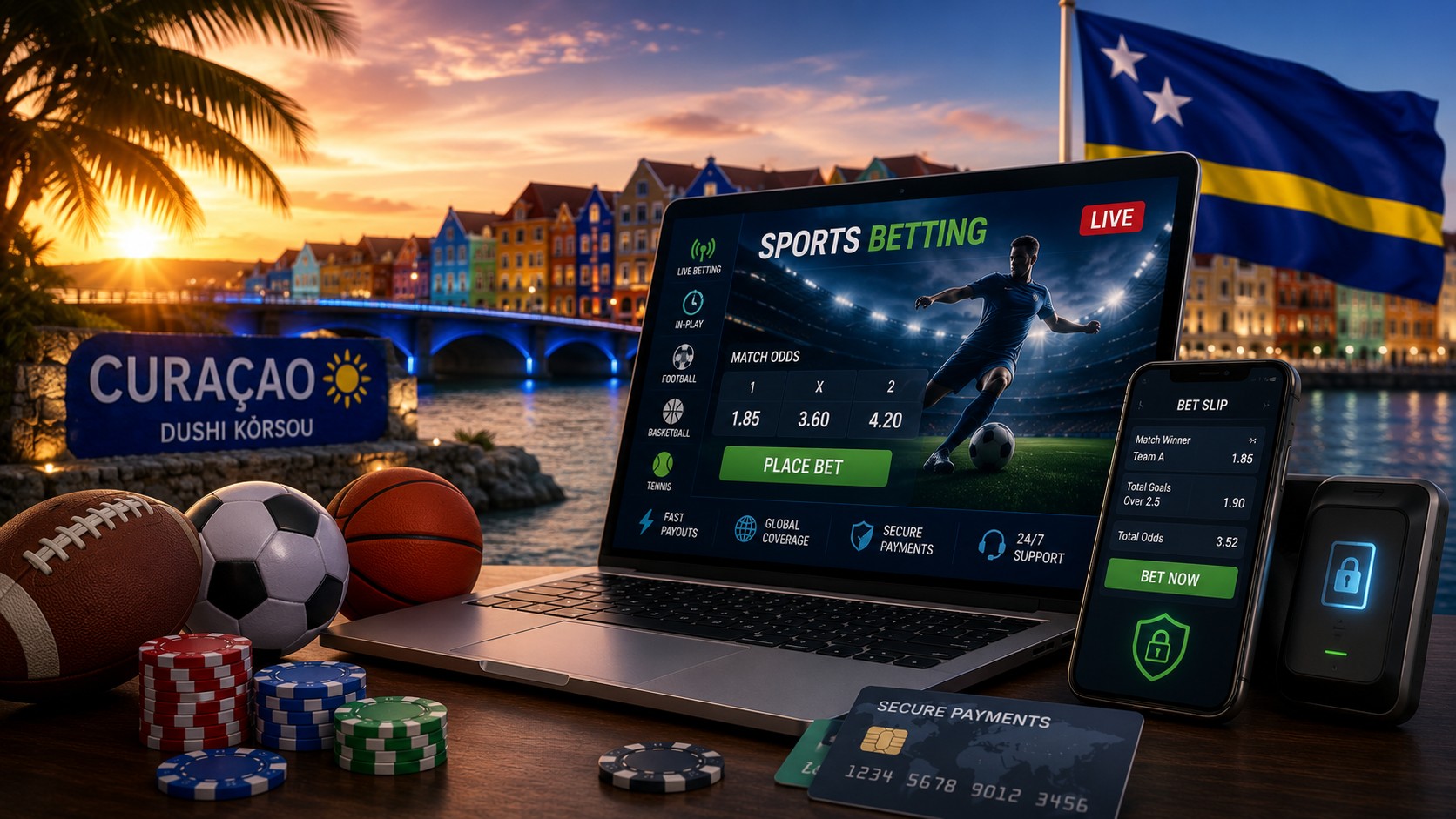
Curaçao just went through the most significant regulatory transformation in its gambling history. The old master-and-sub-license system — the one that made Curaçao famous as the fastest, cheapest gambling license in the world — was fully abolished under the National Ordinance on Games of Chance (LOK), with the Curaçao Gaming Authority now issuing licenses directly and requiring genuine local physical substance as of January 2026. But here’s the detail every operator needs to understand before choosing a payment provider: even after this reform, Visa and Mastercard continue to treat Curaçao gaming merchants as high-risk, and European acquiring banks remain cautious. Crypto payment rails and specialist high-risk EMIs (Electronic Money Institutions) remain the primary payment infrastructure for most CGA-licensed operators — not a backup option, the actual main path. This guide ranks the top 10 merchant account providers for Curaçao sports betting operators in 2026, built around that reality.
Why Curaçao Sports Betting Payment Processing Looks Different Now
The old master license era is genuinely over, and the sub-licenses it produced expired in January 2025. Operators like Stake, Cloudbet, and BC.Game hold new direct CGA licenses; anyone who didn’t transition lost the ability to operate legally from Curaçao. This matters directly for payment providers, since a “Curaçao license” claim now needs to specifically mean a current CGA B2C license, not a legacy sub-license from the old four master license holders.
Local physical substance is now mandatory, not optional — and it’s a real operational cost, not a formality. From January 2026, genuine local substance means an actual office, staff, and a resident managing director who genuinely manages from the island — for operators who previously treated Curaçao as a pure paper structure, this is a material new cost that also changes what documentation a payment provider will expect to see during underwriting.
A single unified license covers all game types, a genuine operational advantage for sportsbooks specifically. Unlike jurisdictions requiring separate licenses for casino, poker, and sports betting, Curaçao’s license covers everything under one framework — you can launch with a sportsbook and add casino games later with no new permits and no prior regulator review of individual games, a meaningfully faster path than Malta’s more segmented Type 1-4 structure.
Card network scrutiny hasn’t gone away just because the licensing framework improved. This is the single most important fact for sportsbook operators specifically: despite the LOK reform’s genuine credibility improvements, Visa and Mastercard still classify Curaçao gaming merchants as high-risk, and mainstream European banks remain cautious about the jurisdiction’s residual reputational baggage from the old, less-regulated sub-license era.
A functioning Curaçao sportsbook payment stack typically requires five distinct components, not just one processor relationship. The company itself (Curaçao-registered), a high-risk-capable bank account, a merchant account or PSP relationship built specifically for iGaming, an associated EMI account that channels PSP transactions, and often a holding company structure somewhere in the EU banking domain to legally control the financial accounts. Understanding this multi-layer structure matters before evaluating any single provider in isolation.
Data localization requirements now directly affect operational infrastructure, indirectly affecting payment integration timelines. Licensed platforms must place a physical server in a Tier-IV certified Curaçao data center, with weekly data synchronization and a mandatory three-year retention period the CGA can access directly for compliance auditing — payment providers integrating with your platform need to work within this infrastructure requirement.
The Top 10 Merchant Account Providers for Curaçao Sports Betting
- WebPays
WebPays offers dedicated gambling merchant account infrastructure with a stated focus on preventing payment freezes — directly relevant given Curaçao operators’ continued elevated card-network scrutiny even post-LOK reform.
Strengths: Genuine gambling-vertical specialization; transparent published reserve and approval-timeline terms; explicit focus on long-term account stability rather than just initial approval, valuable given how actively card networks monitor this category.
Weaknesses: Curaçao/LOK-specific regulatory documentation isn’t distinctly highlighted from its broader gambling coverage; final terms require direct engagement.
- Inquid
Inquid explicitly names Casino & Betting among its core industries, with MID cascading technology built to switch merchant IDs automatically and improve approval rates — genuinely valuable given how elevated decline rates run for Curaçao-licensed sportsbooks specifically.
Strengths: Explicit sportsbook/casino vertical specialization; MID cascading directly addresses the higher decline rates Curaçao operators face from cautious card issuers; supports crypto payment processing alongside traditional cards, relevant given how central crypto rails are to this specific market.
Weaknesses: Independent long-term track record is less established than legacy offshore gambling specialists; specific CGA/LOK compliance documentation isn’t separately called out.
- eLotPay
eLotPay’s hybrid card-and-crypto settlement model is arguably the single most structurally relevant provider type for Curaçao sportsbooks specifically, given that crypto rails are described as the primary — not secondary — payment infrastructure for most CGA-licensed operators.
Strengths: Genuine dual-rail flexibility matching exactly how Curaçao operators actually need to be built — crypto-first with card acceptance layered on; automatic stablecoin/local-currency conversion reduces volatility exposure compared to pure crypto acceptance; directly relevant to Curaçao’s documented operator base, which skews toward crypto-native casino and sportsbook operations.
Weaknesses: As with any crypto-forward provider, genuine compliance depth (KYC, AML aligned with FATF standards CGA now requires) deserves independent verification; less specifically CGA-license-aware than dedicated Curaçao gaming-license consultancies.
- NOWPayments
NOWPayments offers pure crypto acceptance, directly relevant given how many CGA-licensed sportsbooks operate as genuinely crypto-native businesses from the outset rather than adding crypto as a secondary option.
Strengths: Broad cryptocurrency support matching the crypto-first reality of the Curaçao operator base; straightforward API integration; relevant for sportsbooks whose player base is concentrated in crypto-comfortable markets.
Weaknesses: Doesn’t solve fiat/card acceptance on its own — Curaçao sportsbooks generally need this alongside, not instead of, card processing infrastructure; less useful for operators specifically targeting markets with lower crypto adoption.
- Amald
Amald’s dedicated MID structure and international merchant account infrastructure are relevant to Curaçao sportsbooks needing genuine account isolation given the category’s elevated card-network scrutiny.
Strengths: Explicit dedicated MID offering, reducing exposure to pooled-aggregator freeze risk; PCI-DSS compliant gateway infrastructure; broad acquiring bank network relevant to operators needing redundancy.
Weaknesses: Less Curaçao/LOK-specific positioning than dedicated gambling-jurisdiction consultancies; smaller documented enterprise case study base.
- Instabill
Instabill’s genuinely international acquiring relationships across Europe, Asia, and Latin America are directly relevant given that Curaçao is specifically noted as well-suited to operators targeting growth markets in Latin America, Asia, and Africa.
Strengths: Long institutional track record in offshore gambling placement specifically; multi-region acquiring depth matching Curaçao’s actual target market profile; established relationship network provides genuine redundancy value.
Weaknesses: Less CGA/LOK-specific regulatory depth than specialized gaming-license consultancies; settlement timelines generally trail EU-domestic-focused alternatives.
- eMerchantBroker (EMB)
EMB’s broad acquiring network covering gambling alongside forex and crypto-adjacent categories is relevant for Curaçao operators running mixed revenue models — sportsbook alongside affiliate or crypto-exchange-adjacent business lines.
Strengths: Broad multi-vertical acquiring flexibility, useful for operators with diversified revenue beyond pure sports betting; established reputation across multiple high-risk categories provides comparative underwriting context.
Weaknesses: Not specifically Curaçao/LOK-focused; pricing and reserve terms require direct negotiation.
- PayCly
PayCly’s multi-currency infrastructure across 100+ currencies suits Curaçao sportsbooks with genuinely international player bases, particularly relevant given the jurisdiction’s strong recognition in Latin American and Asian markets specifically.
Strengths: Strong multi-currency settlement capability matching Curaçao’s international target markets; streamlined onboarding; broad currency support reduces unnecessary conversion exposure.
Weaknesses: Less gambling-native than dedicated sportsbook specialists; limited public pricing transparency.
- Durango Merchant Services
Durango’s decades of offshore banking relationships and specialization in hardest-to-place merchants are relevant for Curaçao operators, particularly those transitioning from the old sub-license system or needing MATCH-list recovery.
Strengths: Genuine specialization in difficult-to-place merchants, useful for operators whose banking relationships were disrupted by the LOK transition; broad category coverage spanning gambling and adjacent verticals.
Weaknesses: Terms tend to reflect the elevated risk profile of its typical client base; not the fastest or cheapest option for operators without recovery-specific placement needs.
- BoxCharge
BoxCharge is a genuine cross-border payment orchestration platform with smart routing, cascading payment logic, and USDT crypto support — worth including with the same honest caveat as the Malta piece: gambling isn’t among its explicitly listed industry verticals.
Strengths: Sophisticated multi-acquirer cascading infrastructure could add real value at the orchestration layer, particularly for improving authorization rates across the multiple acquirers a Curaçao operator’s five-component payment stack often requires; genuine USDT (TRC-20/ERC-20) crypto support relevant to this market; strong LatAm alternative payment method coverage (PIX, Boleto) relevant to Curaçao’s target markets.
Weaknesses: Not a gambling-specialized provider — confirm gambling-specific underwriting appetite directly before applying; better evaluated as a potential orchestration-layer addition to a genuine gambling specialist than as a primary standalone provider.
Comparison Table
| Rank | Provider | Standout Strength | Curaçao-Specific Fit |
| 1 | WebPays | Freeze-prevention focus | General gambling specialization |
| 2 | Inquid | MID cascading, crypto support | Strong, crypto-inclusive |
| 3 | eLotPay | Crypto-first hybrid settlement | Very strong — matches operator profile |
| 4 | NOWPayments | Pure crypto acceptance | Strong for crypto-native sportsbooks |
| 5 | Amald | Dedicated MID | General high-risk, gambling-inclusive |
| 6 | Instabill | LatAm/Asia/Africa acquiring | Strong, matches target markets |
| 7 | eMerchantBroker | Multi-vertical flexibility | General |
| 8 | PayCly | Multi-currency infrastructure | Strong, international-focused |
| 9 | Durango | MATCH-list recovery | Useful for post-LOK-transition operators |
| 10 | BoxCharge | Smart routing, LatAm APMs | Not gambling-specific — verify directly |
What to Genuinely Look For as a Curaçao Sportsbook Operator
Confirm your operator holds a current, direct CGA license, not a legacy sub-license. Any payment provider genuinely built for this jurisdiction should specifically ask about this distinction, given how completely the LOK reform restructured licensing.
Treat crypto payment infrastructure as core, not optional. Given that crypto rails and specialist EMIs are described as the primary payment infrastructure for most CGA-licensed operators, a provider without genuine crypto capability is solving only part of your actual payment stack.
Understand the full five-component structure — company, bank account, merchant account/PSP, EMI account, and often an EU holding structure — before evaluating any single provider as a complete solution.
Ask directly how a provider’s underwriting has adapted to LOK’s FATF-aligned AML/KYC requirements, given how significantly stricter these are than the old sub-license system’s standards.
If your player base concentrates in Latin America, Asia, or Africa, prioritize providers with genuine acquiring depth in those specific regions over generalist high-risk processors.
Frequently Asked Questions
Q1: Is a Curaçao gambling license still fast and affordable after the LOK reform?
A: Relatively, yes — licensing typically runs €20,000 and 2-4 months, still faster than Malta’s 7-12 month MGA process, though the reform has added genuine local substance requirements that increase real operational costs compared to the old master-license era.
Q2: Does the LOK reform mean Curaçao operators now get easier access to card processing?
A: Somewhat improved, but not solved. Visa and Mastercard continue to classify Curaçao gaming merchants as high-risk, and European acquiring banks remain cautious — crypto rails and specialist EMIs remain the primary payment infrastructure for most operators.
Q3: Do I need separate licenses for casino and sports betting in Curaçao?
A: No — Curaçao’s unified license structure covers all game types under one framework, letting you launch with a sportsbook and add casino games later without a new license application.
Q4: What happened to operators who didn’t transition to the new CGA direct-licensing system?
A: Their old sub-licenses expired in January 2025, and they lost the ability to legally operate from Curaçao without obtaining a new direct CGA license.
Q5: Is physical presence in Curaçao actually required now?
A: Yes — from January 2026, genuine local substance (office, staff, and a resident managing director who actually manages from the island) is mandatory, a real cost increase for operators who previously treated Curaçao as a pure paper structure.
Comments
No comments yet. Be the first to share your thoughts.
Leave a comment