
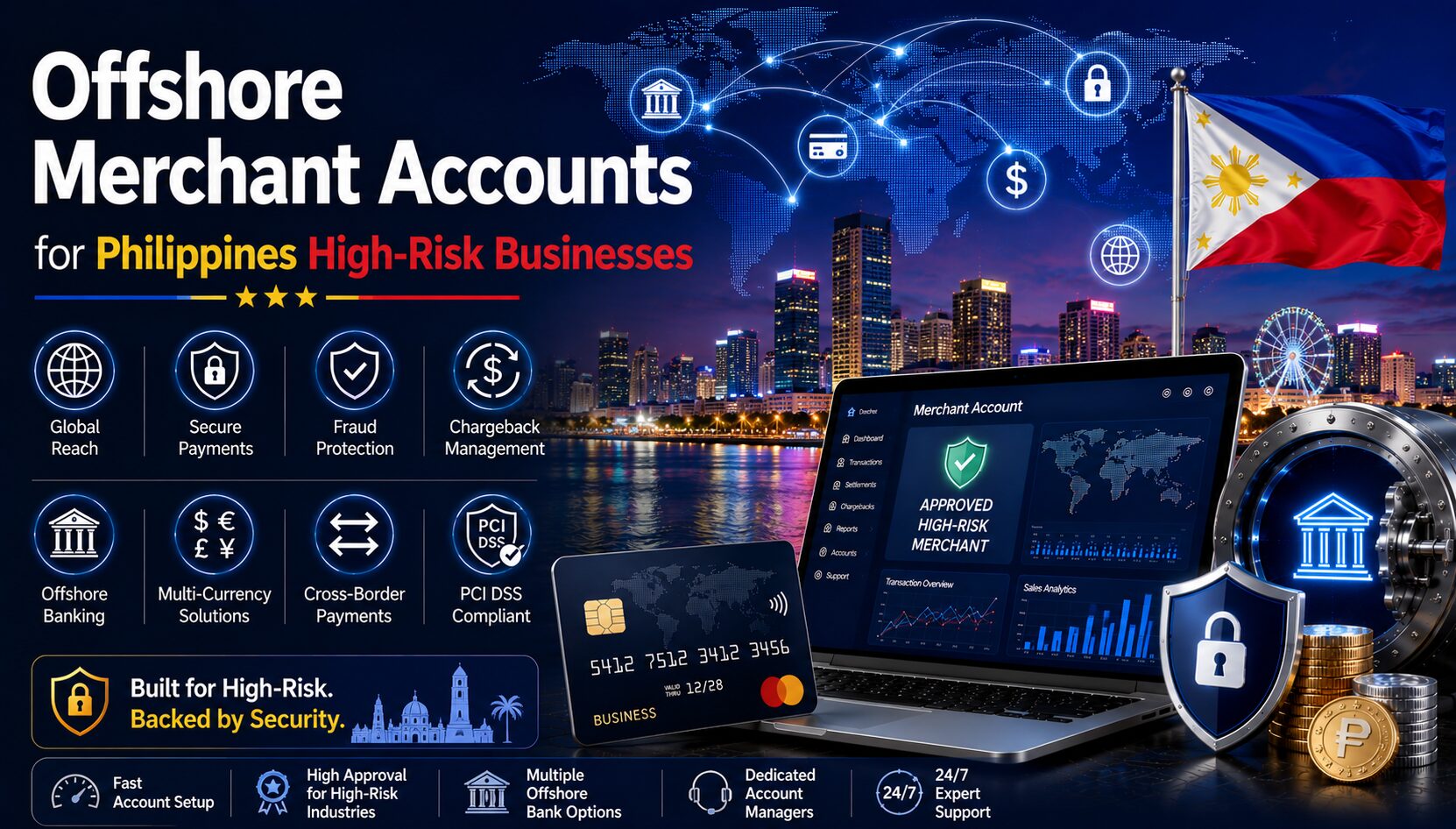
The Philippines just closed one of the most dramatic chapters in global offshore gambling history. The POGO (Philippine Offshore Gaming Operator) model — once a multi-billion-dollar industry employing hundreds of thousands of workers to serve bettors in mainland China and across Southeast Asia — has been completely dismantled following a presidential ban, congressional criminalization, and a systematic enforcement campaign that authorities now describe as fully complete. At the same time, the Philippines’ crypto regulatory framework remains genuinely open for business, just heavily gated by an unusual multi-year licensing moratorium. For high-risk merchants and payment providers, understanding exactly what changed with POGOs — and what remains a viable path in the Philippines’ domestic gaming and crypto sectors — is essential before evaluating any strategy targeting this market.
This guide covers the POGO ban and its complete enforcement conclusion, what replaced it in the domestic PIGO framework, the BSP’s ongoing VASP licensing moratorium for crypto businesses, and what all of this means for payment processing strategy.
The Rise and Fall of POGOs: What Happened and Why
The Philippine Amusement and Gaming Corporation (PAGCOR) began issuing POGO licenses in 2016 specifically to capture offshore-targeted online gambling demand — primarily from mainland China, where gambling is illegal, alongside broader Southeast Asian markets. The model grew explosively: at its peak around 2019, the industry had roughly 60 licensed POGO operators employing an estimated 200,000 to 300,000 workers, the large majority Chinese nationals, concentrated in special economic zone compounds in locations like Pasay, Clark (Pampanga), Bamban (Tarlac), and Parañaque. Republic Act 11590, passed in 2021, formalized taxation specifically for this sector, reflecting how institutionalized the POGO model had become within Philippine economic policy by that point.
The industry became inseparable from serious criminal activity. Investigative journalism from Reuters, the South China Morning Post, and Philippine outlets repeatedly documented human trafficking, cyber fraud, kidnapping, and tax evasion tied directly to POGO operations. The most high-profile case — the sentencing of Alice Guo for human trafficking following a 2024 raid — became a defining moment that helped justify the sector’s complete closure in the eyes of Philippine authorities and the public.
President Marcos ordered a total ban in 2024, and Congress made it permanent in 2025. Following a presidential directive to wind down the industry (formalized through Executive Order 74 in November 2024), Republic Act 12312 — the Anti-POGO Act of 2025 — was signed on October 23, 2025, permanently criminalizing all POGOs and institutionalizing the ban through congressional action rather than leaving it as an executive-branch policy that a future administration could simply reverse.
An attempted rebrand offered no escape route. Some operators tried repositioning as “Internet Gaming Licensees” or “Internet Gaming Lessees” (IGLs) to sidestep the POGO designation specifically, but the law’s intent was comprehensive: Republic Act 12312 explicitly prohibits individuals and entities from acting as POGO gaming content providers or POGO-accredited service providers, effectively outlawing the domestic supply of gaming software, payment solutions, and IT support to offshore-facing operators under any rebranded name.
By early 2026, the dismantling was described by Philippine authorities as fully complete. Licenses were revoked, offices shuttered, and thousands of workers deported. Officials now state plainly that there are “no official POGOs left” and “no illegal POGOs either” following the sustained crackdown — a genuinely unusual level of enforcement completion compared to most gambling bans covered elsewhere in this series, where offshore operators typically persist in some diminished gray-market form even after aggressive government action.
Enforcement infrastructure remains in place to prevent resurgence. A newly created Administrative Oversight Committee, led by the Presidential Anti-Organized Crime Commission or the Department of Justice, continues monitoring for any offshore operations attempting to reappear, and prosecutions continue against former POGO networks even as the sector itself no longer exists in any licensed form.
What Replaced POGOs: The Domestic PIGO Framework
PAGCOR no longer issues any license for foreign-facing online gambling. Its regulatory mandate has narrowed entirely to domestic and inland gaming. Any online gambling platform accessible to a person physically located within the Philippines must now hold a specific Domestic Electronic Gaming License — commonly referred to as a PIGO (Philippine Inland Gaming Operator) license — and must display a “Licensed by PAGCOR” seal with a verifiable license number. Any site lacking this seal is considered an illegal operation under current Philippine law, regardless of what licensing it might hold elsewhere.
The domestic market has grown substantially even as the offshore sector collapsed. The Philippine online gambling industry’s shift inward has been rapid enough that domestic platforms are now considered among the world’s top ten online gambling markets by scale — a genuinely notable outcome given that this growth happened in parallel with, not despite, the elimination of the entire offshore-facing POGO sector.
PAGCOR itself is restructuring to separate regulatory and commercial functions. The corporation posted net income of PHP 14.32 billion for the first nine months of 2025, up 49% year over year, and management has confirmed plans to separate PAGCOR’s commercial casino operations (including the planned 2026 privatization of the government-run Casino Filipino brand) from its core regulatory functions — a structural change intended to eliminate the inherent conflict of interest in a body that both regulates the industry and competes commercially within it.
Growing domestic revenue has brought its own new scrutiny. With the domestic sector now flourishing, lawmakers in both houses of Philippine Congress have floated proposals ranging from strict new restrictions to outright bans on online gambling generally — meaning even domestically licensed operators shouldn’t assume the current PIGO framework is a stable, permanently settled arrangement.
AML obligations for licensed gaming operators remain substantial. Republic Act 10927 (2017) designated casinos — including internet-based and ship-based casinos specifically — as “covered persons” under the Anti-Money Laundering Act, with a single-cash-transaction reporting threshold of PHP 5 million. The Casino Implementing Rules and Regulations, jointly issued by PAGCOR and the Anti-Money Laundering Council, implement this framework for licensed operators.
Crypto in the Philippines: A Genuinely Open Framework, Gated by an Extended Moratorium
The Philippines has built one of the more developed crypto regulatory frameworks in Southeast Asia, but the practical path to entering this market has been unusually constrained for several years running.
The Bangko Sentral ng Pilipinas (BSP) regulates Virtual Asset Service Providers through Circular No. 1108, requiring any qualifying entity to secure a Certificate of Authority as a Money Service Business before operating. VASP activities covered under this framework include exchange between virtual assets and fiat currency, exchange between different virtual assets, and safekeeping or administration of virtual assets or the instruments controlling them.
A moratorium on new VASP licenses has now stretched well beyond its original timeline. The BSP first announced this moratorium effective September 1, 2022, intending to give the central bank time to assess risks from rapid virtual-asset sector growth and strengthen its supervisory capacity. The moratorium was originally expected to lift on September 1, 2025 — but in a memorandum dated August 20, 2025, the BSP extended it again, citing continuing risk assessment needs. As of mid-2026, the BSP has not published any formal notice lifting the moratorium, meaning most standalone applicants still cannot obtain a fresh Certificate of Authority.
Narrow exceptions do exist for institutions already holding other BSP licenses. BSP-supervised financial institutions — universal banks, commercial banks, thrift banks, rural banks, quasi-banks, and electronic money issuers already holding BSP authorization — can apply to add VASP functions onto their existing license, even during the moratorium. This creates a genuinely different path to market than a standalone crypto exchange application, and it’s worth any prospective operator understanding this distinction clearly before assuming the moratorium makes Philippine market entry impossible outright.
Compliance requirements continue tightening even as new licensing remains frozen. In June 2026, the BSP introduced stricter due diligence requirements for VASPs, requiring exchanges to evaluate any virtual asset across six specific areas — issuer background, market maturity, use cases, transparency and security, redemption and liquidity, and legal compliance — before listing it. The BSP has also explicitly prohibited VASPs from listing or supporting anonymity-enhancing, privacy-focused virtual assets, reflecting a broader global regulatory trend against privacy coins that’s shown up across several markets in this series.
Travel Rule compliance applies at a meaningfully lower threshold than in some other jurisdictions. Licensed VASPs must transmit originator and beneficiary information for virtual-asset transfers reaching or exceeding PHP 50,000 (roughly $850-900 depending on exchange rates), in line with FATF standards the BSP has adopted.
Securities-classified tokens fall outside BSP’s jurisdiction entirely. Circular No. 1108 explicitly carves out virtual assets that qualify as securities under the Securities Regulation Code — these fall under the Securities and Exchange Commission’s authority instead, meaning a token’s specific classification determines which regulator’s framework actually applies.
Both gambling operators and crypto exchanges face AML scrutiny at both ends of any crypto-to-fiat-to-gaming transaction flow. Because PAGCOR-licensed gaming operators and BSP-licensed VASPs are both designated AMLA “covered persons,” a transaction path that moves crypto to Philippine pesos and then into a domestic gaming platform attracts reporting obligations from both institutions independently — a meaningful compliance consideration for any payment provider serving both sectors.
What This Means for Payment Processing Strategy
For gambling specifically, the Philippines represents perhaps the cleanest closed-category example in this entire series: the POGO model that once defined offshore gambling processing conversations about the Philippines simply no longer exists, has no rebranding workaround, and comes with active ongoing enforcement designed to prevent resurgence. Any payment provider still marketing “Philippines offshore gaming processing” services in 2026 is referencing a business model that Philippine authorities have declared fully closed.
For domestic gaming (PIGO-licensed) and crypto (BSP VASP-licensed), the Philippines offers genuine, functioning regulatory pathways — but crypto specifically requires either securing one of the narrow moratorium exceptions or working with an already-licensed institution, rather than assuming a straightforward new-applicant path exists.
Domestic vs. Offshore for Philippines-Facing Merchants: What Changes
| Factor | Philippines-Licensed Setup | Offshore Processing |
| Offshore gambling (POGO model) | No longer exists as a licensable category | Not legally viable under any structure; enforcement infrastructure remains active |
| Domestic gambling (PIGO) | Requires PAGCOR Domestic Electronic Gaming License | Not applicable — offshore doesn’t substitute for required domestic licensing |
| Crypto/VASP | Requires BSP Certificate of Authority, subject to ongoing moratorium | Cannot substitute for BSP licensing if serving Philippine residents |
| CBD, adult, subscription businesses | Domestic banks often cautious, similar to global pattern | Standard offshore value proposition for acceptance gaps |
| Best fit | PAGCOR-licensed PIGO operators, BSP-exception-holding financial institutions | Non-gambling, non-crypto high-risk categories seeking broader acceptance |
Providers Worth Evaluating for the Philippines Market
- eMerchantBroker (EMB)
EMB’s experience across CBD, forex, and adult categories is relevant for Philippines-facing merchants in these non-gambling verticals, where domestic bank caution creates a genuine acceptance gap similar to patterns seen across Southeast Asia broadly. For anything gaming-adjacent specifically, EMB should be evaluated on whether it requires confirmed PAGCOR PIGO licensing before onboarding, given how thoroughly the POGO closure has eliminated any offshore-only pathway.
- PayCly
PayCly’s multi-currency infrastructure and CBD/forex/adult specialization suit merchants treating the Philippines as one market within a broader Southeast Asian or global strategy. For crypto-adjacent businesses, working with PayCly makes sense only once genuine BSP VASP authorization (or a confirmed moratorium exception) is secured — a payment provider’s flexibility cannot substitute for this specific licensing requirement.
- WebPays
WebPays’ broad experience across CBD, gaming (non-gambling), and dating categories extends usefully to Philippines-facing merchants in these verticals. Its PCI DSS-compliant infrastructure is relevant for businesses navigating the Philippines’ generally cautious domestic banking posture toward high-risk categories broadly.
Industry-Specific Considerations for Philippines-Facing Merchants
Offshore gambling (formerly POGO): Fully closed. There is no compliant route to market for foreign-facing online gambling operating from or through the Philippines, and any payment provider or merchant considering this should treat the category as permanently eliminated rather than a temporarily dormant opportunity.
Domestic gambling (PIGO): A PAGCOR Domestic Electronic Gaming License is the clear baseline requirement, with a visible “Licensed by PAGCOR” seal now serving as the practical marker of legitimacy for Philippine consumers and payment providers alike.
Cryptocurrency and virtual asset services: BSP Certificate of Authority under Circular No. 1108 is required, but the ongoing new-license moratorium means most standalone applicants need to pursue partnership with an already-licensed institution or secure one of the narrow exceptions available to existing BSP-supervised entities.
CBD, adult content, and subscription businesses: These follow patterns similar to other Southeast Asian markets — domestic bank caution creates an acceptance gap that specialized or offshore providers fill, without the hard legal prerequisites that gambling and crypto carry in the Philippines specifically.
Documentation Philippines-Facing High-Risk Merchants Should Prepare
- Business registration and corporate structure documentation
- PAGCOR Domestic Electronic Gaming License, where applicable, for any gaming operation serving customers physically located in the Philippines
- BSP Certificate of Authority as a VASP, where applicable, or documented partnership with an already-licensed BSP-supervised institution given the ongoing moratorium
- 3–6 months of recent bank statements
- Processing history, including chargeback ratios, from any prior merchant accounts
- AML/CTF compliance documentation, including Travel Rule compliance procedures for virtual-asset transfers at or above the PHP 50,000 threshold
Choosing the Right Setup: A Practical Framework
Philippines-facing merchants are best served asking a category-specific first question, consistent with several other markets in this series: is this activity legally viable in the Philippines at all under current law, and if the answer involves gambling, does it clearly fall within PAGCOR’s narrowed domestic-only mandate rather than the now-eliminated offshore POGO model? For crypto, the practical question shifts to whether a genuine path exists given the ongoing BSP moratorium — either through a moratorium exception or a partnership structure — rather than assuming a standard new-applicant licensing process remains available.
For CBD, adult content, and subscription businesses, the Philippines behaves more like a standard developing Southeast Asian market, where offshore merchant accounts solve a genuine acceptance gap left by cautious domestic banks, without the hard legal prerequisites that make gambling and crypto fundamentally different conversations in this market.
Conclusion
The Philippines’ 2026 high-risk payments landscape is defined by the complete and, by the government’s own account, final closure of the POGO offshore gambling model that once made this market a central reference point for offshore gambling payment processing — replaced entirely by a domestic-only PIGO framework under PAGCOR’s narrowed regulatory mandate. For crypto businesses, a genuinely open regulatory framework under BSP Circular No. 1108 remains gated by a new-license moratorium extended multiple times since 2022, with no clear end date as of mid-2026. For merchants and payment providers in the Philippines’ remaining high-risk categories — CBD, adult content, and subscription businesses — providers like eMerchantBroker, PayCly, and WebPays offer relevant experience navigating a generally cautious domestic banking environment.
Frequently Asked Questions (FAQs)
Q1: Are POGOs (Philippine Offshore Gaming Operators) still operating in 2026?
A: No. Following President Marcos’s 2024 ban and the Anti-POGO Act (Republic Act 12312) signed in October 2025, Philippine authorities report there are no official or illegal POGOs remaining as of 2026 — the sector has been completely dismantled.
Q2: Can foreign-facing online gambling operators still get licensed by PAGCOR?
A: No. PAGCOR no longer issues any license for foreign-facing online gambling. Its current mandate is limited to domestic gaming through the Philippine Inland Gaming Operator (PIGO) framework and traditional land-based casino oversight.
Q3: Is it possible to get a new crypto exchange license in the Philippines right now?
A: It’s difficult for standalone new applicants. The BSP’s moratorium on new VASP Certificates of Authority, first imposed in 2022, was extended again in August 2025 and remains in effect as of mid-2026, with narrow exceptions only for institutions already holding other BSP licenses.
Q4: What is the Travel Rule threshold for crypto transactions in the Philippines?
A: PHP 50,000 (roughly $850-900). Licensed VASPs must transmit originator and beneficiary information for virtual-asset transfers at or above this threshold, in line with FATF standards adopted by the BSP.
Q5: Do Philippine gambling operators and crypto exchanges face separate anti-money-laundering reporting requirements?
A: Yes, and both apply independently to the same transaction flow where relevant. PAGCOR-licensed gaming operators and BSP-licensed VASPs are each designated AMLA “covered persons,” meaning a crypto-to-peso-to-gaming transaction path attracts reporting obligations at both ends.
Comments
No comments yet. Be the first to share your thoughts.
Leave a comment