
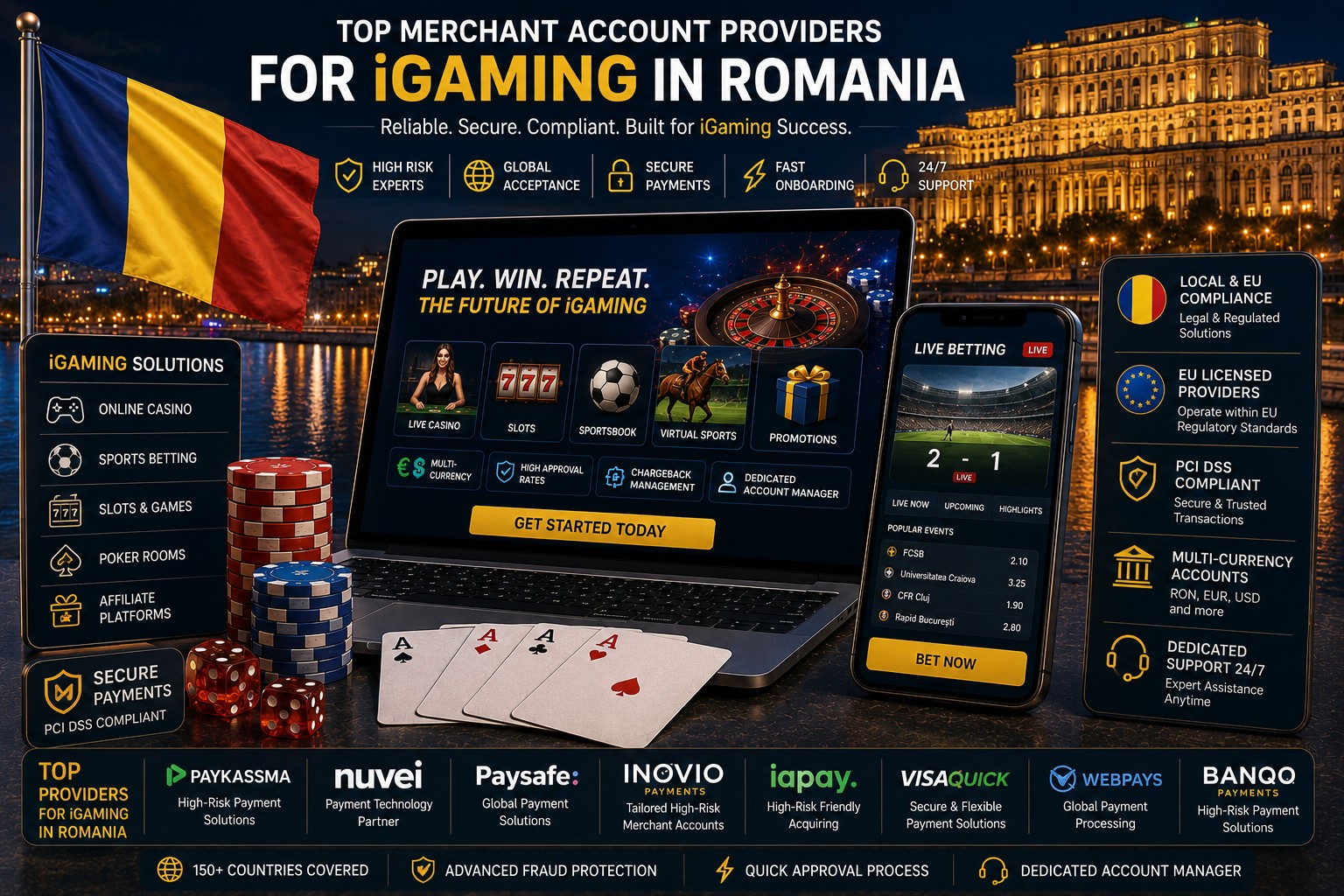
Romania has a structural requirement that separates it from almost every other market in this guide series: the payment processor itself must hold a specific ONJN license, not just the gambling operator. Under Romanian law, only PSPs approved and licensed by the Oficiul Național pentru Jocuri de Noroc as Class 2 providers are permitted to handle gambling payments — as of recent published data, more than 40 payment service providers hold this specific license. A generic high-risk payment provider, however well-regarded elsewhere in Europe, cannot legally process Romanian gambling transactions unless it specifically holds this Class 2 authorization. This guide explains what that means in practice and covers the payment infrastructure considerations every ONJN-licensed operator needs to evaluate.
Why Romanian iGaming Payment Processing Has a Unique Structural Requirement
The payment processor must be individually licensed by ONJN — this isn’t optional or something the operator can work around. ONJN issues a Class 2 license specifically to B2B providers including software and payment processors, distinct from the Class 1 license operators themselves hold. A payment provider without this specific Romanian authorization cannot legally handle Romanian gambling transactions, full stop — no amount of general European licensing or high-risk gambling experience substitutes for it.
Player funds must sit in Romanian bank accounts specifically, not just any EU account. The remote gambling organiser licensed in Romania must deposit players’ funds only in bank accounts opened with banks located on Romanian national territory — a genuine structural constraint that shapes which banking relationships a payment provider actually needs.
Foreign gambling licenses provide zero payment or operational standing in Romania. A Malta, Curaçao, or Gibraltar license doesn’t cover Romania in any way, and neither does any other foreign authorization — the only legal route into the Romanian market is a direct ONJN license, and this applies equally strictly to the payment processing layer.
Enforcement extends directly to payment blocking, coordinated across multiple Romanian authorities. ONJN works with ANCOM (Romania’s telecom regulator) for ISP-level blocking of unlicensed sites, and separately instructs Romanian banks and payment processors directly on payment restrictions — meaning non-compliant payment flows face active, coordinated enforcement, not passive discouragement.
The 30-day statutory review timeline applies to license and authorization applications, but real-world setup takes longer. While ONJN’s formal application review window is set at 30 days from complete documentation submission, practical setup — accounting for banking relationships, ONJN-approved lab certification, and payment processor licensing — typically runs 4-8 weeks depending on the complexity of the operator’s structure and chosen bank.
A public ONJN registry is the only reliable way to verify a payment processor’s actual Class 2 status. ONJN publishes its licensed B2C operator list and its Class 2 B2B provider list directly on its official website (onjn.gov.ro), alongside a public blacklist of unauthorised operators — any Romanian iGaming payment decision should start with checking this registry directly, not relying on a provider’s own marketing claims of Romanian compliance.
What This Means for Choosing a Payment Provider
Given how specific and non-negotiable Romania’s Class 2 PSP licensing requirement is, this guide takes a different approach than most others in this series: rather than ranking international high-risk providers as if they’re confirmed Romanian-licensed, the honest and useful path is to explain what to verify before engaging any of them. None of the general international high-risk gambling processors commonly covered across this guide series should be assumed to hold Romanian ONJN Class 2 status without direct confirmation — this is a jurisdiction where checking the actual regulator’s published list matters more than any comparative ranking.
Several EU-licensed, gambling-experienced payment institutions are worth evaluating specifically for whether they hold — or can obtain — ONJN Class 2 licensing, given their existing European regulatory infrastructure:
RoxPay
RoxPay’s genuine EU-licensed payment institution status (PCI DSS Level 1, ISO 27001 certified, OAM-registered in Italy) makes it a structurally plausible candidate for Romanian ONJN Class 2 licensing, given how much of the underlying compliance infrastructure (AML, KYC, EU regulatory alignment) overlaps with what ONJN requires.
Strengths: Genuine EU regulatory credibility and existing gambling-processing infrastructure provide a real foundation for pursuing or holding Romanian-specific licensing.
Weaknesses: Confirm current ONJN Class 2 status directly against the official registry before assuming it applies — EU licensing elsewhere does not automatically transfer to Romanian authorization.
EMS Ltd Global
EMS’s deep regulatory understanding of gambling frameworks across the UK and Europe is relevant context, though Romanian-specific ONJN Class 2 status requires direct, independent verification.
Strengths: Genuine European regulatory depth and experience navigating multiple national gambling frameworks, useful context for a Romanian licensing conversation.
Weaknesses: Romanian ONJN Class 2 status is not documented and must be confirmed directly before any engagement.
Fibonatix
Fibonatix’s European gambling merchant processing experience is relevant background, though — as with every provider in this list — Romanian Class 2 authorization needs independent confirmation.
Strengths: Genuine European gambling-vertical positioning and multi-currency infrastructure.
Weaknesses: No documented Romanian ONJN Class 2 licensing — verify directly.
Instabill, WebPays, Amald, Inquid, PayCly, eLotPay, BoxCharge
Each of these providers, covered throughout this guide series for other European and international gambling markets, may or may not hold Romanian ONJN Class 2 authorization — this genuinely cannot be assumed from their broader European or international gambling experience, and each should be evaluated the same way: by checking ONJN’s published Class 2 registry directly before any engagement, not by inferring compliance from reputation in other markets.
Comparison Table
| Provider | European Gambling Experience | Confirmed ONJN Class 2 Status |
| RoxPay | Strong, EU-licensed institution | Verify directly against ONJN registry |
| EMS Ltd Global | Strong, UK/EU regulatory depth | Verify directly against ONJN registry |
| Fibonatix | Strong, European gambling specialist | Verify directly against ONJN registry |
| WebPays | Strong, general gambling specialization | Verify directly against ONJN registry |
| Amald | Moderate, general high-risk gambling | Verify directly against ONJN registry |
| Inquid | Moderate, named betting vertical | Verify directly against ONJN registry |
| Instabill | Strong, offshore gambling placement | Verify directly against ONJN registry |
| PayCly | Moderate, multi-currency infrastructure | Verify directly against ONJN registry |
| eLotPay | Moderate, crypto-hybrid settlement | Verify directly against ONJN registry |
| BoxCharge | General orchestration, not gambling-specific | Verify directly against ONJN registry |
What to Genuinely Look For as a Romanian iGaming Operator
Check ONJN’s official Class 2 licensee list directly before engaging any payment provider. This is the single non-negotiable step for Romania specifically — available at onjn.gov.ro’s licensed B2B provider page — and no provider’s own marketing claims should substitute for this direct verification.
Confirm player funds will be held in a genuinely Romanian-domiciled bank account, since this is a specific legal requirement, not a preference.
Verify RNG and platform certification comes from an ONJN-approved testing laboratory (GLI, iTech Labs, or similar approved labs) — a payment processor relationship means little if your underlying platform certification isn’t valid.
Understand that Romania’s licensing is strictly ring-fenced — a license only covers players physically located in Romania and cannot be used to target other markets, which shapes how narrowly your Romanian payment infrastructure needs to be scoped versus a broader European strategy.
Budget realistically for 4-8 weeks of practical setup time, even though ONJN’s formal statutory review window is 30 days, given the additional time required for banking relationships and payment processor licensing verification.
Frequently Asked Questions
Q1: Can a payment processor licensed in another EU country process Romanian gambling payments?
A: Not automatically — Romania requires payment processors handling gambling transactions to hold a specific ONJN Class 2 license, regardless of licensing held elsewhere in the EU.
Q2: Does a Malta or Curaçao gambling license allow an operator to serve Romanian players?
A: No — foreign gambling licenses provide no legal standing in Romania. Only a direct ONJN Class 1 license permits serving Romanian players, and this applies equally to the payment processing layer, which needs its own separate Class 2 authorization.
Q3: Where must Romanian gambling operators hold player funds?
A: In bank accounts opened with banks located on Romanian national territory specifically — not just any EU-domiciled account.
Q4: How many payment service providers currently hold ONJN Class 2 licensing?
A: More than 40 as of recently published data, though this figure changes over time — always verify current status directly against ONJN’s official published registry.
Q5: How does ONJN enforce against unlicensed payment processing?
A: Through coordinated action with ANCOM (Romania’s telecom regulator) for ISP-level blocking, alongside direct instructions to Romanian banks and payment processors restricting non-compliant payment flows.
Comments
No comments yet. Be the first to share your thoughts.
Leave a comment