
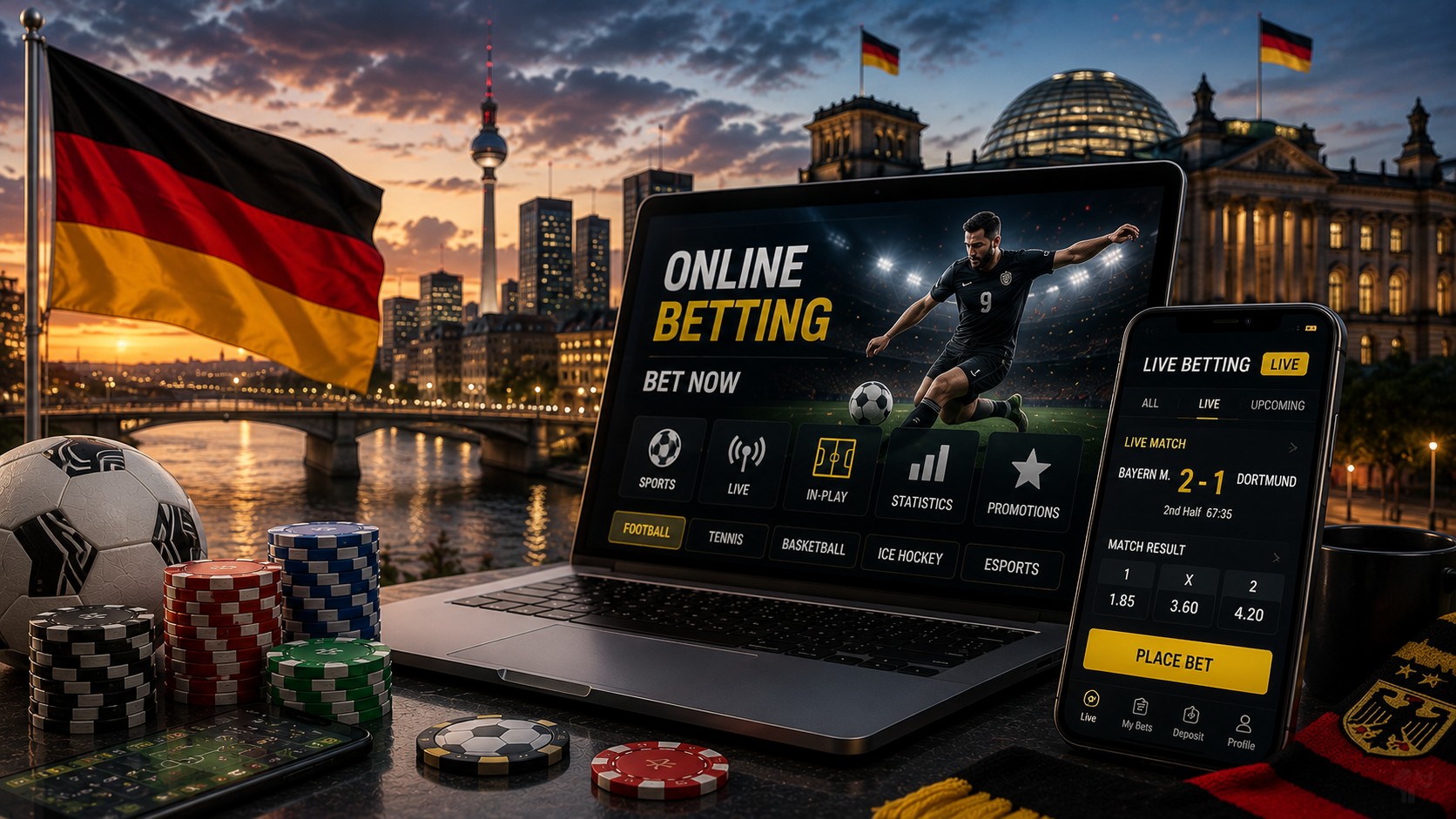
Germany eliminated its single most iconic gambling payment method entirely — Giropay shut down permanently on December 31, 2024, with no renewal, no transition period, no exceptions. Any provider still listing Giropay in a German cashier today produces a hard failure for every player who clicks it. That single fact reshapes the entire German payment conversation: PayPal, Wero, Paysafecard, and Klarna’s Sofort now carry the volume Giropay used to handle, layered on top of Germany’s uniquely demanding technical requirement — every single deposit must be queried against LUGAS, the country’s real-time cross-operator deposit-monitoring system, before it can be processed at all. This guide ranks the top 10 merchant account providers for German online betting operators in 2026.
Why German Betting Payment Processing Is Uniquely Demanding
LUGAS isn’t a reporting requirement you fulfill after the fact — it’s a real-time query your payment stack must complete before every deposit clears. The Länderübergreifendes Glücksspielaufsichtssystem enforces a €1,000 monthly cross-operator deposit cap in real time, with higher limits (up to €10,000) available only under defined regulatory conditions and ongoing scrutiny. In 2025 alone, LUGAS processed data from more than 60 licensed operators and approximately five million registered players — a payment provider needs genuine, tested LUGAS query integration, not a bolt-on compliance afterthought.
Giropay’s shutdown is permanent and confirmed, not a gradual decline still in progress. This is worth stating unambiguously given how much outdated content still lists Giropay as a live German payment option: it ended December 31, 2024. Any provider or cashier still presenting it is offering a broken payment method, not a legacy one worth tolerating.
OASIS self-exclusion checking runs at genuinely massive scale. The national self-exclusion database processed roughly 5 billion queries in 2024 — every German gambling transaction sits inside an infrastructure layer most other markets in this guide series don’t require at anywhere near this volume.
Local card acquiring genuinely outperforms cross-border routing in Germany specifically, given how tightly German card issuers scrutinize gambling MCCs — a payment provider without genuine German or EU-domestic acquiring relationships will see meaningfully worse authorization rates than one routing transactions locally.
Full identity verification (KYC) is required before a player’s first deposit, not after. This isn’t unusual within regulated European gambling generally, but Germany’s specific combination of pre-deposit KYC, real-time LUGAS querying, and OASIS self-exclusion checking creates a genuinely more layered technical compliance stack than most comparable EU markets.
The market is growing fast enough that payment infrastructure decisions carry real commercial weight. Germany’s legal online gambling market is projected to grow past €4 billion in 2026, with payment infrastructure itself shifting from proprietary systems toward open banking and account-to-account payment rails — a trend worth factoring into any long-term provider relationship.
The EU Instant Payments Regulation is accelerating real-time settlement across German banking generally, with Deutsche Bank reporting a 27% increase in real-time transfers following implementation — relevant context for evaluating how modern a given payment provider‘s underlying bank-transfer infrastructure genuinely is.
The Top 10 Merchant Account Providers for German Online Betting
- RoxPay
RoxPay’s genuine EU-licensed payment institution status (PCI DSS Level 1, ISO 27001 certified, OAM-registered in Italy) is a structurally strong fit for Germany’s compliance-heavy environment, offering real EU regulatory standing rather than an offshore acquiring relationship layered with German-specific bolt-ons.
Strengths: Genuine EU regulatory credibility directly relevant to GGL’s compliance expectations; supports gambling, forex, and crypto processing for operators with mixed product lines; local EU acquiring generally outperforms cross-border routing on German gambling MCCs specifically.
Weaknesses: Confirm direct, tested LUGAS query integration explicitly — genuine EU licensing doesn’t automatically guarantee this specific German technical requirement is built and proven.
- EMS Ltd Global
EMS specifically differentiates itself around deep regulatory understanding of gambling frameworks across the UK and Europe, directly relevant to Germany’s GlüStV interstate treaty framework and GGL-specific compliance demands.
Strengths: Genuine European regulatory depth; streamlined underwriting built around licensing verification and transaction behavior rather than generic high-risk assessment; documented access to gambling-friendly acquirers.
Weaknesses: German-specific LUGAS and OASIS integration depth isn’t distinctly documented from its broader European coverage — confirm this directly.
- Fibonatix
Fibonatix offers standard-timeline European gambling merchant processing with multi-currency support and fraud prevention built for EU-facing betting operators, relevant to Germany’s requirement for genuinely EU-integrated payment infrastructure.
Strengths: Genuine European gambling-vertical positioning; multi-currency infrastructure; documented KYC/compliance guidance for gambling merchants, relevant given Germany’s pre-deposit KYC requirement specifically.
Weaknesses: Not positioned as a fastest-turnaround option; confirm LUGAS-specific technical integration directly rather than assuming general EU compliance coverage extends to it.
- WebPays
WebPays offers dedicated gambling merchant account infrastructure with explicit attention to preventing payment freezes, relevant given how strictly German issuers scrutinize gambling transactions.
Strengths: Genuine gambling-vertical specialization; transparent published terms; explicit long-term account stability focus.
Weaknesses: German-specific LUGAS/OASIS compliance documentation isn’t distinctly highlighted — confirm directly.
- Inquid
Inquid’s named Casino & Betting specialization and MID cascading technology are relevant given elevated decline rates for gambling transactions specifically under German issuer scrutiny.
Strengths: Explicit betting-vertical specialization; MID cascading directly addresses elevated German gambling-MCC decline rates; multi-currency support.
Weaknesses: Confirm genuine German-specific LUGAS integration explicitly before assuming broad EU coverage extends to this specific requirement.
- Amald
Amald’s dedicated MID structure offers real account isolation value for German operators, given how consequential a shared-aggregator account’s exposure to another merchant’s compliance issue could be under GGL’s active enforcement posture.
Strengths: Explicit dedicated MID offering; PCI-DSS compliant gateway infrastructure; broad acquiring bank network.
Weaknesses: Less Germany-specific positioning than dedicated European gambling-jurisdiction specialists.
- Instabill
Instabill’s genuinely international acquiring relationships offer backup value for German operators, particularly useful given local acquiring’s documented authorization-rate advantage — Instabill can serve as a redundancy layer alongside a primary local-EU processor.
Strengths: Long institutional track record in gambling-specific placement; multi-region acquiring depth provides genuine redundancy.
Weaknesses: Less Germany-specific regulatory depth than EU-domestic specialists; settlement timelines generally trail local-EU alternatives — best used as backup, not primary.
- PayCly
PayCly’s multi-currency infrastructure is relevant for German operators with any cross-border European revenue alongside their core domestic German business.
Strengths: Strong multi-currency settlement capability; streamlined onboarding relative to slower competitors.
Weaknesses: Confirm genuine LUGAS integration and local German acquiring specifically rather than assuming general EU multi-currency support covers Germany’s unique requirements.
- eLotPay
eLotPay’s hybrid card-and-crypto settlement model is worth flagging with an important caveat specific to Germany: crypto remains banned for use at GGL-licensed gambling sites, meaning eLotPay’s crypto capability is not applicable to German-licensed gambling operations specifically, though its card-processing side may still be relevant.
Strengths: Card-processing capability relevant as one component of a broader German payment stack.
Weaknesses: Its core crypto-hybrid differentiator has no legal application to GGL-licensed German gambling — evaluate it purely on its fiat card-processing merits for this specific market, not its crypto capability.
- BoxCharge
BoxCharge is a genuine cross-border payment orchestration platform with strong European alternative payment method coverage — included with the standard caveat that gambling isn’t among its explicitly listed industry verticals.
Strengths: Sophisticated multi-acquirer smart routing could add value at the orchestration layer for German operators managing local acquiring alongside broader European payment relationships; strong SEPA and European APM infrastructure relevant to Germany’s shift toward open banking and account-to-account payments.
Weaknesses: Not a gambling-specialized provider, and no documented LUGAS integration — confirm underwriting appetite and genuine German technical compliance capability directly before applying.
Comparison Table
| Rank | Provider | Standout Strength | LUGAS Integration |
| 1 | RoxPay | Genuine EU-licensed institution | Confirm directly |
| 2 | EMS Ltd Global | Deep UK/EU regulatory expertise | Confirm directly |
| 3 | Fibonatix | European gambling positioning | Confirm directly |
| 4 | WebPays | Freeze-prevention focus | Confirm directly |
| 5 | Inquid | MID cascading | Confirm directly |
| 6 | Amald | Dedicated MID | Confirm directly |
| 7 | Instabill | International backup redundancy | Best as secondary layer |
| 8 | PayCly | Multi-currency infrastructure | Confirm directly |
| 9 | eLotPay | Card processing (crypto N/A for DE) | N/A — crypto banned in DE gambling |
| 10 | BoxCharge | Smart routing, SEPA/APM coverage | Not gambling-specific |
What to Genuinely Look For as a German Betting Operator
Verify Giropay is genuinely absent from any provider’s proposed cashier, and confirm PayPal, Wero, Paysafecard, and Klarna’s Sofort are the actual live alternatives offered. Any provider proposal still featuring Giropay is working from outdated information.
Ask directly, and get a technical answer, about real-time LUGAS query integration. This is the single most Germany-specific technical requirement in this entire guide series — a provider without a clear, demonstrated answer likely hasn’t built genuine German market infrastructure.
Prioritize local German or EU-domestic acquiring over cross-border routing, given the documented authorization-rate advantage this provides on German gambling MCCs specifically.
Confirm pre-deposit KYC infrastructure is genuinely built into the payment flow, not layered on as a separate step that could create checkout friction or compliance gaps.
Remember crypto has no legal application to GGL-licensed gambling in Germany, regardless of a provider’s crypto capabilities elsewhere — evaluate crypto-forward providers purely on their fiat processing merits for this specific market.
Frequently Asked Questions
Q1: Is Giropay still a valid payment method for German online betting?
A: No — Giropay shut down permanently on December 31, 2024. Any cashier or provider still listing it produces a hard transaction failure for players.
Q2: What is LUGAS and why does it matter for payment processing?
A: LUGAS (Länderübergreifendes Glücksspielaufsichtssystem) is Germany’s real-time cross-operator deposit-monitoring system, enforcing a €1,000 monthly deposit cap across all licensed operators. Payment providers must query it before processing each deposit, not just report to it afterward.
Q3: What payment methods carry the volume Giropay used to handle in Germany?
A: PayPal, Wero, Paysafecard, and Klarna’s Sofort are the primary methods now carrying that volume.
Q4: Can German-licensed gambling operators accept cryptocurrency?
A: No — crypto is explicitly banned for use at GGL-licensed gambling sites under German law, regardless of what a payment provider offers in other markets.
Q5: Why does local German acquiring outperform cross-border payment routing?
A: German card issuers apply especially tight scrutiny to gambling MCCs, and local acquiring relationships significantly outperform cross-border routing on authorization rates as a direct result.
Comments
No comments yet. Be the first to share your thoughts.
Leave a comment