
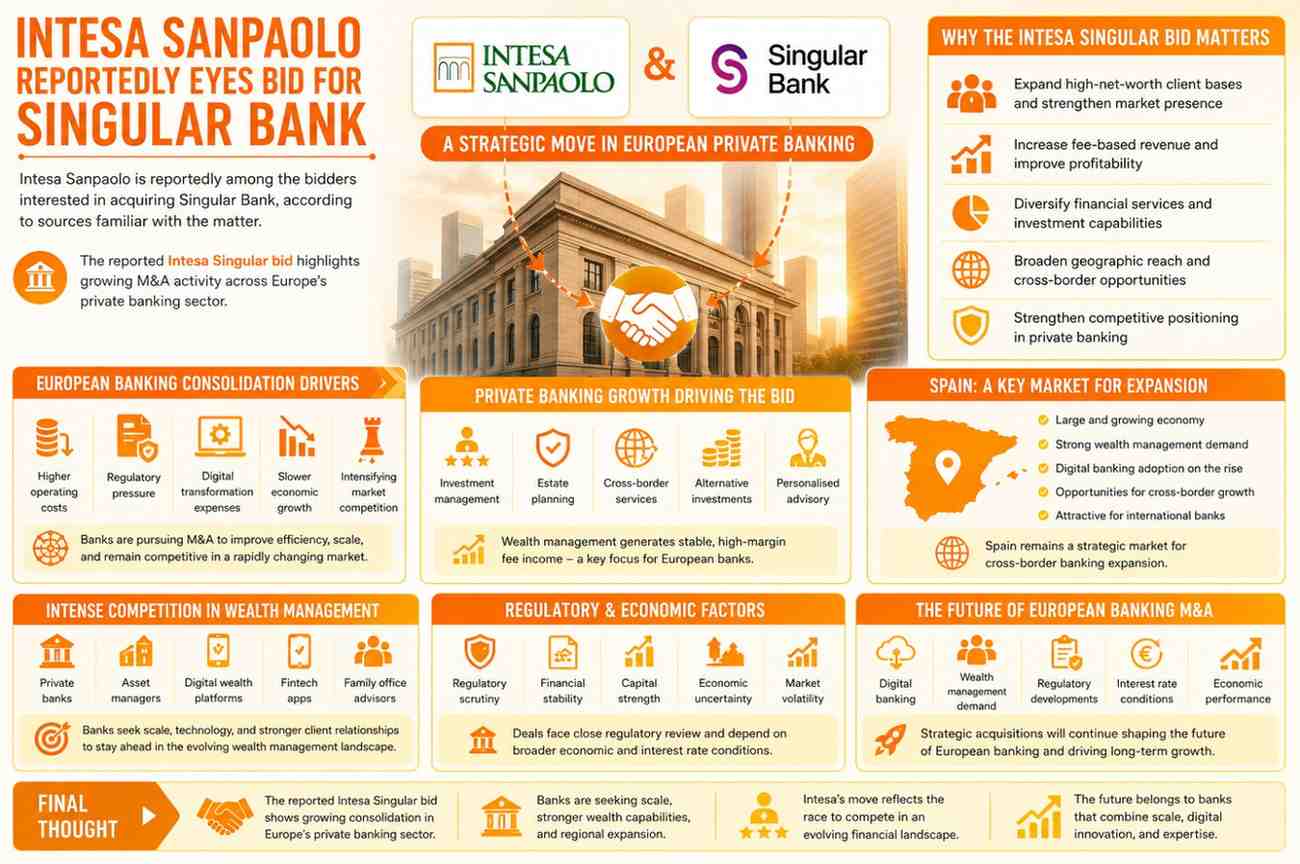
Intesa Sanpaolo is reportedly among the bidders interested in acquiring Singular Bank, according to sources familiar with the matter. The reported Intesa Singular bid highlights growing merger and acquisition activity across Europe’s private banking sector as financial institutions seek expansion opportunities in key regional markets.
Over the past few years, European banks have increasingly explored strategic acquisitions to strengthen wealth management capabilities, expand geographic reach, and improve long-term profitability. As a result, private banking and asset management businesses have become attractive targets for major financial institutions.
Consequently, the reported Intesa Singular bid reflects broader trends shaping European banking consolidation and cross-border financial expansion. Moreover, rising competition in wealth management continues to encourage banks to pursue acquisitions that can strengthen client networks and diversify revenue streams.
Why the Intesa Singular Bid Matters
The European banking industry continues evolving as institutions adapt to changing market conditions, digital transformation, and growing competition.
In recent years, private banking has become an increasingly important growth area because wealthy clients continue demanding personalised investment and wealth management services. In addition, banks are seeking more stable sources of long-term revenue.
Because of this trend, the reported Intesa Singular bid may represent a strategic effort to strengthen positioning within the European private banking market.
Additionally, acquisitions in wealth management can help banks:
- Expand high-net-worth client bases
- Increase fee-based revenue
- Diversify financial services
- Improve regional market presence
- Strengthen investment capabilities
As a result, private banking assets remain attractive for large financial groups seeking long-term growth opportunities. Furthermore, wealth management businesses often provide stronger margins than traditional lending operations.
Intesa Banking Acquisition Reflects European Consolidation
Banking consolidation has become a major trend across Europe as institutions face:
- Higher operating costs
- Regulatory pressure
- Digital transformation expenses
- Slower economic growth
- Intensifying market competition
Because of these challenges, many banks are pursuing mergers and acquisitions to improve efficiency and scale. At the same time, financial institutions are looking for ways to remain competitive in a rapidly changing market.
The reported Intesa Singular bid reflects this broader wave of consolidation shaping the European financial sector.
Moreover, cross-border acquisitions are becoming increasingly important as banks seek expansion opportunities outside domestic markets. Therefore, European banking groups are exploring deals that can strengthen regional influence and client reach.
Consequently, strategic banking deals may continue accelerating across Europe over the coming years.
Private Banking Growth Drives the Intesa Singular Bid
Private banking and wealth management services continue attracting strong interest from major financial institutions.
High-net-worth clients increasingly require:
- Investment management
- Estate planning
- Cross-border financial services
- Alternative investments
- Personalised advisory solutions
As a result, banks are investing heavily in expanding wealth management capabilities. In many cases, institutions are also upgrading digital advisory services to improve customer experience.
The reported Intesa Singular bid highlights how private banking remains one of the most competitive and profitable segments within financial services.
Furthermore, wealth management businesses often generate more stable fee income compared with traditional lending operations. Therefore, many European banks are focusing more heavily on growing private banking divisions.
At the same time, digital wealth platforms are increasing competition across the market.
Spain Attracts Cross-Border Bank Expansion
Spain continues attracting interest from international financial institutions because of its large economy and active financial services market.
The Spanish banking sector has undergone significant restructuring over the past decade. Meanwhile, digital banking adoption and wealth management demand continue growing across the country.
Because of these conditions, the reported Intesa Singular bid may reflect broader interest in Spain’s evolving financial sector.
Additionally, Spain provides opportunities for:
- Wealth management expansion
- Cross-border banking growth
- Digital financial services
- Private client advisory services
- Investment platform development
Consequently, foreign banks may continue seeking acquisition opportunities within the Spanish market. Furthermore, Spain’s growing private wealth segment remains attractive for international banking groups.
Competition in Wealth Management Intensifies
Competition within wealth management continues to increase across Europe and global financial markets.
Today, traditional banks compete with:
- Private banking firms
- Asset managers
- Digital wealth platforms
- Fintech investment apps
- Family office advisory firms
Because of this competitive landscape, banks are increasingly seeking scale and stronger client relationships through acquisitions.
The reported Intesa Singular bid, therefore, reflects wider efforts among financial institutions to strengthen competitive positioning within wealth management.
At the same time, digital transformation is reshaping how private banking services are delivered to clients. As a result, banks are investing heavily in technology and personalised financial solutions.
Consequently, firms that combine digital innovation with strong advisory capabilities may gain an advantage in the evolving wealth management market.
Regulatory and Economic Factors Influence Banking Deals
Banking acquisitions across Europe continue facing close regulatory scrutiny.
Regulators typically evaluate:
- Financial stability
- Competition concerns
- Capital strength
- Consumer protection
- Operational risk management
Because of these requirements, cross-border banking transactions can involve lengthy approval processes. In addition, regulators continue monitoring systemic risks within the broader financial system.
The reported Intesa Singular bid may therefore depend on regulatory considerations as well as broader market conditions.
Additionally, economic uncertainty and interest rate changes continue influencing banking sector strategy across Europe. Meanwhile, financial institutions remain cautious about long-term market volatility and geopolitical risks.
Cross-Border Banking Expansion Remains Important
European banks are increasingly pursuing cross-border expansion strategies as domestic growth opportunities become more limited.
International acquisitions may help banks:
- Diversify revenue sources
- Access new client markets
- Expand investment services
- Improve operational scale
- Strengthen regional competitiveness
As a result, cross-border banking activity may remain a major trend within the European financial sector.
The reported Intesa Singular bid reflects how financial institutions continue searching for strategic expansion opportunities across regional markets.
Furthermore, larger banking groups are increasingly looking for acquisitions that can strengthen wealth management operations while improving long-term profitability.
Future Outlook for European Banking M&A
Looking ahead, merger and acquisition activity within European banking is expected to continue evolving.
Several factors may influence future deals, including:
- Digital banking growth
- Wealth management demand
- Regulatory developments
- Interest rate conditions
- Economic performance across Europe
Because of these trends, private banking and wealth management firms may remain attractive acquisition targets for larger institutions.
In addition, technology investment and client experience improvements are likely to play a bigger role in future banking strategies.
The reported Intesa Singular bid could therefore represent part of a broader consolidation trend shaping the future of European banking.
Ultimately, banks that successfully combine scale, digital innovation, and wealth management expertise may strengthen their competitive position in the years ahead.
Final Thoughts
The reported interest from Intesa in Spain’s Singular Bank highlights growing consolidation and competition within the European private banking industry.
As financial institutions seek stronger wealth management capabilities and cross-border expansion opportunities, acquisition activity may continue increasing across regional banking markets.
The Intesa Singular bid reflects broader efforts among European banks to strengthen scale, diversify revenue, and compete more effectively within evolving financial markets.
Ultimately, the future of European banking may increasingly depend on strategic acquisitions, digital transformation, and expansion into high-growth financial services segments.
Comments
No comments yet. Be the first to share your thoughts.
Leave a comment