
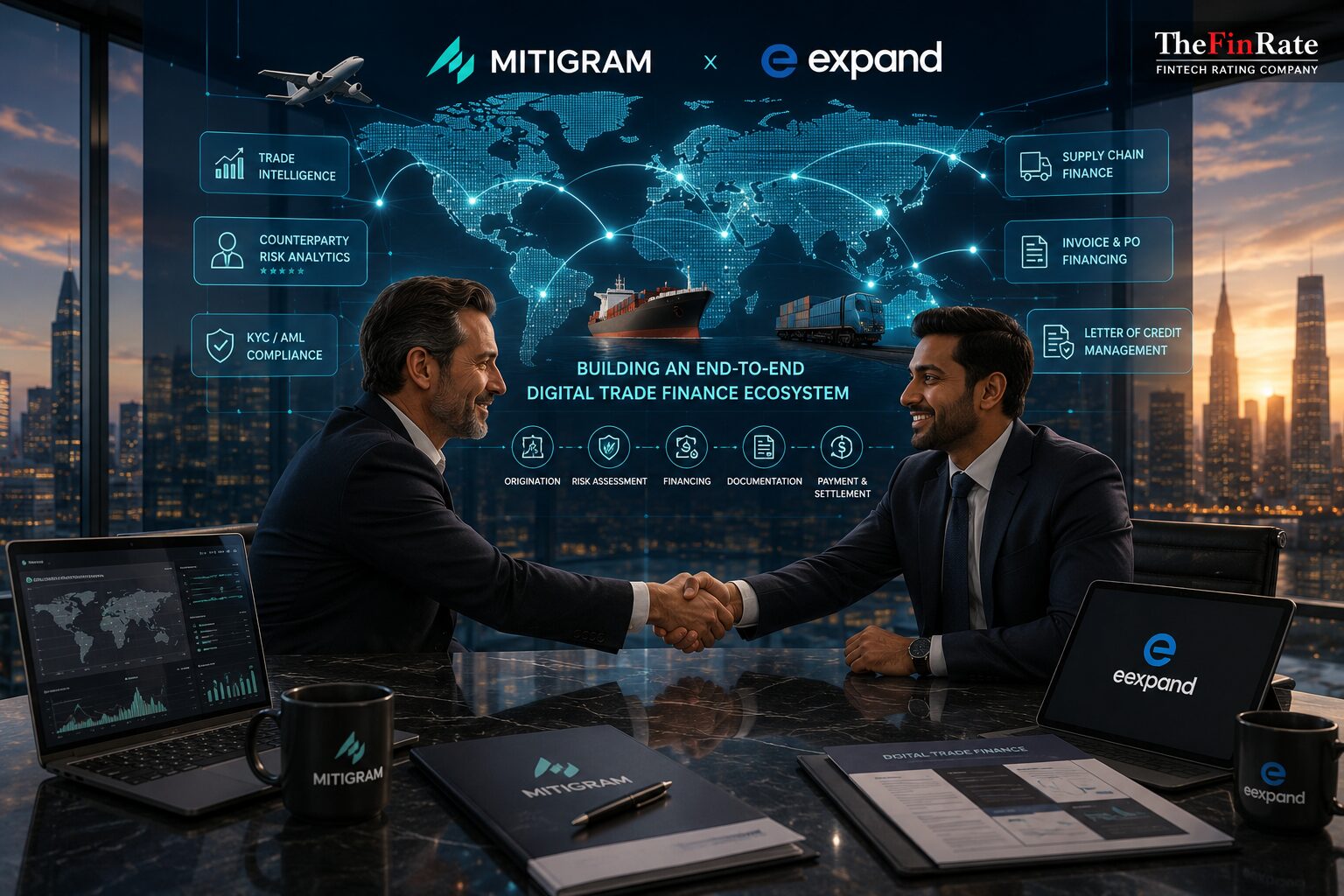
Mitigram Acquires expand to Build an End-to-End Digital Trade Finance Ecosystem
Trade finance has long suffered from fragmentation. Businesses often use one platform to find export opportunities, another to verify trading partners, and yet another to secure financing. Every handoff adds delays, costs, and complexity.
Mitigram aims to change that.
The global digital trade finance platform has acquired Export Enterprises SA, the company behind expand, a Paris-based trade intelligence platform. While the financial terms were not disclosed, the strategic intent is clear: combine trade intelligence with financing workflows to create a seamless digital journey for banks, corporates, and SMEs.
Rather than being just another fintech acquisition, the deal reflects a broader shift in trade finance. Platforms are moving beyond financing alone to cover the entire trade lifecycle—from identifying opportunities to completing funded transactions.
Why This Acquisition Matters
Trade finance begins long before a loan is approved.
Companies first need to identify promising export markets, find reliable buyers, assess risks, and build trusted business relationships. Only then does financing become relevant.
By acquiring expand, Mitigram is moving further upstream in the trade process, giving customers access to both market intelligence and financing through a connected platform.
The combined offering enables businesses to:
- Discover new export markets.
- Identify verified trading partners.
- Access trade intelligence and market insights.
- Connect with financing solutions in the same workflow.
- Reduce friction throughout the export process.
This creates a more integrated experience for both financial institutions and exporters.
What expand Brings to Mitigram
Expand has built one of the largest digital trade intelligence networks in Europe.
The platform supports:
- More than 50 global banks.
- Over 700,000 registered businesses.
- White-labeled trade portals for banks and trade organizations.
- APIs and embedded trade intelligence tools.
- Products including Trade Pilot, Trade Club Connect, and the Trade Resources Platform.
Its customer base includes major financial institutions such as Lloyds Bank, Santander, Bank of China, and Royal Bank of Canada.
These capabilities complement Mitigram’s digital trade finance platform by adding the discovery and engagement layer before financing begins.
How the Combined Platform Works
The acquisition creates a more connected trade finance workflow.
Instead of moving between multiple systems, businesses can complete more of the trade journey in one ecosystem.
A typical workflow now looks like this:
- A company identifies export opportunities through eexpand.
- The platform recommends markets and potential counterparties.
- Trade intelligence helps assess business risks.
- Verified data improves confidence in partner selection.
- Mitigram then supports financing and transaction execution.
- Banks can monitor, onboard, and finance clients more efficiently.
The result is a smoother path from opportunity discovery to funded international trade.
What It Means for Banks
For financial institutions, the acquisition expands the role of trade finance.
Instead of waiting for businesses to request financing, banks can engage customers much earlier in the export journey.
The combined platform can help banks:
- Generate new trade finance demand.
- Improve SME client acquisition.
- Offer value-added trade intelligence services.
- Increase cross-selling opportunities.
- Create stronger customer relationships.
- Deliver embedded trade services through APIs and white-labeled portals.
This supports a growing industry trend known as “beyond banking,” where financial institutions provide advisory tools alongside traditional financial products.
What It Means for SMEs
Small and medium-sized businesses often struggle with more than financing.
Many face challenges such as:
- Finding reliable overseas buyers.
- Evaluating unfamiliar markets.
- Completing compliance requirements.
- Accessing trade finance at the right time.
The combined Mitigram-expand platform addresses these pain points by connecting intelligence with execution.
Instead of searching across multiple providers, exporters can move through one connected workflow that supports planning, partner discovery, and financing.
For many SMEs, simplifying the process may prove just as valuable as reducing financing costs.
A Growing Shift in Trade Finance
The acquisition reflects a much broader transformation across the industry.
Trade finance platforms are evolving into complete digital ecosystems rather than standalone financing solutions.
Several trends are driving this shift:
- AI-powered trade intelligence.
- Embedded financial services.
- API-first banking infrastructure.
- Digital onboarding.
- Verified counterparty networks.
- End-to-end trade workflows.
Banks are increasingly looking for integrated solutions that improve customer engagement while reducing manual work.
Mitigram’s acquisition positions the company directly within that trend.
The Problems It Aims to Solve
Traditional trade finance remains fragmented.
Businesses often switch between separate systems for market research, compliance, onboarding, financing, and transaction management.
That fragmentation creates several problems:
- Longer onboarding times.
- Higher operating costs.
- Repeated compliance checks.
- Poor customer experience.
- Limited visibility across the trade lifecycle.
By combining trade intelligence with financing, Mitigram aims to eliminate many of these inefficiencies.
Challenges Ahead
The opportunity is significant, but successful integration will determine the acquisition’s long-term value.
Several risks remain.
Integration Risk
Combining two technology platforms may create overlapping products, customer migration challenges, and workflow disruptions.
Commercial Risk
Banks must adopt the integrated platform for the strategy to deliver meaningful revenue growth.
Data Risk
Trade intelligence depends on accurate, current, and trustworthy information.
Adoption Risk
SMEs will only benefit if onboarding, compliance, and financing remain fast and simple.
Execution will ultimately determine whether the acquisition delivers on its promise.
Where the Market Is Heading
Trade finance is becoming increasingly digital, connected, and data-driven.
Instead of treating financing as the final step, platforms are beginning to support businesses from the moment they start exploring international markets.
Future platforms are likely to include:
- AI-assisted trade matching.
- Automated compliance checks.
- Embedded financing.
- Digital onboarding.
- Real-time trade intelligence.
- API-enabled banking services.
As banks continue investing in digital transformation, acquisitions like this may become more common.
A Different Way to View the Deal
Most people see trade finance as a lending business.
This acquisition suggests something different.
The greatest competitive advantage may come long before financing is approved.
Companies that control market discovery, customer engagement, and trusted trade data can influence where financing opportunities originate.
Viewed that way, Mitigram is not simply acquiring another software platform.
It is strengthening its position at the very beginning of the global trade finance journey.
Summary
Mitigram’s acquisition of eexpand is about more than expanding its product portfolio. It is about connecting every stage of international trade—from market discovery and partner selection to financing and execution—within a single digital ecosystem.
For banks, that means better client engagement and stronger trade finance pipelines. For SMEs, it promises a simpler path to international growth. And for the wider industry, it signals where digital trade finance is heading: integrated platforms that combine intelligence, connectivity, and funding into one seamless experience.
As trade finance becomes increasingly digital, the winners are unlikely to be those offering financing alone. They will be the platforms that help businesses discover opportunities, build trusted relationships, and complete transactions from start to finish.
Comments
No comments yet. Be the first to share your thoughts.
Leave a comment