
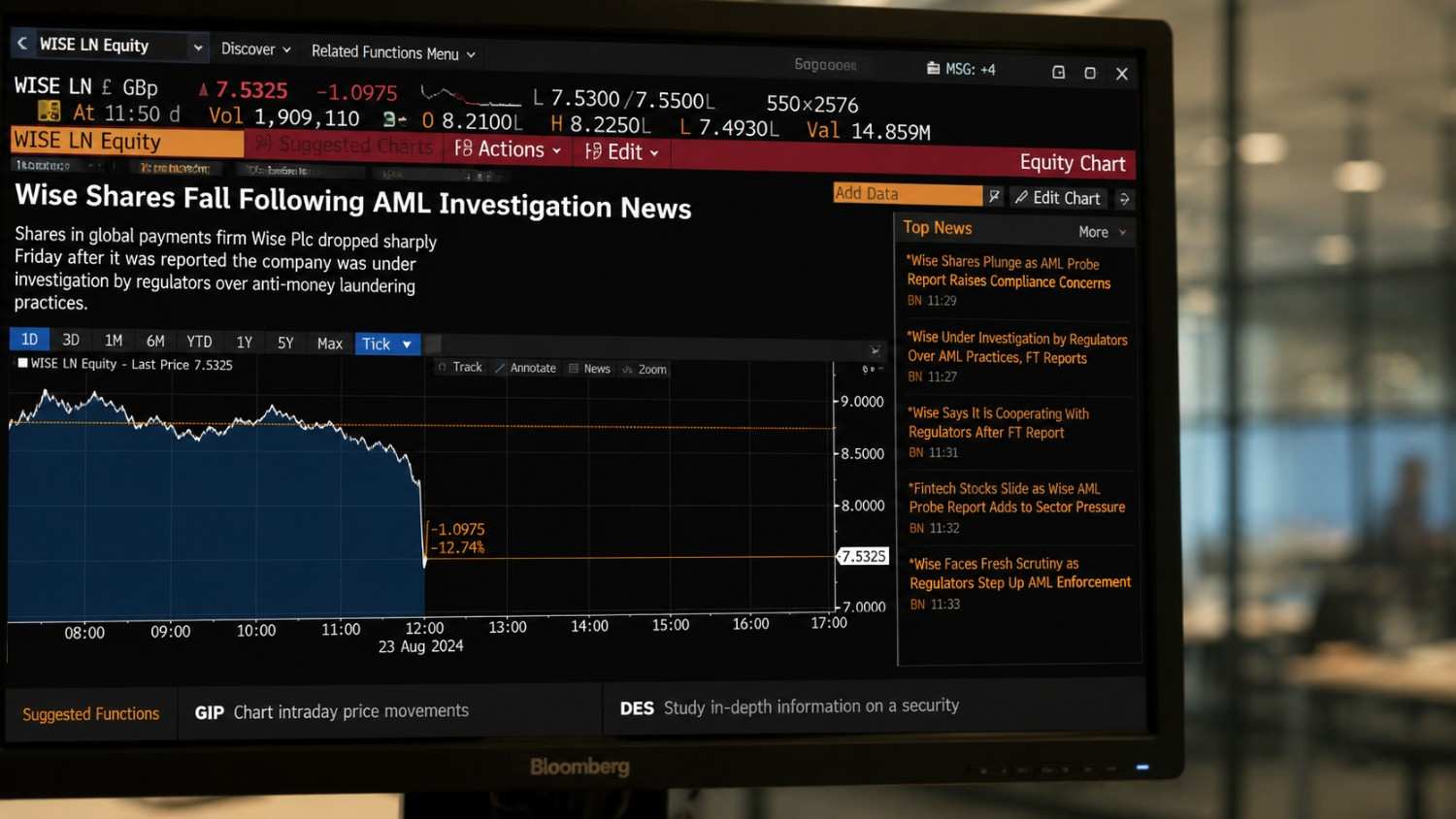
AML Investigation weighs on Wise shares
An ongoing AML Investigation has drawn market attention after shares of Wise declined as investors reacted to reports concerning regulatory scrutiny and compliance-related matters.
Moreover, the development highlights the growing importance of anti-money laundering compliance across the financial services sector. As a result, investors are closely monitoring how regulatory reviews could affect the company’s operations and reputation.
Furthermore, financial institutions continue facing increasing expectations regarding compliance controls and risk management. Consequently, the AML Investigation has become a significant topic for both investors and industry observers.
AML Investigation raises compliance concerns
The latest AML Investigation underscores the importance of maintaining strong compliance frameworks within financial institutions.
Several key focus areas include:
- Anti-money laundering controls
- Transaction monitoring
- Customer due diligence
- Risk management processes
- Regulatory compliance
Moreover, regulators expect financial firms to maintain robust systems that help identify and prevent financial crime. Because compliance failures can create operational and reputational risks, institutions continue investing heavily in monitoring capabilities.
Furthermore, strong compliance programs help maintain trust among customers and stakeholders. As a result, regulatory developments often attract considerable market attention.
Wise faces increased investor scrutiny
The ongoing AML Investigation has prompted investors to evaluate potential implications for Wise.
Moreover, publicly traded financial companies are often closely watched when regulatory matters emerge. Because investors seek clarity regarding potential risks, market reactions can be significant.
Furthermore, uncertainty surrounding regulatory reviews may influence investor sentiment. Consequently, share price movements often reflect concerns about possible outcomes.
Additionally, transparency remains important during periods of regulatory attention.
Financial sector prioritises compliance
The AML Investigation reflects broader industry efforts to strengthen financial crime prevention measures.
Several important priorities include:
- Fraud prevention
- Know-your-customer procedures
- Regulatory reporting
- Transaction oversight
- Financial crime detection
Moreover, financial institutions continue expanding compliance teams and technology investments. Because financial crime risks remain a major concern, firms are strengthening monitoring frameworks.
Furthermore, regulators around the world are increasing expectations regarding compliance standards. As a result, anti-money laundering controls remain a critical focus area.
AML Investigation highlights regulatory expectations
The attention surrounding the AML Investigation demonstrates the importance of meeting evolving regulatory requirements.
Moreover, authorities continue focusing on how financial institutions identify and manage risks. Because regulatory frameworks are becoming increasingly complex, compliance obligations continue expanding.
Furthermore, firms must balance growth objectives with strong governance and oversight. Consequently, regulatory compliance remains an essential component of long-term business strategy.
Additionally, effective controls can help reduce operational and legal risks.
Technology plays a growing role in compliance
The ongoing AML Investigation also highlights the growing role of technology in compliance operations.
Several commonly used tools include:
- Automated monitoring systems
- Artificial intelligence solutions
- Risk assessment platforms
- Transaction screening software
- Compliance analytics
Moreover, technology can help institutions identify suspicious activity more efficiently. Because financial transactions occur at large scale, automation has become increasingly important.
Furthermore, digital tools can improve reporting and investigation processes. As a result, compliance technology continues attracting investment.
Comparison between traditional and technology-driven compliance systems
| Feature | Traditional Compliance | Technology-Driven Compliance |
|---|---|---|
| Monitoring Speed | Slower | Faster |
| Data Processing | Manual | Automated |
| Risk Detection | Moderate | Enhanced |
| Scalability | Limited | Higher |
| Reporting Efficiency | Lower | Improved |
Moreover, this comparison explains why financial institutions continue modernising compliance operations.
AML Investigation affects market sentiment
The AML Investigation has contributed to changes in market sentiment surrounding Wise.
Moreover, investors often react quickly to developments involving regulatory oversight. Because compliance issues can affect business performance and reputation, regulatory reviews receive significant attention.
Furthermore, market participants continue assessing available information regarding the investigation. Consequently, share price volatility may persist while developments unfold.
Additionally, investor confidence often depends on transparency and effective risk management.
Regulatory compliance remains a strategic priority
The focus created by the AML Investigation reinforces the importance of regulatory compliance across financial services.
Moreover, firms must continuously update systems and procedures to meet changing requirements. Because financial crime risks evolve over time, compliance programs require ongoing improvement.
Furthermore, institutions are expected to maintain strong governance structures and internal controls. As a result, compliance remains a central strategic priority.
Additionally, regulatory expectations are likely to continue increasing in the future.
Future outlook for AML Investigation developments
The future impact of the AML Investigation will depend on regulatory findings, company responses, and broader market conditions.
Moreover, investors are expected to continue monitoring updates closely. Because regulatory reviews can influence business operations and investor confidence, future developments remain important.
Furthermore, financial institutions across the sector may review their own compliance practices in response to increased scrutiny. Consequently, anti-money laundering controls are likely to remain a major industry focus.
Additionally, technology and compliance innovation may continue supporting stronger risk management efforts.
Final Thoughts
The ongoing AML Investigation involving Wise highlights the growing importance of compliance, governance, and financial crime prevention within the financial sector.
Moreover, regulatory scrutiny continues shaping investor sentiment and industry practices. As a result, financial institutions are increasing investments in compliance frameworks and monitoring technologies.
Ultimately, the AML Investigation serves as a reminder that strong risk management and regulatory compliance remain essential for maintaining trust and supporting long-term business success.
Wise shares tumble over AML investigation
Comments
No comments yet. Be the first to share your thoughts.
Leave a comment