
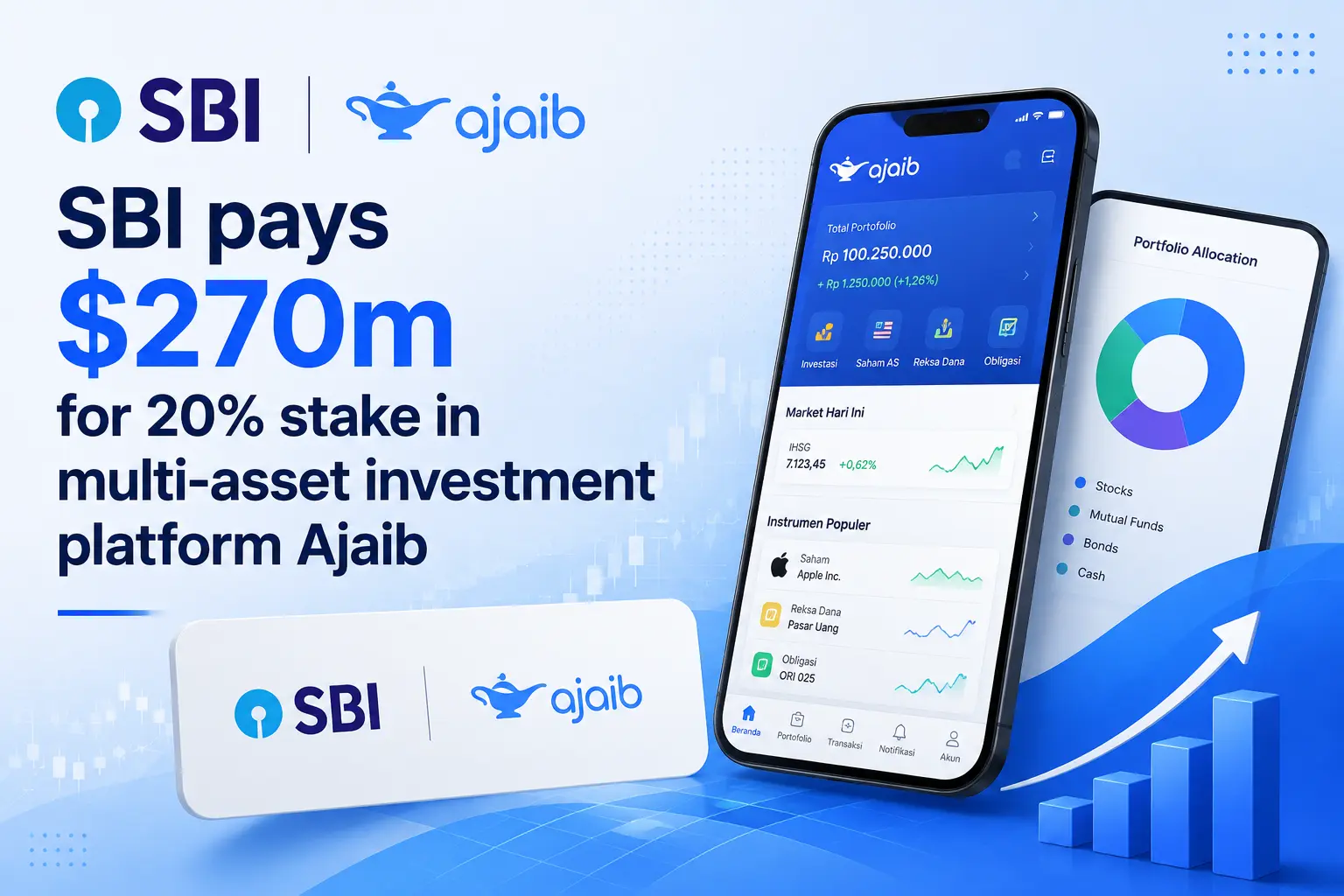
SBI Invests $270 Million in Ajaib for 20% Stake, Expanding Digital Asset Push in Indonesia
Japan’s SBI Holdings has invested $270 million in Indonesian investment platform Ajaib for an approximately 20% stake, strengthening its strategy around digital investing and assets across Southeast Asia.
Japan’s SBI Holdings is expanding its presence in Indonesia’s fast-growing fintech market after investing $270 million in Ajaib, one of the country’s leading online multi-asset investment platforms.
The strategic investment gives SBI an approximately 20% stake in Ajaib and makes the Indonesian fintech an equity-method affiliate of the Japanese financial group. SBI announced the investment on August 28.
The deal also gives SBI a stronger foothold in Indonesia as financial services across Asia increasingly converge around digital investing, cryptocurrencies, stablecoins and tokenized assets.
SBI Ajaib investment strengthens Indonesia fintech strategy
Ajaib started as an online securities brokerage in 2019. Since then, the company has expanded into a broader investment platform serving retail investors and businesses.
Today, its offering covers several asset classes, including stocks, mutual funds and cryptocurrencies. The company also provides corporate customers with services linked to stablecoin settlement and liquidity.
The latest investment adds significant financial backing as Ajaib continues expanding its platform.
Ajaib says the SBI transaction represents Indonesia’s biggest technology funding round since 2022. The company has now raised more than $500 million since its launch.
The company previously raised $153 million in its Series B funding round in 2021, a transaction that helped push Ajaib into unicorn territory.
Why SBI is investing in Ajaib
For SBI, the transaction goes beyond gaining exposure to an Indonesian fintech company.
The Japanese financial group has been building a wider digital-asset presence across Asia. Its businesses already include crypto-related operations in Japan and Singapore, while recent investments have expanded its exposure to stablecoins, tokenization, and digital financial infrastructure.
SBI has also been pursuing opportunities around its yen-denominated JPYSC stablecoin and blockchain-based settlement infrastructure. The Ajaib investment gives the group access to Indonesia’s large retail investment market and could support its broader regional digital-asset strategy.
That makes Indonesia particularly important.
The country’s growing retail investment base provides a potential distribution channel for new digital financial products. At the same time, Ajaib gives SBI an established local platform rather than requiring the Japanese group to build a new retail investment business from scratch.
Ajaib connects traditional investing with digital assets
Ajaib’s development also reflects a wider change in the fintech sector.
Digital investment platforms are increasingly moving beyond traditional stocks and funds. Many are adding cryptocurrencies, foreign exchange, commodities, and other digital financial products to meet changing investor demand.
Ajaib has followed that path.
Its platform combines traditional investment products with digital assets. For corporate customers, the company also offers OTC stablecoin settlement services and customized liquidity solutions.
As a result, the platform sits at the intersection of wealthtech, fintech and digital assets.
That combination could become increasingly valuable as Asian financial markets develop new digital settlement and investment infrastructure.
SBI continues building an Asian digital-asset network
The Ajaib investment is not an isolated move for SBI.
The Japanese financial group has continued making strategic investments across the region as it builds its digital-asset ecosystem.
SBI already operates SBI VC Trade in Japan and has exposure to Singapore-based crypto exchange Coinhako. It has also invested in other companies working on digital assets and financial infrastructure.
In August, SBI backed stablecoin-focused neobank Fasset in a $68 million Series C financing round.
The group has also explored tokenization initiatives in Asia, including projects involving digital securities and blockchain-based settlement.
Together, these moves point to a broader strategy.
Rather than treating crypto as a standalone business, SBI appears to be positioning digital assets alongside payments, investment management and traditional financial services.
Indonesia becomes an important fintech market
Indonesia is becoming an increasingly important market for digital financial services.
Its large population, growing digital economy, and expanding retail investment activity have attracted fintech companies and international investors.
However, the country’s startup funding environment has faced pressure in recent years. That makes a $270 million investment particularly significant.
Current industry reporting describes the Ajaib transaction as one of Indonesia’s largest technology fundraising events in recent years.
For Ajaib, the investment provides capital at a time when fintech companies are increasingly expected to demonstrate sustainable growth rather than simply chase user numbers.
For SBI, meanwhile, the transaction provides direct exposure to a major Southeast Asian consumer market.
Digital assets become part of the investment platform
The Ajaib deal also highlights another important trend: digital assets are becoming more closely integrated with mainstream investment platforms.
Traditional financial institutions have increasingly moved from simply observing the crypto market to investing in exchanges, infrastructure providers and digital-asset platforms.
SBI has been particularly active in this area.
Its regional strategy includes crypto exchanges, stablecoin initiatives, tokenization projects, and investments in companies supporting blockchain-based financial infrastructure.
Ajaib fits naturally into that strategy because its platform already combines conventional investments with digital assets.
The next phase could therefore focus on connecting these businesses more closely across markets.
What the SBI investment means for Ajaib
The new capital could help Ajaib expand its product offering and strengthen its position in Indonesia’s competitive investment market.
It could also give the company access to SBI’s wider financial network and expertise in digital assets.
That combination could create opportunities around cross-border investment, digital-asset products, and blockchain-based settlement.
Still, the success of the strategy will depend on execution.
Digital-asset markets remain highly regulated, while investor demand can shift quickly. Both companies will therefore need to balance innovation with strong risk management and regulatory compliance.
SBI Ajaib deal reflects a wider Asian fintech trend
The transaction is part of a broader shift taking place across Asian financial markets.
Banks, investment groups, and fintech companies are increasingly exploring how traditional finance can connect with blockchain-based infrastructure.
Several areas are attracting investment:
- Digital investment platforms
- Stablecoins
- Tokenized securities
- Crypto exchanges
- Cross-border payments
- Blockchain settlement
- Digital wealth management
At the same time, investors are looking for platforms that can connect these services to mainstream customers.
Ajaib could become one such platform in Indonesia.
What comes next for SBI and Ajaib?
The immediate focus will be on how the two companies use their new strategic relationship.
Ajaib can use SBI’s financial expertise and regional network to strengthen its investment and digital-asset offering. SBI, meanwhile, gains a direct connection to Indonesia’s retail investment market.
The relationship could also create opportunities to connect Indonesia with SBI’s wider digital-asset ecosystem across Asia.
However, those opportunities will depend on regulatory developments, customer adoption and the companies’ ability to integrate their respective capabilities.
For now, the investment represents a significant vote of confidence in Ajaib and Indonesia’s digital investment market.
The bigger picture for Asian fintech
The SBI Ajaib investment is important not only because of its $270 million price tag.
It shows how traditional financial groups are increasingly using strategic investments to build positions in the next generation of financial infrastructure.
SBI is gaining exposure to Indonesia’s retail investment market. Ajaib receives a major strategic investor with deep experience across financial services and digital assets.
More importantly, the deal brings traditional investing and digital assets closer together.
As Asian financial markets continue to digitize, that convergence could become one of the industry’s most important themes.
For SBI, the Ajaib investment is another step toward building a broader digital-finance network across Asia.
For Ajaib, it could provide the capital and strategic backing needed for its next stage of growth.
And for Indonesia’s fintech sector, the deal sends a clear signal: global financial institutions are still willing to make major bets on the region’s digital investment future.
SBI pays $270m for 20% stake in multi-asset investment platform Ajaib
Comments
No comments yet. Be the first to share your thoughts.
Leave a comment