
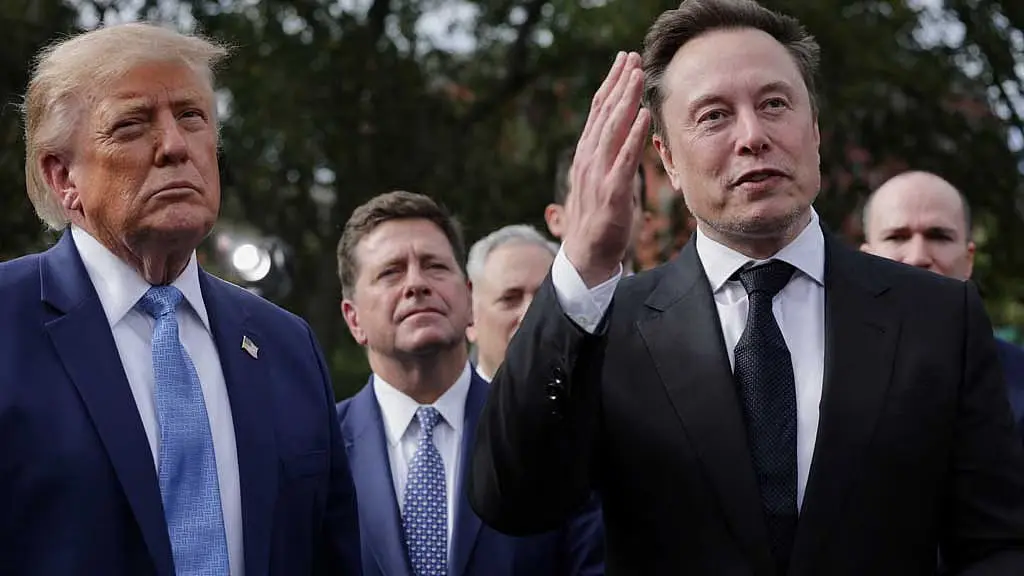
SpaceX’s AI division is getting a new name. Elon Musk confirmed on October 4 that SpaceXAI will become SpaceXSI, swapping “Artificial Intelligence” for “Super Intelligence” in its corporate identity. The change follows President Donald Trump’s late September executive order pushing federal agencies to use “Super Intelligence” and “SI” instead of “Artificial Intelligence” and “AI.”
A user on X asked Musk directly whether the company could rename itself SpaceXSI. His reply left little room for doubt: “Yes, we will make that change.” He followed up in a separate post with a blunter line: “No more AI. SI, it’s better.” Reuters independently reported the planned rebrand, adding weight to what might otherwise have looked like an offhand social media exchange.
That said, nothing here is legally required. Trump’s order applies to federal agencies and official government communications, not private companies. SpaceX didn’t have to change anything. Musk chose to anyway, and that choice is the real story.
From SpaceXAI to SpaceXSI: A Second Identity Shift in Under a Year
The rebrand gives SpaceX’s AI business its second major name change in less than twelve months, which is a fast turnaround even by Musk’s standards.
SpaceX acquired xAI back in February 2026, folding it in as what the company called a vertically integrated combination of AI, space, and connectivity technology. Once the deal closed, SpaceX began operating its AI work under the SpaceXAI banner. Now that name is already on its way out, replaced by SpaceXSI.
The timing lines things up neatly. Trump signed Executive Order 14434, titled “Inaugurating the Era of Super Intelligence,” on September 29. Musk announced the SpaceX rebrand just five days later. However, the order itself never mentions SpaceX or any private company by name, so the connection here is about alignment, not compliance.
What Trump’s Executive Order Actually Does
Executive Order 14434 argues that today’s frontier AI systems have outgrown the term “artificial intelligence” as it was originally used. As a result, the order instructs executive branch agencies to favor “Super Intelligence” and “SI” across official correspondence, public communications, websites, reports, and policy documents, wherever that’s legally permitted.
It’s worth being precise about what the order does not do. It doesn’t rewrite existing regulations, past presidential actions, contracts, or historical records. It also doesn’t create a brand-new legal definition of superintelligence right away. For now, the order relies on the existing statutory definition of artificial intelligence already written into U.S. law.
Still, something will eventually change on the definitional side. The White House has given the Assistant to the President for Science and Technology 60 days to propose an actual federal definition of “Super Intelligence” and “SI.” That process is also expected to examine whether the current legal definition of AI needs to be revised, expanded, or scrapped entirely. Until that happens, the terminology shift is mostly cosmetic at the federal level, even as it ripples outward into corporate branding.
Musk’s Longstanding Interest in Superintelligence
This isn’t the first time Musk has engaged seriously with the concept of superintelligence. Fox Business noted his earlier ties to Nick Bostrom’s 2014 book “Superintelligence: Paths, Dangers, Strategies,” a text that shaped a lot of early thinking about advanced AI risk. Musk has spoken publicly for years about the dangers highly capable AI systems could pose.
So his latest comments aren’t really a new philosophical position. What’s new is attaching the “SI” label directly to a SpaceX business line. The shift from SpaceXAI to SpaceXSI is a branding decision, not an announcement of some previously undisclosed AI breakthrough. That distinction matters quite a bit, and it’s one worth keeping in mind as the story develops.
Building AI Into a Bigger Technology Strategy
The rebrand arrives as SpaceX keeps weaving AI deeper into its overall business plan. The company’s own materials describe its operations as spanning space, connectivity, and AI, with ambitions that go well beyond rockets and satellites.
One area getting particular attention is orbital AI compute. SpaceX has floated the idea that space-based infrastructure could eventually help solve some of AI’s biggest physical constraints, namely the power and cooling demands that ground-based data centers struggle with. It’s an ambitious bet, and one that ties directly into Musk’s broader vision for the company.
SpaceX’s European prospectus backs this up on paper. It identifies AI as a newly formed business segment and names xAI as the foundation of that effort, while also flagging integration, scaling, and execution risks tied to building the segment out. In other words, this isn’t just talk. SpaceX is actively trying to stand up a real AI business alongside its established rocket and satellite operations, and the SpaceXSI name now sits on top of that entire effort.
The $1.25 Trillion Deal Behind the Name
To understand why this rebrand carries weight, it helps to revisit the scale of the underlying deal. SpaceX announced its acquisition of xAI in February 2026, describing the move as a way to combine AI capabilities with its existing space and connectivity businesses under one vertically integrated structure.
Reuters reported that the deal valued the combined company at roughly $1.25 trillion. Under the agreed structure, xAI remains a wholly owned subsidiary while still operating as part of the larger SpaceX group. That arrangement gave Musk’s companies a genuinely enormous combined footprint: rockets, Starlink connectivity, satellite infrastructure, and now a serious AI research and product arm all under one roof.
The SpaceXAI-to-SpaceXSI switch adds a new layer on top of that existing structure. It doesn’t change the underlying business. It changes what that business calls itself.
Why the Name Change Isn’t a Technology Announcement
Here’s the point worth repeating: renaming the division to SpaceXSI does not mean SpaceX has built or achieved anything resembling actual superintelligence. There’s no new model, no fresh capability, and no scientific claim buried in the announcement.
That context matters because “superintelligence” has a specific history in AI research. Researchers have generally used the term to describe hypothetical future systems capable of exceeding human cognitive performance across a wide range of tasks, not products that exist today. Trump’s executive order uses the term in a different, narrower way, built for government communications rather than technical classification, and it still leans on the existing statutory AI definition for now.
So Musk’s rebrand should be read as exactly what it is: an alignment with new government terminology, not confirmation that SpaceX has crossed some technical threshold. The company’s AI products remain what they were the day before the announcement.
Could Other Companies Follow Musk’s Lead?
Trump’s executive order has introduced a new vocabulary into how the federal government talks about advanced AI, and Musk’s rebrand gives that vocabulary its first high-profile corporate test case. If SpaceXSI sticks and more companies decide to echo the shift, “SI” could start showing up more often in investor presentations, marketing materials, and everyday tech industry language.
That said, a full industry pivot away from “AI” seems unlikely anytime soon. The term is deeply embedded across research literature, regulatory frameworks, product naming, financial disclosures, and ordinary conversation. Replacing all of that overnight just isn’t realistic.
For financial markets specifically, what companies actually build and monetize will likely matter more than what they choose to call it. Terminology shifts make headlines, but revenue, product adoption, and compute costs are what eventually move valuations.
A Business Still Actively Shipping AI Products
None of this happens in a vacuum. SpaceX’s AI division has been building real products well before this naming change came along. Reuters reported in July that SpaceXAI had unveiled Grok 4.5, a model focused on coding and agentic tasks, meaning multi-step workflows an AI agent can carry out somewhat independently.
That detail is worth keeping in view. SpaceXSI isn’t a shell waiting to be filled with substance later. It’s inheriting an active product line and an ongoing development effort, just under a different name.
What Comes Next
For now, Musk has only confirmed his intention to rename the division. Exactly how fast SpaceXSI rolls out across products, websites, and official communications remains to be seen, and the practical rollout will take time regardless of how quickly the announcement spread online.
The bigger open question extends beyond SpaceX. Will Musk apply the same “SI” terminology to his other companies? Will competitors follow suit, or will “SpaceXSI” end up as an isolated example rather than the start of a broader industry trend? Those answers will likely take months to play out, not days.
What’s already clear is this: a presidential directive aimed squarely at federal government communications has, within days, influenced the branding of one of the most valuable technology companies in the world. That’s a notably fast transmission from policy to corporate identity, and it says something about how closely Musk tracks Washington’s language choices, even when nothing legally obligates him to adopt them.
Musk Says SpaceXAI Will Rebrand To ‘SpaceXSI’ After Trump Pushes ‘Super Intelligence’ Name Change
Comments
No comments yet. Be the first to share your thoughts.
Leave a comment