
SoftBank’s $40 Billion Bridge Facility Fuels Its Biggest Bet Yet on OpenAI
Artificial intelligence is no longer driven by technology alone. It is now driven by capital.
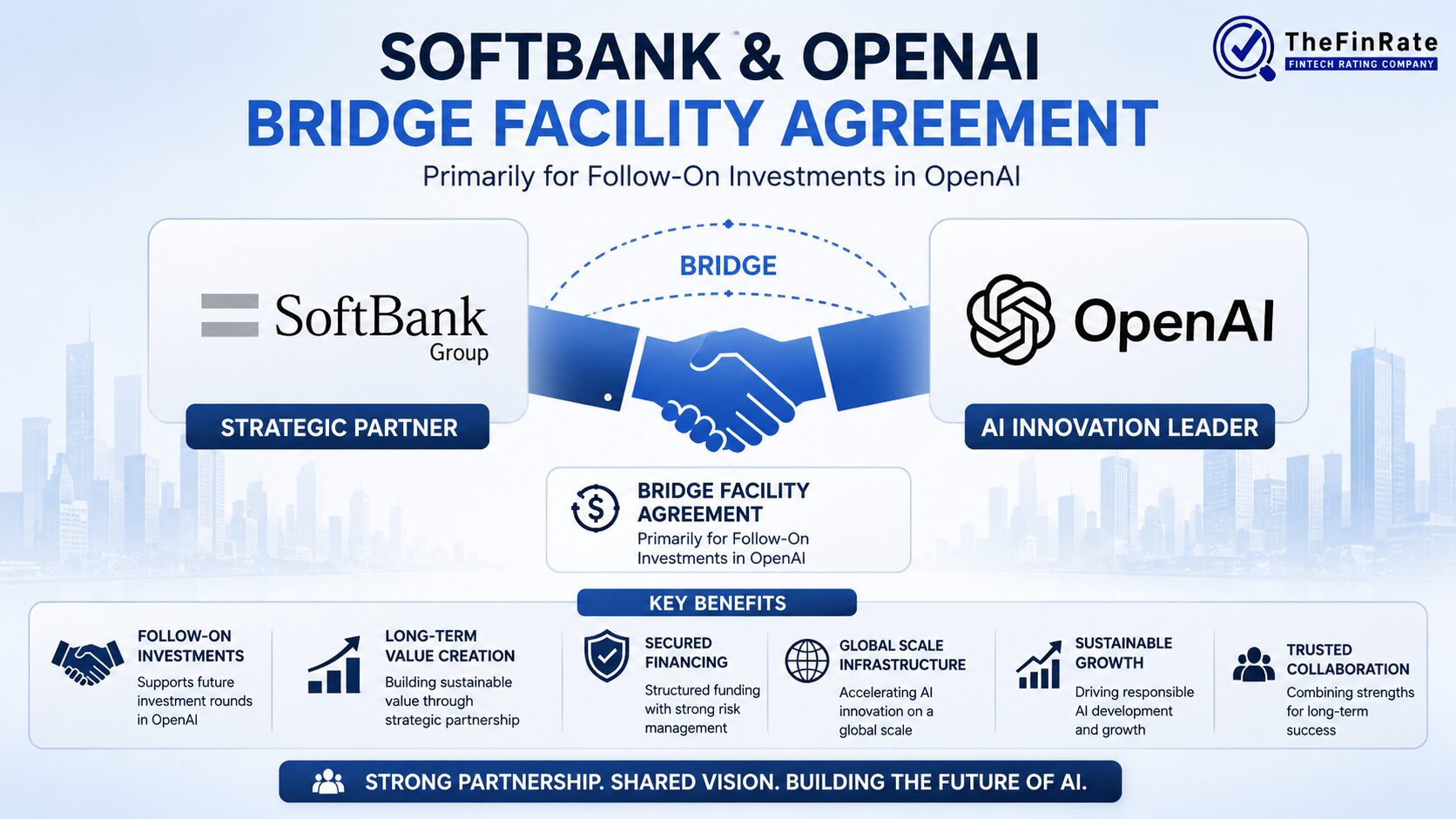
SoftBank has taken that reality to a new level by securing a $40 billion bridge financing facility, one of the largest AI-related funding arrangements ever announced. The money is primarily intended to support the company’s $30 billion follow-on investment in OpenAI, reinforcing its commitment to one of the world’s most influential AI companies.
The deal is more than another funding announcement. It shows how the race for AI leadership is becoming a battle of financial strength, where access to capital is just as important as access to technology.
What Happened?
SoftBank Group announced that it entered into a $40 billion unsecured bridge facility agreement on March 27, 2026.
The financing serves one primary purpose: funding the company’s previously announced $30 billion follow-on investment in OpenAI through SoftBank Vision Fund. Any remaining funds may be used for general corporate purposes.
According to Reuters, the financing was arranged by a syndicate of major global banks, including:
- JPMorgan Chase
- Goldman Sachs
- Mizuho Bank
- Sumitomo Mitsui Banking Corporation (SMBC)
- MUFG Bank
The participation of several leading financial institutions highlights the scale and significance of the transaction.
Why SoftBank Is Borrowing $40 Billion
SoftBank had already committed to investing another $30 billion in OpenAI earlier this year.
Rather than waiting to raise permanent capital, the company chose a bridge facility to meet that commitment immediately.
In simple terms, SoftBank is borrowing now so it can invest now.
The company expects to repay the bridge loan later through a combination of:
- Asset sales
- New financing arrangements
- Other corporate funding activities
This approach allows SoftBank to move quickly while preserving flexibility over how it manages long-term funding.
It is a classic financing strategy—but on an extraordinary scale.
Understanding the Deal Structure
One feature makes this transaction particularly noteworthy.
The loan is unsecured.
Unlike many large corporate financings, SoftBank did not pledge specific assets as collateral.
Instead, lenders are relying on the company’s overall financial strength and future repayment plans.
Key terms include:
- Facility size: $40 billion
- Loan type: Unsecured bridge facility
- Maturity: March 25, 2027
- Primary purpose: Finance OpenAI investment
Because bridge loans are temporary by design, SoftBank has roughly one year to refinance or repay the debt.
That creates flexibility—but it also creates pressure.
The OpenAI Investment Will Be Made in Stages
SoftBank is not deploying the entire investment at once.
Instead, the funding follows a phased schedule.
According to the company:
- The first investment was previously completed.
- The second $10 billion tranche has been funded using the bridge facility.
- The third $10 billion tranche is scheduled for October 1, 2026.
This staggered approach helps spread funding requirements over time while giving SoftBank greater flexibility in managing its balance sheet.
Why This Matters for the AI Industry
This financing tells a much bigger story than one company’s investment strategy.
Artificial intelligence has become one of the most capital-intensive industries in the world.
Building advanced AI models now requires enormous spending on:
- Computing infrastructure
- AI chips
- Data centers
- Cloud capacity
- Research talent
- Global expansion
As investment requirements continue to grow, companies increasingly rely on sophisticated financing structures rather than traditional equity funding alone.
SoftBank’s bridge facility is a clear example of this new reality.
The future of AI will depend not only on innovation but also on access to large-scale capital.
The Financial Risks Investors Should Watch
The opportunity is significant, but so are the risks.
Rising leverage
Borrowing $40 billion increases SoftBank’s overall debt exposure.
If financial markets weaken or refinancing becomes more expensive, repayment could become more challenging.
Concentration risk
A substantial portion of the financing supports a single investment.
Even though OpenAI is widely viewed as an industry leader, concentrating such a large amount of capital in one company naturally increases investment risk.
Execution risk
Bridge loans are temporary.
SoftBank must successfully refinance the facility or generate enough liquidity through asset sales before the loan matures.
Any delays could increase financing costs or pressure the company’s balance sheet.
Why SoftBank Still Sees the Upside
Despite the risks, the potential rewards remain compelling.
If OpenAI continues leading the generative AI market, SoftBank could significantly strengthen its position in one of the world’s fastest-growing technology sectors.
The investment also reinforces SoftBank’s role as one of the largest global investors in artificial intelligence.
Rather than simply funding startups, the company is helping shape the financial infrastructure behind the next generation of AI.
That positioning could prove valuable as enterprise AI adoption accelerates across industries.
The Bigger Picture
Many headlines describe this as another major investment in OpenAI.
The bigger story, however, is about financing.
SoftBank is using structured debt to secure a strategic position today while planning to arrange permanent funding later.
That approach reflects how today’s largest technology investments are increasingly funded.
Capital markets have become just as important as product innovation.
Companies that can access billions of dollars quickly gain a significant competitive advantage in the AI race.
What Comes Next?
The immediate focus shifts to execution.
SoftBank must complete the remaining investment tranches while successfully managing its refinancing strategy over the next twelve months.
Investors will also watch whether:
- Asset sales progress as planned.
- Credit conditions remain favorable.
- OpenAI continues expanding its commercial business.
- AI investment demand remains strong.
Each of these factors will influence how successful this financing ultimately becomes.
Final Thoughts
SoftBank’s $40 billion bridge facility is one of the most ambitious financing moves in the history of artificial intelligence.
It demonstrates that the AI race is no longer driven solely by breakthrough technology. Financial strength, capital access, and execution have become equally important.
The bridge loan gives SoftBank the flexibility to deepen its investment in OpenAI today while arranging long-term funding over the coming year.
Whether that strategy delivers exceptional returns or creates additional financial pressure will depend on two things: OpenAI’s continued growth and SoftBank’s ability to manage one of the largest bridge financings ever assembled for an AI investment.
One thing is already clear—the future of artificial intelligence will be shaped not only by the companies building the technology, but also by the institutions willing to finance it.
Comments
No comments yet. Be the first to share your thoughts.
Leave a comment