
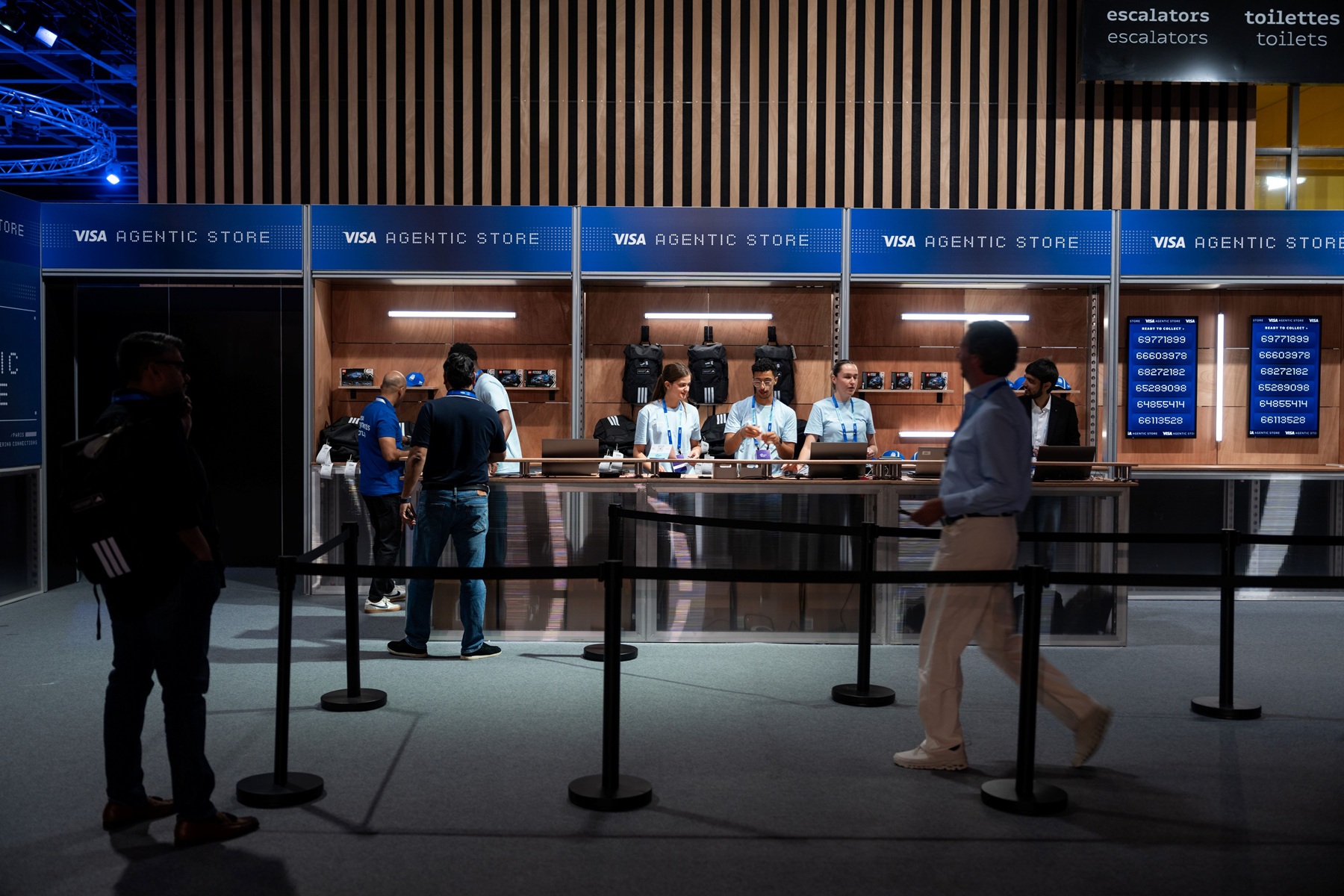
Visa is expanding its Agentic Ready program beyond card issuers, bringing merchants, payment service providers, and B2B commerce platforms into the infrastructure needed for AI-driven payments. The expansion begins with more than 140 participants and aims to help businesses recognize, authenticate, and process transactions initiated by artificial intelligence agents.
The move addresses a key challenge for agentic commerce. AI agents may increasingly search for products, compare prices, and complete purchases on behalf of consumers. However, merchants and payment providers must first establish how to identify trusted agents, verify payment authority, and protect transactions.
Visa's expanded program will provide a collaborative framework for testing these capabilities through existing payment infrastructure. It forms part of Visa Intelligent Commerce, the company's broader strategy for AI-powered commerce.
The expansion also brings together major payment companies, including Adyen, Airwallex, Checkout.com, Fiserv, Global Payments, PayPal, Stripe, and Worldline. Meanwhile, B2B platforms such as Billtrust, HighRadius, and Versapay are exploring how AI agents can support business purchasing and invoice payments.
Visa Extends Agentic Ready Beyond Card Issuers
Visa initially introduced Agentic Ready to help financial institutions prepare for transactions initiated by AI agents.
The program already includes more than 175 issuers across 45 markets. These institutions can test and validate agent-initiated transactions using their own issued credit and debit cards.
The latest expansion addresses the acceptance side of payments. This includes merchants, acquirers, payment service providers, and commerce platforms.
Visa says the program now launches with more than 140 participants. It also expects additional financial institutions, merchants, and technology providers to join throughout 2027.
The expanded framework will help participants assess how trusted agent transactions can move through existing payment systems. This includes identifying agents, authenticating transactions, and processing payments securely.
Visa says the program also gives partners a common way to test new commerce experiences. As a result, businesses can explore agentic payments without replacing the infrastructure they already use.
Major Payment Providers Prepare for AI-Initiated Transactions
The expansion brings together companies across different parts of the payments ecosystem. Each participant is focusing on capabilities that support trusted agent-initiated transactions.
Adyen is working with Visa on agent recognition, network token acceptance, and the use of agentic signals in fraud and risk systems. These capabilities complement Adyen's existing agentic commerce work.
Airwallex is collaborating with Visa to support merchants operating across markets and currencies. Its work includes embedding the Trusted Agent Protocol into interactions, alongside its Agentic Commerce Suite and agentic risk capabilities.
Checkout.com is helping merchants adapt existing checkout experiences for AI-initiated payments. The work focuses on trusted agent identification, secure authentication, risk management, and payment processing.
Meanwhile, Fiserv is advancing capabilities across agent discovery, checkout, tokenized payments, authentication, and fraud management.
Global Payments is focusing on agent recognition, customer permissions, fraud controls, and payment routing. These capabilities could help merchants manage agent-initiated transactions across different commerce environments.
PayPal is working with Visa to expand acceptance of Visa agentic tokens across its merchant network. This would allow merchants to process tokenized payments initiated by AI agents through their existing PayPal integrations.
Stripe is testing ways to recognize agent-initiated payments, strengthen merchant controls, and improve approval rates. Worldline is also working with Visa on security, trust, and interoperability, building on its earlier live agentic payment demonstrations in European markets.
Other participants include Basis Theory, VGS, and Spreedly. Their work covers payment credentials, merchant identification, agent authentication, and support for trusted payments through existing infrastructure.
B2B Platforms Bring Agentic Payments to Business Transactions
Agentic commerce is not limited to consumers buying products online. AI agents could also support business purchasing, invoice payments, and financial administration.
Visa's expanded program includes BillTrust, HighRadius, and Versapay to explore these opportunities.
Billtrust is building on an earlier pilot involving trusted AI agents completing approved invoice payments through supplier portals. The company is now exploring how agent and business identification can support wider adoption.
The model aims to preserve supplier controls, approved payment instructions, and transaction visibility. This is important because businesses need to know which agent is making a payment and whether the transaction has been authorized.
HighRadius is working towards secure B2B payments through its Agentic AI platform. The company says its platform includes more than 190 AI agents supporting finance functions across more than 1,500 companies.
Its work with Visa aims to reduce manual tasks such as supplier portal logins and emailed card payments. It also seeks to maintain visibility and control over business transactions.
Versapay is working with Visa and accounts payable partners to develop agentic bill payments. Its approach aims to let trusted AI agents access approved payment flows while preserving business oversight and reconciliation.
These developments could eventually reduce manual work across accounts payable and receivable. However, broader deployment will depend on reliable agent identity, payment permissions, and controls.
Trust, Identity, and Tokenization Will Shape Agentic Commerce
Agentic commerce introduces a different set of challenges for payment security.
In a traditional online purchase, a consumer directly interacts with a merchant and approves the transaction. With agentic commerce, an AI agent may perform several steps on the consumer's behalf.
That creates important questions. Can the merchant verify the agent's identity? What has the consumer authorized? Can the payment provider confirm that the transaction follows those instructions?
Visa's program is designed to help participants test answers to these questions.
Network tokens can help protect payment credentials by replacing sensitive card details with tokens. Agent identification and authentication can also help establish whether a transaction comes from a trusted agent.
In addition, risk and fraud signals can help merchants and payment providers assess suspicious activity. Permission controls can define what an agent may purchase and under which conditions.
The Visa Acceptance Platform complements the program with capabilities covering omnichannel acceptance, credential management, fraud protection, and dispute management.
Together, these tools aim to help businesses support agentic experiences while retaining existing security and payment controls.
What the Expansion Means for the Future of Payments
Visa's latest move signals that agentic commerce is moving beyond card issuer preparation and into the wider acceptance ecosystem.
Payment networks cannot scale this model alone. Merchants, acquirers, payment processors, and technology platforms must also recognize and support agent-initiated transactions.
The participation of major companies across these categories shows growing industry coordination. It also highlights the need for common approaches to agent identity, customer permissions, tokenized credentials, and transaction security.
However, joining Agentic Ready does not mean every participant has launched fully operational agentic payment services. The program provides a framework for testing and validating readiness. Many participants describe their work as preparation, exploration, or capability development.
Some activity is already further along. Worldline has reported live agentic payment transactions in European markets, while Billtrust has described a live pilot for approved invoice payments through supplier portals.
The next challenge will be turning these early capabilities into reliable commercial services. Merchants will need confidence in agent identity, customers will need control over delegated spending, and payment providers will need effective fraud and dispute processes.
The FinRate Takeaway: Visa is bringing the acceptance side of the payments ecosystem into the agentic commerce transition. Its expanded program connects more than 140 participants with an existing network of 175+ issuers across 45 markets. The scale of participation is significant, but the real test will be whether the industry can make AI-initiated payments secure, interoperable, and commercially useful.
Visa Expands Agentic Ready to Help Scale Trusted AI Commerce Globally
Comments
No comments yet. Be the first to share your thoughts.
Leave a comment