
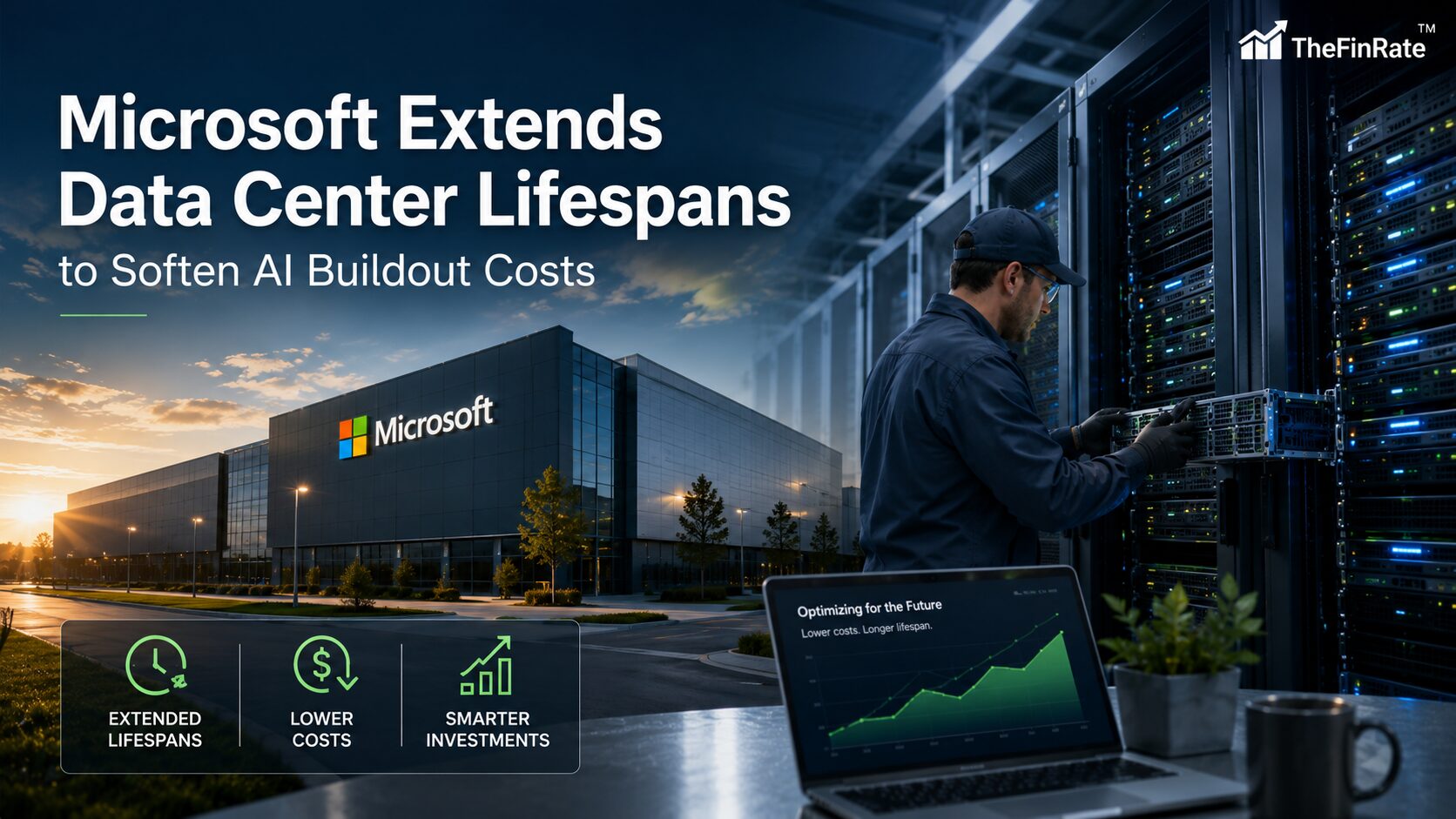
Microsoft Extends Data Center Lifespans to Reduce AI Infrastructure Costs
Microsoft is extending the operational lifespan of key data center assets. The move is part of a broader effort to reduce the rising costs of AI infrastructure. As a result, the company aims to improve capital efficiency while continuing to expand its AI capabilities.
The decision reflects the financial pressure facing major cloud providers. AI infrastructure requires massive spending on graphics processing units (GPUs), networking equipment, power systems, and large data centers. Therefore, companies are looking for ways to control costs without slowing AI growth.
Microsoft is not reducing its AI ambitions. Instead, it is changing how it manages long-term infrastructure investments. By using existing facilities for longer, the company can delay replacement costs and improve returns on earlier investments.
A More Disciplined AI Investment Strategy
Over the past two years, Microsoft has invested heavily in AI infrastructure. The company has expanded data center capacity across Azure and AI services. It has also increased spending on AI chips and cloud infrastructure.
However, extending data center lifespans changes the economics of that investment. The company can spread costs over a longer period. Consequently, annual depreciation expenses may decline.
This strategy also improves capital allocation. Instead of replacing facilities quickly, Microsoft can upgrade them gradually. As a result, the company can maintain computing capacity while reducing unnecessary spending.
Investors have closely watched AI infrastructure costs. Therefore, Microsoft’s decision signals a stronger focus on financial discipline.
Why Data Center Lifespans Matter
Data centers are among the most expensive assets in the technology industry. Building a modern AI facility requires billions of dollars in investment. The costs include land, construction, cooling systems, networking, and power infrastructure.
Traditionally, cloud providers replace parts of this infrastructure on fixed schedules. However, those replacement cycles can become expensive during a major AI expansion.
By extending asset lifespans, Microsoft can reduce capital expenditure pressure. In addition, the company can generate more value from existing infrastructure.
This approach may improve operating margins over time. Moreover, it creates greater flexibility for future AI investments.
Balancing Growth and Cost Control
Microsoft continues to see strong demand for AI services. Azure remains a major growth driver for the company. Businesses are deploying AI applications across cloud computing, software development, and enterprise automation.
Nevertheless, AI infrastructure has become increasingly expensive. Training and running large AI models requires enormous computing power. Furthermore, hardware technology changes rapidly, which creates constant pressure to upgrade systems.
Microsoft is trying to balance expansion with cost control. Therefore, longer infrastructure lifecycles have become an important financial tool.
The company can continue adding AI capacity. At the same time, it can reduce the pace of infrastructure replacement spending.
A Broader Industry Signal
Microsoft’s strategy could influence other hyperscale cloud providers. Companies such as Amazon Web Services, Google Cloud, and Meta face similar investment pressures.
Each company has committed billions of dollars to AI infrastructure. However, investors increasingly want evidence that those investments can generate attractive returns.
Longer infrastructure lifecycles may become more common across the industry. If that happens, equipment suppliers and construction firms could see changes in demand patterns.
Meanwhile, cloud providers may focus more on efficiency than rapid expansion alone.
The Economics of AI Infrastructure
AI infrastructure has become a competitive advantage. Access to GPUs, networking capacity, power, and data centers determines how quickly companies can deploy AI services.
Microsoft’s partnership with OpenAI has increased the importance of infrastructure optimization. AI workloads continue to expand across enterprise software and cloud services.
Therefore, the company must ensure that infrastructure spending produces long-term value.
Extending data center lifespans supports that goal. Existing assets can continue generating returns while newer technologies are introduced selectively.
What Investors Should Watch
The decision may improve Microsoft’s financial profile. Lower replacement spending can support stronger free cash flow over time.
Investors are watching several key metrics. These include capital expenditure growth, operating margins, and return on invested capital.
If AI revenue continues rising, Microsoft could benefit from greater operating leverage. In other words, revenue may grow faster than infrastructure costs.
Moreover, the company will have more flexibility to invest in next-generation AI chips and networking technologies.
Sustainability Benefits
Longer data center lifespans may also support Microsoft’s sustainability goals. Constructing new facilities requires significant materials, energy, and land resources.
By extending the useful life of existing infrastructure, Microsoft can reduce the environmental impact of frequent replacement cycles. In addition, the company can improve resource efficiency across its data center network.
Energy efficiency remains an important priority. AI workloads consume large amounts of electricity, and power availability has become a key industry challenge.
Therefore, optimizing existing facilities can provide both financial and environmental benefits.
What Comes Next
Microsoft is expected to continue investing aggressively in AI infrastructure. Demand for AI services remains strong across cloud computing, cybersecurity, productivity software, and enterprise applications.
However, the company is becoming more selective about how it deploys capital. Instead of replacing infrastructure rapidly, Microsoft appears focused on maximizing the value of existing assets.
This strategy reflects a more mature phase of the AI investment cycle. Scale still matters, but efficiency matters more than before.
Consequently, extending data center lifespans may become a defining feature of the next stage of AI infrastructure development. Microsoft’s approach shows that long-term success will depend not only on building more capacity, but also on generating stronger returns from every infrastructure investment.
Microsoft Extends Data Center Lifespans to Soften AI Buildout Costs – PYMNTS
Comments
No comments yet. Be the first to share your thoughts.
Leave a comment