
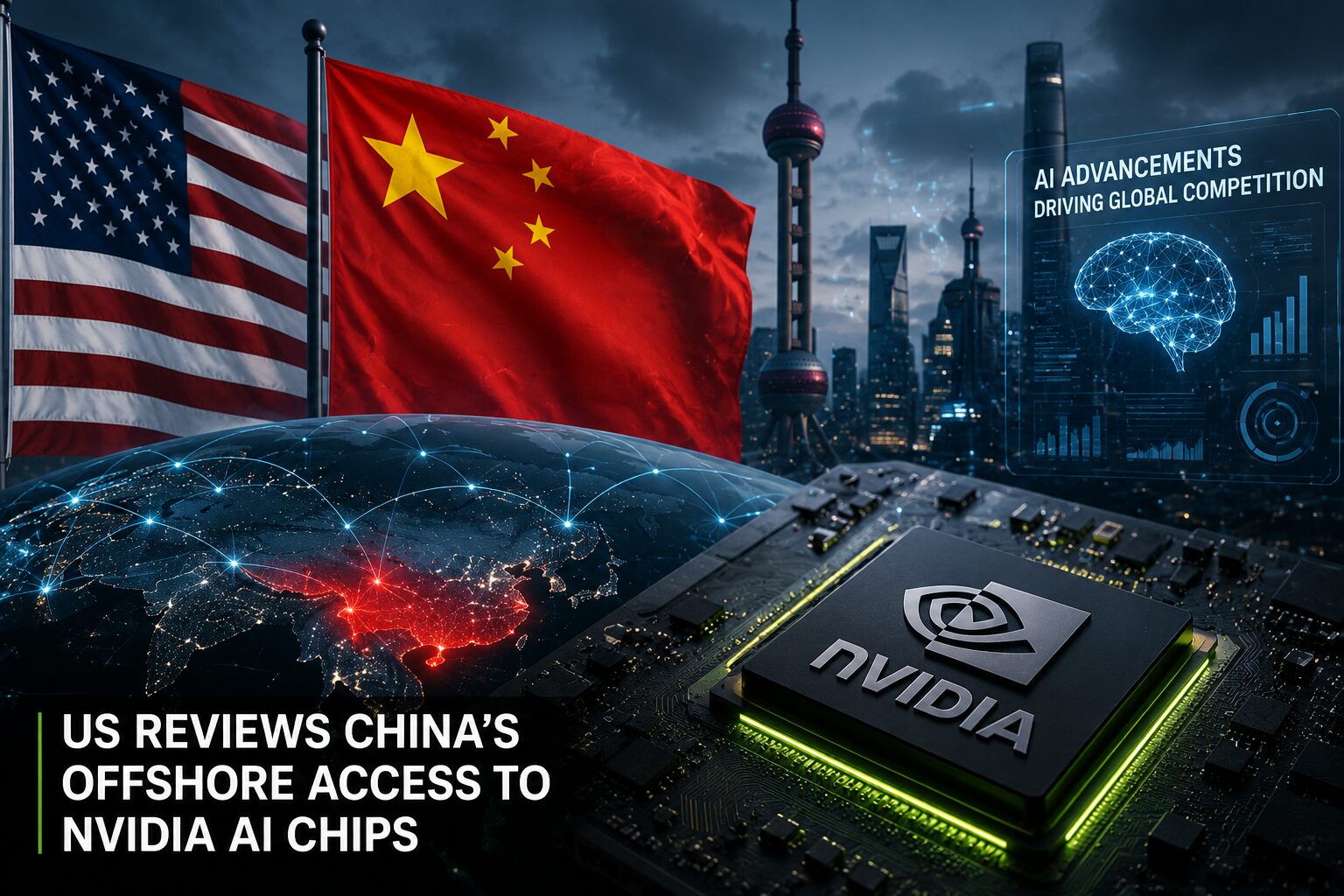
US Reviews China’s Offshore Access to Nvidia AI Chips After New AI Advances
The United States is looking into how Chinese artificial intelligence companiesre getting access to advanced Nvidia AI chips through computing infrastructure outside of China. This is happening after some AI breakthroughs that made people question if the current US export controls are working.
According to reports US officials are checking if there are ways for Chinese AI companies to use high-end Nvidia processors by renting computing power from facilities outside of China. This means they would not have to import the chips into China.
The US is worried that the current restrictions on exporting semiconductor chips might not be enough to stop Chinese companies from getting the computing power they need to develop cutting-edge AI systems.
A closer look at chip access
The review is focusing on how Chinese AI companies might be getting access to advanced AI hardware through data centers and cloud computing providers in other countries. Of buying the restricted chips directly these companies can rent processing power from facilities outside of China that use Nvidias latest AI processors.
This way AI developers can. Run advanced models using computing infrastructure that is not in China. The US officials are checking if the current export control rules are good enough to handle these kinds of access arrangements.
AI breakthroughs have intensified scrutiny
The review is happening after some Chinese AI companies made some advances in AI. These developments have caught the attention of people in Washington because they show that Chinese companies might still be able to get a lot of computing power even with export restrictions.
Nvidias high-performance AI chips are still some of the important parts for training big language models and other advanced AI systems. So getting access to these chips has become an issue in the global competition to develop AI.
Export controls remain a major policy tool
The US has made its semiconductor export controls stricter in recent years to limit Chinas access to advanced AI chips. The goal is to slow down the development of AI capabilities that could be used for military or surveillance purposes.
However cloud computing services and offshore data center access have become questions in export control policy. Policymakers are now wondering if they should regulate access to computing power than the physical shipment of semiconductor chips.
Cloud computing creates regulatory challenges
One of the big issues is that AI development needs not just the chips, but also access to computing resources. Ai companies use cloud infrastructure instead of owning all their own hardware. This makes it harder to regulate because advanced processors can be used remotely from anywhere in the world.
As AI infrastructure becomes more global governments might need ways to monitor access to high-performance computing resources. The US is trying to figure out how to handle this.
Nvidia remains central to the AI race
Nvidia is still the main supplier of AI accelerators used by big tech companies, cloud providers and AI developers all over the world. The demand for its processors keeps growing as more people invest in AI.
The company has been affected by export restrictions, which have changed what products it can sell in some markets. The US review is not about putting restrictions on Nvidia but it shows how important access to AI computing infrastructure is.
Potential implications for AI infrastructure
If regulators decide that offshore access arrangements are getting around export controls they might consider new measures for cloud computing foreign data centers or international AI infrastructure providers. This could affect a lot of companies, including cloud service providers and AI infrastructure companies.
Any changes could also influence where AI companies put their computing infrastructure and how they get processors. The US is still figuring out what to do.
What happens next?
The US has not announced any policy changes and the review is still part of an ongoing assessment of export control enforcement. The review is trying to understand how Chinese AI companies are legally getting access to computing resources outside of China.
Any future actions would likely involve working with export control authorities, technology regulators and international partners. The US is taking its time to get it right.
The bottom line
The US review of Chinas access to Nvidia AI chips shows a new phase in the global competition over AI infrastructure. As AI development relies more on cloud computing and international data centers regulators are checking if the current export controls are still working.
The outcome of this review could change US semiconductor policy, cloud infrastructure regulation and the global AI technology landscape. Nvidia AI chips are still at the center of it all. The US wants to make sure it is doing enough to control access to these chips. Chinas offshore access, to Nvidia AI chips is an issue.
Comments
No comments yet. Be the first to share your thoughts.
Leave a comment