
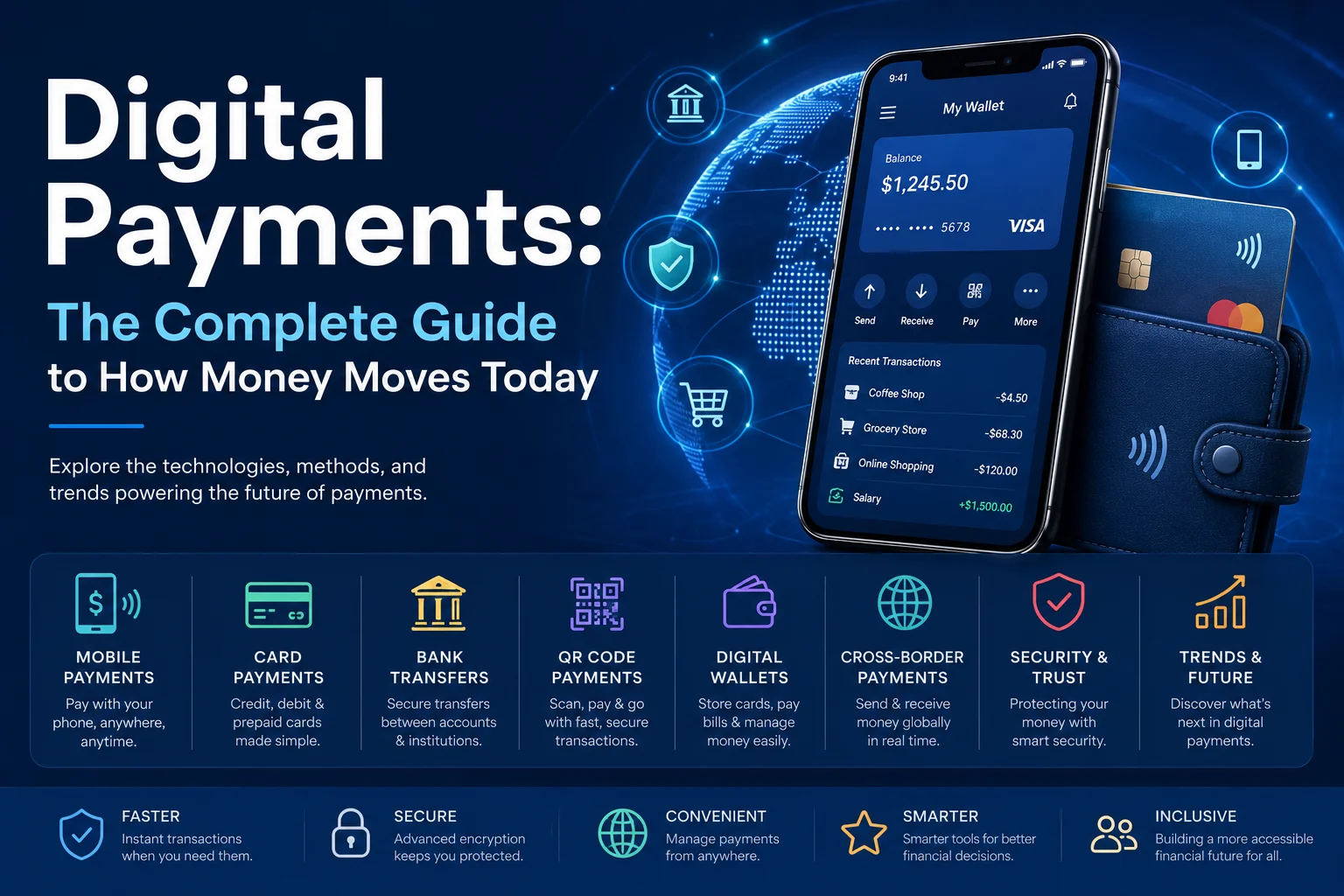
Digital payments now account for the majority of global consumer transactions, and the infrastructure powering them is more complex than it appears at checkout. Behind every card tap, wallet scan, or one-click purchase sits a multi-layer system of merchant accounts, payment gateways, payment processors, and settlement networks. This guide breaks down how digital payments actually work in 2026, who the key players are, what it costs, and what businesses in high-risk industries need to know about specialist payment processing.
TL;DR
- Digital payment processing runs through a chain: gateway → processor → card network → banks
- Payment wallets now represent 50%+ of global eCommerce checkouts in 2026
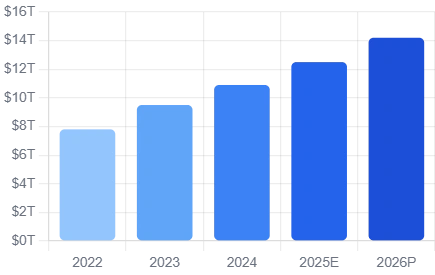
- Global digital commerce transaction value is projected to surpass $14 trillion in 2026
- Cross-border payments carry average fees of 3-5%, though fintech alternatives are reducing costs fast
- High-risk merchants, gambling, adult content, CBD, forex, require specialist high-risk payment gateways
- Standard processors like Stripe and PayPal will terminate high-risk accounts without warning
- Choosing the right payment provider means matching your risk level, volume, and geography to the right solution
What Are Digital Payments?
Digital payments are any transactions where value moves electronically between a payer and a payee, no physical cash required. The term covers card payments (credit, debit, prepaid), mobile payment wallets, online payments via bank transfer, cross-border remittances, Buy Now Pay Later (BNPL), and crypto settlements. If money moves without touching a banknote, it qualifies as a digital payment.
What separates digital from cash isn’t just the medium, it’s the infrastructure. Every digital payment introduces intermediaries: issuing banks, card networks, acquiring banks, and payment processors, each adding a layer of verification, fraud detection, and a fee. The tradeoff is access: merchants can accept payments from any customer, in any market, 24 hours a day. In 2026, over 65% of global consumer transactions are digital, with that share continuing to climb as mobile penetration expands across emerging markets.
How Digital Payment Processing Works
When a customer hits “pay,” a real-time authorization chain activates across multiple systems simultaneously. It completes in under two seconds, but involves at least five distinct entities executing in sequence.
Here is the step-by-step flow of a digital payment:
- Customer initiates payment: enters card details, authenticates via wallet biometrics, or completes a one-click checkout
- Payment gateway encrypts data: tokenizes sensitive card information and transmits it securely to the payment processor
- Processor routes to the card network: the transaction request goes to Visa, Mastercard, or Amex for authorization
- Issuing bank authorizes: the customer’s bank checks available funds, runs fraud screening, and returns approval or decline
- Authorization flows back: confirmation passes through card network → processor → gateway → merchant checkout
- Settlement: funds move from the issuing bank to the merchant account, typically within 1-3 business days
Payment gateways and payment processors are not the same thing. The gateway is the interface, it captures, encrypts, and transmits payment data from the customer. The processor is the engine, it routes that data between financial institutions to move money. Modern all-in-one payment providers like Stripe, Square, and PayPal bundle both functions into a single integration. Enterprise merchants often maintain separate acquiring bank relationships and processor contracts to achieve lower per-transaction rates and greater control over funds.
Key Players in Every Digital Transaction
| Role | Function | Examples |
|---|---|---|
| Payment Gateway | Captures and encrypts payment data | Stripe, Authorize.net, Braintree, NMI |
| Payment Processor | Routes funds between banks | Worldpay, Adyen, Elavon, Fiserv |
| Acquiring Bank | Holds the merchant account | Chase Paymentech, Barclays, Wells Fargo |
| Card Network | Authorization rules and clearing | Visa, Mastercard, Amex, Discover |
| Issuing Bank | Customer’s bank, approves or declines | Any consumer or business bank |
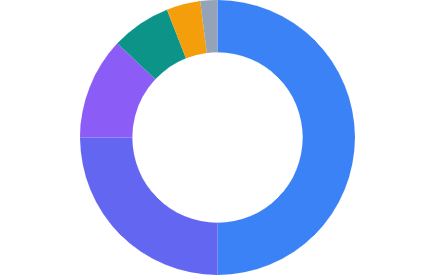 Digital Wallets 50%, Credit Cards 25%, Debit Cards 12%, Bank Transfers 7%, BNPL 4%, Other2%
Types of Digital Payments in 2026
Card Payments
Credit and debit cards remain the dominant payment rail globally. Visa and Mastercard jointly process over 300 billion transactions annually. Card-not-present (CNP) transactions, the standard format for online payments, continue to grow, but carry a significantly higher fraud rate than in-person card payments due to the absence of physical authentication.
Payment Wallets
Payment wallets, Apple Pay, Google Pay, PayPal, Alipay, and regional leaders like PhonePe and GCash, now represent over 50% of global eCommerce checkouts. Mobile wallet transaction value is projected to reach $12 trillion globally in 2026. Device-level tokenization and biometric authentication make wallets among the most fraud-resistant digital payment methods available, with chargebacks running significantly below standard CNP card rates.
Cross-Border Payments
Cross-border payments are the fastest-growing segment of digital payment infrastructure. Global B2B cross-border transaction volume is projected to reach $56 trillion by 2030 according to McKinsey & Company. Core challenges remain: average international transfer fees of 3-5%, settlement timelines of 2-5 business days via SWIFT, and FX conversion costs that compound on high-volume trade. Emerging alternatives, SWIFT gpo, RippleNet, regional real-time payment corridors, and stablecoin settlements, are reducing these barriers, particularly for high-volume emerging market corridors.
Buy Now, Pay Later (BNPL)
BNPL has moved from a niche checkout option to mainstream merchant services infrastructure. Global BNPL transaction volume is projected to reach $576 billion in 2026. Merchants that offer BNPL at checkout report average order value increases of 30-50%. Klarna, Afterpay, and Affirm lead the space, with major eCommerce platforms now integrating BNPL as a native checkout method alongside standard card and wallet options.
Crypto and Stablecoin Payments
Merchant adoption of crypto payment processing has accelerated in 2026, particularly among businesses in high-risk industries where traditional merchant services are unavailable. Stablecoins, primarily USDT and USDC, are increasingly used for cross-border B2B settlements, offering near-instant finality and significantly lower fees than traditional SWIFT wire transfers.
Digital Payments Market: 2026 Data Snapshot
Global digital commerce payments are on a steep upward trajectory. Transaction value processed through digital payment channels is projected to surpass $14 trillion in 2026, up from approximately $9.5 trillion in 2023. That growth reflects three concurrent trends: continued eCommerce expansion, mobile wallet adoption in emerging markets, and the ongoing displacement of cash-based payment processing across developed economies.
Key 2026 benchmarks every payments professional should know:
| Metric | 2026 Figure | Source |
|---|---|---|
| Global digital commerce transaction value | ~$14+ trillion (projected) | Statista / PPRO |
| Mobile wallet users globally | 5.2+ billion | World Bank |
| Mobile wallet share of eCommerce checkouts | 50%+ | Worldpay FIS Report |
| Global BNPL transaction volume | ~$576 billion | Statista |
| Average standard merchant processing fee | 1.5-3.5% per transaction | Nilson Report |
| Average cross-border transfer fee | 3–5% globally | World Bank |
| Global chargeback rate (industry average) | ~0.6% | Visa / Mastercard |
| High-risk merchant chargeback rate | 1-2%+ without controls | EMB Industry Data |
| Digital payments CAGR (2023–2027) | ~11-15% | McKinsey / BCG |
High-Risk Payment Gateways: 2026 Industry Update
One of the most underserved, and most operationally critical, segments of digital payment processing is high-risk merchant accounts. Standard payment facilitators like Stripe, PayPal, and Square operate aggregated account models that allow rapid merchant onboarding, but they routinely terminate accounts in restricted industries, often with 72 hours notice or less. For affected businesses, losing payment processing means losing the ability to trade.
What Makes a Business “High-Risk”?
Payment processors classify merchants as high-risk based on industry type, chargeback exposure, regulatory complexity, and processing history. Common high-risk classifications in 2026 include:
- Online gambling, sports betting, and iGaming platforms
- Adult entertainment and subscription content sites
- CBD, kratom, nootropics, and supplement retailers
- Forex brokers, crypto exchanges, and binary options platforms
- Travel agencies with advance booking models and high cancellation rates
- Subscription businesses with high refund or chargeback exposure
- Firearms, ammunition, and tactical equipment dealers
How High-Risk Payment Processing Differs from Standard
Merchants who need a high-risk merchant account should expect materially different terms from standard merchant services. The core differences in 2026 are:
- Processing fees: 3-7% per transaction versus 1.5-3% for standard merchants
- Rolling reserves: 5-15% of monthly volume held for 90-180 days as a chargeback buffer
- Underwriting timeline: 5-15 business days versus same-day approvals for aggregated accounts
- Contract length: 2-3 year agreements with early termination fees are standard
- Chargeback thresholds: Stricter limits, often 1% versus the standard 2% Visa/Mastercard threshold
Top High-Risk Payment Gateway Providers in 2026
| Provider | Best For | Processing Rate | Rolling Reserve |
|---|---|---|---|
| PayKings | Adult content, nutraceuticals, supplements | 3.5-7% | 5-10% |
| Durango Merchant Services | CBD, firearms, travel | 3-6% | 5-15% |
| SMB Global | International high-risk merchants | 3-7% | 5-10% |
| eMerchantBroker (EMB) | Gambling, forex, adult | 3.5-6.5% | 5-15% |
| Soar Payments | US general high-risk businesses | 3-5% | 5-10% |
Pros and Cons: High-Risk Payment Gateways
| Pros | Cons |
|---|---|
| Accept businesses declined by standard processors | Processing fees of 3-7% per transaction |
| Chargeback monitoring and dispute support included | Rolling reserves reduce available working capital |
| Multi-currency and offshore processing available | 5-15 business day underwriting and approval period |
| Deep experience across regulated and restricted verticals | Multi-year contracts with early termination penalties |
| Dedicated account management and risk guidance | Coverage varies, not all providers cover every industry |
Pros and Cons of Digital Payments for Merchants
| Pros | Cons |
|---|---|
| Accept payments from any market, 24/7 | Processing fees apply to every transaction |
| Real-time authorization and 1-3 day settlement | Chargebacks create fund reversal and penalty risk |
| Built-in fraud screening and encryption | PCI DSS compliance requires ongoing investment |
| Detailed transaction analytics and reporting | Account terminations can hit without warning |
| Multiple checkout options increase conversion rates | CNP fraud rates exceed in-person rates significantly |
How to Choose the Right Payment Provider
The right payment provider is not the most popular one, it is the one that fits your business model, risk profile, and growth trajectory. Four factors determine the correct fit:
- Business risk level: Standard merchants (retail, SaaS, hospitality) can start with aggregated payment providers for ease of setup. High-risk businesses need specialist high-risk payment gateways with direct acquiring bank relationships and underwriting that accounts for their industry.
- Transaction volume and geography: Low-volume domestic merchants often benefit from flat-rate pricing (e.g., Stripe at 2.9% + $0.30). High-volume international merchants should negotiate interchange-plus pricing with enterprise payment processors to reduce costs significantly.
- Cross-border and currency needs: If you process in multiple currencies, compare FX markups, supported settlement currencies, and local payment method coverage. Adyen, Airwallex, and Checkout.com are strong choices for multi-currency merchants with significant cross-border payment volumes.
- Chargeback history: A dispute rate above 1% will limit your merchant services options significantly. Address chargeback issues before applying to new processors; most high-risk providers will still review your historical dispute data before approving an account.
Frequently Asked Questions
What is the difference between a payment gateway and a payment processor?
A payment gateway captures and encrypts customer payment data at checkout, it is the entry point. A payment processor routes that encrypted data between the acquiring bank and the issuing bank to move funds. Modern all-in-one platforms like Stripe and PayPal bundle both functions into a single integration, while enterprise merchants often use separate vendors for each to optimize pricing and control.
How long does digital payment settlement take?
Standard card-based online payments settle in 1-3 business days. Instant or next-day settlement options are available from providers like Stripe and Square for an additional per-transaction fee. Cross-border SWIFT transfers take 2-5 business days; stablecoin payments and real-time payment rails can settle in minutes.
What are the typical fees for digital payment processing?
Standard merchants pay 1.5-3.5% per transaction plus a fixed per-transaction fee (typically $0.20-$0.30). High-risk merchant accounts carry processing fees of 3-7%. International transactions add currency conversion fees of 1.5-3% depending on the payment provider and currency pair involved.
What is a rolling reserve in payment processing?
A rolling reserve is a percentage of daily transaction volume, typically 5-15%, held by the payment processor for a fixed period (usually 90-180 days) as a buffer against chargeback claims and fraud losses. It is most common in high-risk merchant accounts and directly affects short-term cash flow management for affected businesses.
Which industries are classified as high-risk by payment processors?
Common high-risk industry classifications include online gambling and iGaming, adult entertainment, CBD and supplement retail, forex brokers, crypto exchanges, travel with advance booking models, and subscription businesses with elevated chargeback exposure. These businesses require a specialist high-risk payment gateway rather than standard merchant services.
Do I need a merchant account to accept digital payments?
Not necessarily. Payment facilitators like Stripe and PayPal use aggregated merchant accounts, your business is pooled with others, enabling quick setup but offering less control over funds and higher termination risk. Dedicated merchant accounts, issued through an acquiring bank, give high-volume and high-risk merchants more stability, lower effective processing rates, and protection from abrupt account suspensions.
Comments
No comments yet. Be the first to share your thoughts.
Leave a comment