
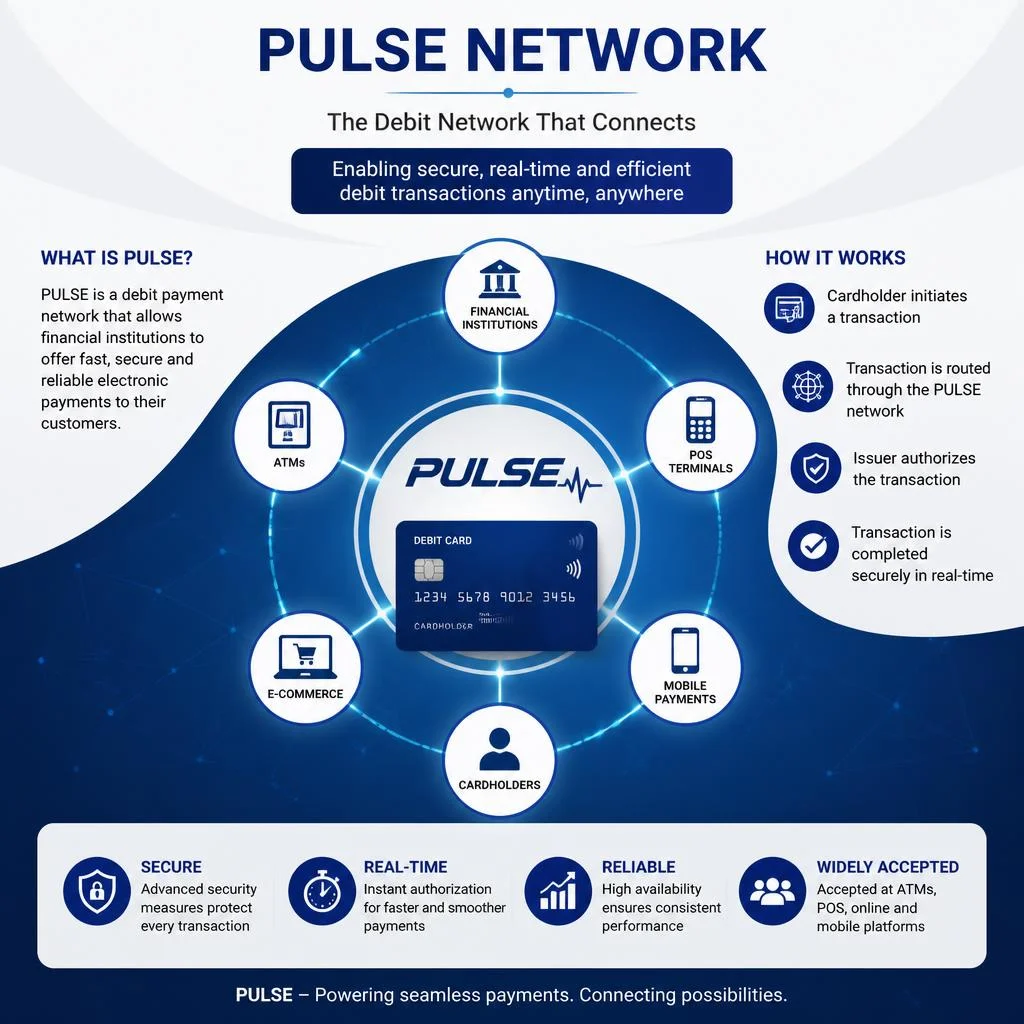
Some merchants search “PULSE” expecting a processor they can sign up with. It isn’t one. PULSE is a debit network, the rails that move debit transactions between banks, ATMs and merchants.
PULSE is a U.S. debit network founded in 1981. Discover bought it in 2005, and Capital One now owns it after closing the Discover deal in May 2025. You can’t open an account with it directly. You reach it through your processor, and it’s worth asking whether that processor routes eligible debit transactions over it.
What PULSE actually is
According to Wikipedia, PULSE began in 1981 and serves more than 4,400 U.S. financial institutions and 380,000+ ATMs. PULSE says it’s the only major debit network not owned by a processor or acquirer. It supports PIN debit, online and card-on-file payments, recurring bill payments and cash back at participating merchants.
Ownership has changed
Capital One completed its acquisition of Discover on May 18, 2025, and PULSE and Diners Club International came with it. Capital One is moving its debit cards from Mastercard to the Discover network. By late July 2026 it had converted roughly 25 million debit cards.
What this means for merchants
Adyen lists PULSE as a supported debit option in the U.S. Its published fee is $0.13 per transaction plus interchange plus 0.60%. Compare that with your own processor’s rates.
Stripe has warned that Capital One debit cards that have been reissued but not yet activated can fail. Existing cards keep working for about 130 days after the new card is issued. Discover’s country coverage also differs from Mastercard’s, so some cards may fail outside its footprint. If you sell internationally, watch your authorization rates on Capital One debit.
Questions for your processor
- Do you route eligible debit transactions over PULSE, and can I see the savings?
- Are the network fees passed through, or bundled into a flat rate?
- Are you seeing authorization changes on migrated Capital One debit cards?
Bottom line: PULSE is established, regulated infrastructure with a big new owner. It’s useful to understand if you take a lot of debit, but you don’t sign up with it directly. Don’t confuse it with pulse-payments.com or any “Pulse Pay” brand.
Comments
No comments yet. Be the first to share your thoughts.
Leave a comment