
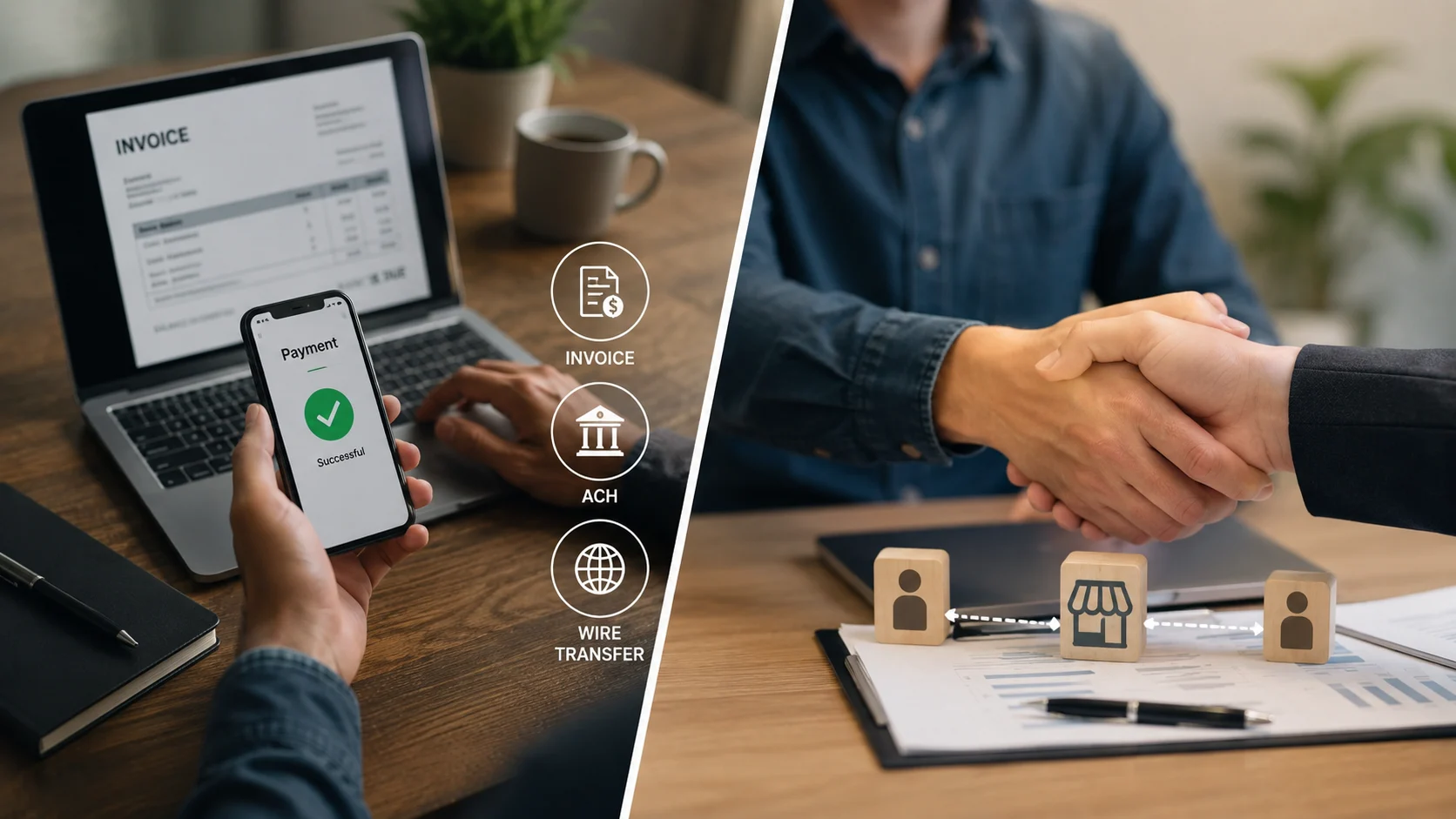
If your business operates in a high-risk industry, think nutraceuticals, SaaS subscriptions, forex, CBD, or travel, you already know the frustration of being declined by mainstream payment providers. But here’s the reality: the B2B segment has quietly evolved, and today there are more viable, cost-effective alternatives to traditional card-based payment processing than ever before.
In 2026, high-risk payment processing in the B2B space is no longer a dead end. It’s a strategic decision.
Why B2B High-Risk Payment Solutions Require a Different Approach
Standard merchant accounts are built for low-risk, predictable transaction profiles. When a business sits outside that box, high chargeback ratios, regulatory complexity, or reputational risk, banks and traditional payment gateways either charge premium rates or reject applications outright.
According to a 2025 Nilson Report estimate, high-risk merchants globally process over $1.2 trillion annually, yet nearly 40% report difficulty securing stable merchant services from mainstream providers. This gap has created a thriving ecosystem of alternative B2B payment rails.
Key reasons B2B high-risk merchants need specialized solutions:
- Chargeback exposure: Industries like nutraceuticals see chargeback rates of 1.5–3%, well above the 0.9% Visa/Mastercard threshold
- Regulatory scrutiny: Sectors such as cannabis, adult content, and gaming face banking restrictions in multiple jurisdictions
- Volume volatility: Subscription-based or seasonal businesses are flagged for irregular processing patterns
- Offshore structures: Many offshore merchants use multi-entity setups that confuse standard underwriting models
Invoice-Based Payment Solutions for High-Risk B2B
Invoice financing and net-terms payment models are among the most underutilized tools in the high-risk B2B toolkit. Rather than routing through a card network, and exposing yourself to chargeback risk, invoice-based payment shifts settlement to bank-level transfers.
How It Works
A buyer places an order and receives a net-30 or net-60 invoice. A third-party fintech (or embedded payment provider) pays the seller immediately, then collects from the buyer on the extended term. No card network. No chargeback window.
Top Invoice-Based Platforms for High-Risk B2B (2026)
| Provider | High-Risk Eligible | Typical Fee | Settlement Speed |
|---|---|---|---|
| Resolve Pay | Yes (select verticals) | 2 – 3% net terms fee | Next – day |
| Tillit | Yes (EU/UK focus) | 1.5 – 2.5% | 1 – 2 days |
| Balance | Yes | 1.5 – 2% | Same day |
| Apruve | Partial | Custom | 2 – 3 days |
Pros of Invoice Financing for High-Risk Merchants:
- No chargeback liability on net-terms transactions
- Improves cash flow predictability
- No card network dependency
Cons:
- Only viable for B2B transactions (not B2C)
- Requires credit underwriting of buyers
- Not suitable for real-time digital goods delivery
ACH Transfers: The Underrated B2B Payment Rail
ACH (Automated Clearing House) payments remain one of the most cost-efficient payment processing options for high-risk B2B merchants. In 2025, ACH transaction volume in the US crossed 33 billion payments, with B2B ACH growing at approximately 11% year-over-year (NACHA, 2025).
For high-risk merchants, ACH offers a critical advantage: no chargeback exposure equivalent to card disputes. ACH disputes exist but are governed by different, and typically more merchant-favorable, rules.
ACH Cost Comparison vs. Card Processing
| Method | Average Cost Per Transaction | Dispute Window | Chargeback Risk |
|---|---|---|---|
| Credit Card | 1.8 – 3.5% + $0.10–0.30 | 120 days | High |
| ACH Debit | $0.25 – $1.50 flat | 60 days | Low – Moderate |
| Same-Day ACH | $0.50 – $2.00 flat | 60 days | Low – Moderate |
| Wire Transfer | $15 – $45 flat | Negligible | Very Low |
Best ACH Providers for High-Risk Merchants
- Dwolla: API-first ACH with high-risk vertical support
- Stripe ACH: Available but requires manual approval for high-risk categories
- Paystand: Zero-fee ACH for B2B, subscription-friendly
- WePay (JPMorgan): Enterprise-grade with embedded ACH rails
ACH Pros:
- Dramatically lower per-transaction costs
- Reduced chargeback exposure
- Suitable for recurring B2B billing
ACH Cons:
- Slower settlement than card (1–3 business days for standard ACH)
- Requires US bank accounts (limited cross-border utility)
- Return rate monitoring required, NACHA penalizes rates above 0.5%
Wire Transfer Alternatives for International High-Risk B2B
Cross-border B2B transactions in high-risk sectors often rely on wire transfers as the fallback when cards aren’t viable. While reliable, traditional SWIFT wires are expensive ($25–$50 per transaction) and slow (1–5 business days).
In 2026, a new generation of wire alternatives has matured significantly:
Modern Wire Alternatives
SWIFT GPI (Global Payments Innovation): Launched by SWIFT in 2017 and now covering over 70% of SWIFT traffic, GPI delivers same-day cross-border settlement with full tracking. For offshore merchants transacting in large B2B volumes, this represents the premium option.
Stablecoin Settlement (USDC / USDT): Several payment providers now offer stablecoin-denominated settlement for B2B invoices. Circle’s USDC on-chain settlement costs as little as $0.01 per transaction, with near-instant finality. Adoption in high-risk sectors (gaming, adult, crypto-adjacent) has grown significantly, Chainalysis reported that B2B stablecoin transactions exceeded $11 trillion in 2024.
Fintech Wire Rails (Wise Business, Airwallex, Nium): These platforms operate on local payment networks rather than SWIFT, cutting costs to $3–$12 per international transfer while maintaining same-day or next-day settlement.
Wire Alternative Comparison
| Solution | Cost | Speed | High-Risk Viable |
|---|---|---|---|
| Traditional SWIFT | $25 – $50 | 1 – 5 days | Yes |
| SWIFT GPI | $15 – $30 | Same day | Yes |
| Wise Business | $3 – $8 | 1- 2 days | Partial |
| Airwallex | $5 – $12 | Same day | Yes |
| USDC Settlement | <$1 | Minutes | Yes (select verticals) |
Choosing the Right Solution: A Decision Framework
Selecting the best B2B high-risk payment rail depends on three key variables:
- Transaction volume: High-volume merchants benefit more from flat-fee ACH; low-volume from invoice financing
- Geography: Domestic US merchants, ACH-first. Cross-border, wire alternatives or stablecoin
- Industry vertical: CBD, nutraceuticals, and subscription boxes benefit from net-terms; forex and gaming benefit from stablecoin rails
A layered approach is often best: use ACH for recurring domestic billing, net-terms invoicing for large B2B orders, and fintech wire rails for international settlement. This diversifies payment processing risk across multiple rails rather than depending on a single provider.
Key Takeaways for High-Risk B2B Merchants
- Invoice financing eliminates card chargeback risk for B2B net-terms transactions
- ACH is 60–80% cheaper than card processing for equivalent B2B volume
- Modern wire alternatives cut cross-border transfer costs by 60–70% vs. traditional SWIFT
- Stablecoin settlement is a viable, growing option for offshore and crypto-adjacent merchants
- No single solution fits all verticals, a multi-rail strategy is the 2026 standard
High-risk doesn’t mean high-cost forever. With the right combination of merchant services, payment rails, and provider partnerships, B2B merchants in even the most challenging verticals can build stable, cost-efficient payment infrastructure.
Frequently Asked Questions
Q: Can high-risk merchants use ACH for recurring billing?
Yes. ACH is one of the best options for high-risk recurring B2B billing due to lower dispute rates and flat-fee pricing. Providers like Dwolla and Paystand support high-risk verticals.
Q: Is invoice financing available for offshore merchants?
Some platforms like Balance and Tillit support offshore merchant structures, but underwriting requirements vary. A local legal entity in the buyer’s jurisdiction often helps.
Q: What’s the cheapest cross-border payment option for high-risk B2B?
Stablecoin settlement (USDC via Circle or Fireblocks) offers sub-$1 transaction costs for international B2B payments, making it the most cost-efficient option in 2026 for eligible verticals.
Q: Are wire transfers better than ACH for high-risk merchants?
For domestic transactions, ACH is cheaper and sufficient. For international or very large single transactions, wire transfers (or modern wire alternatives) are more appropriate.
Q: Do high-risk merchants need a special merchant account for ACH?
Not always. Some ACH providers onboard high-risk merchants directly. Others require a sponsoring bank with high-risk approval, always disclose your vertical upfront.
Comments
No comments yet. Be the first to share your thoughts.
Leave a comment