
TL;DR:
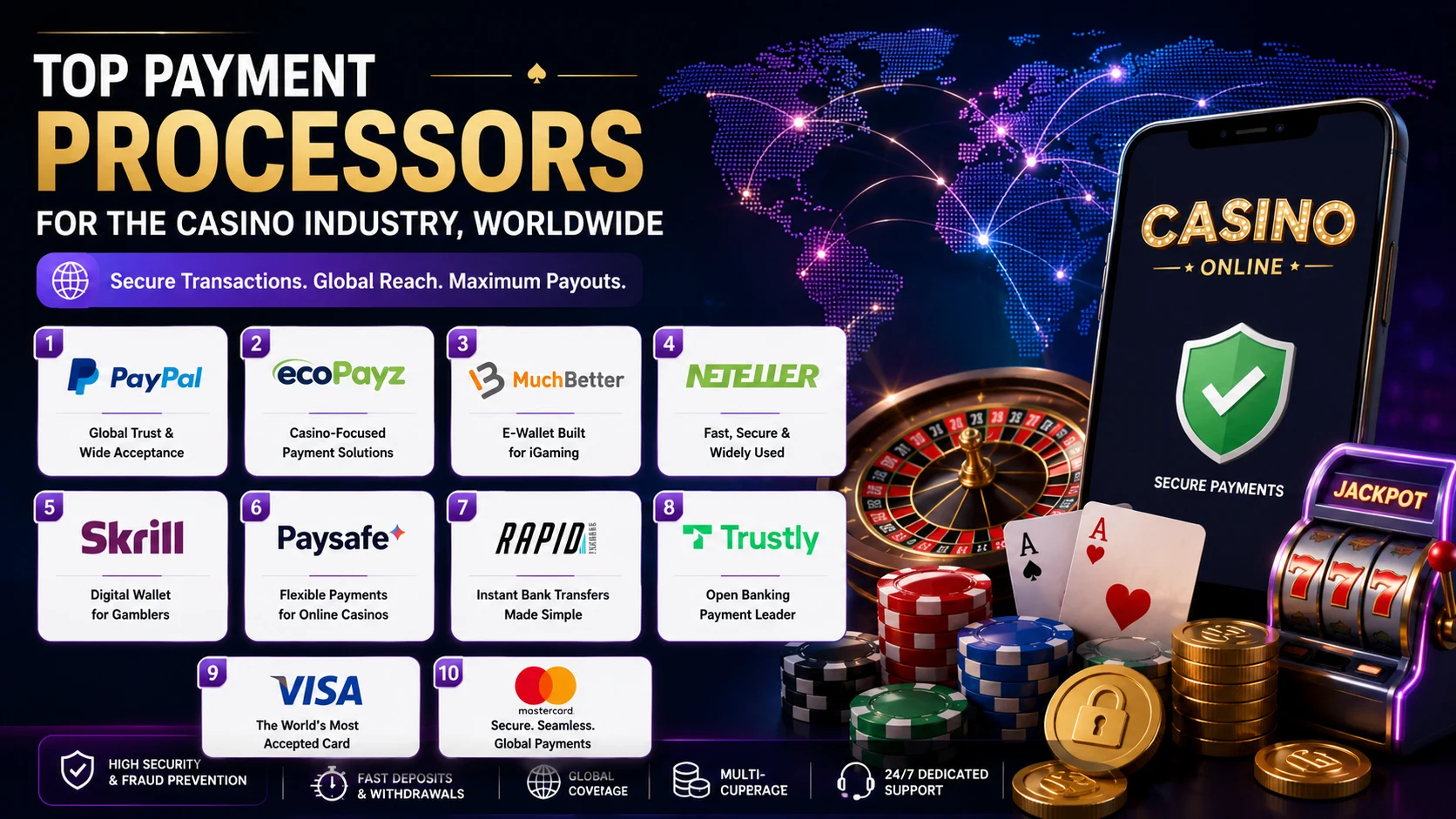
Whether you’re running an online casino, a land-based operation with card-present processing needs, or both, mainstream payment processing providers will decline you by default, gambling sits in the highest-friction risk tier banks evaluate. Below are 10 providers that actually specialize in casino risk, split between US-focused high-risk merchant account specialists and global iGaming-native PSPs, so you can match the right one to your actual footprint.
Why This Search Keeps Leading You Back Here
If you’ve been searching for a casino payment processor, you already know the pattern: apply to a mainstream provider, get an automatic decline or a shutdown notice once your industry code gets flagged, then start over with a specialist. That’s not bad luck, it’s how the industry is structured. Gambling merchants carry chargeback rates 2-4x higher than average e-commerce, which means underwriting takes real documentation, not a five-minute signup. The providers below exist specifically to do that underwriting properly, rather than treating gambling as an afterthought or an outright exclusion.
US-Focused High-Risk Merchant Account Specialists
1. Durango Merchant Services
Durango specializes in the hardest-to-place high-risk categories, including online gaming, adult entertainment, and offshore businesses, leaning on a global network of banking relationships to find approvals other providers can’t. It’s a strong option specifically when your business has already been declined elsewhere.
Best for: Operators who’ve already been rejected by standard high-risk processors and need a specialist with deeper banking reach.
2. PaymentCloud
PaymentCloud pairs high-risk approval rates with a dedicated account manager for every merchant, a meaningful difference from generic processors that route support through a ticket queue. No long-term contracts adds flexibility that matters if you’re still validating your market.
Best for: Operators wanting personalized underwriting support and contract flexibility while scaling.
3. HighRiskPay
HighRiskPay positions itself specifically around online gambling, with chargeback management and fraud protection tools built for the vertical rather than adapted from general e-commerce tooling.
Best for: Operators prioritizing built-in chargeback and fraud tooling as a core part of the processing relationship.
4. Unison Payment Solutions
Unison offers merchant accounts, POS systems, and payment gateways under one roof, with transparent interchange-plus or cost-plus pricing, a meaningful detail, since opaque “qualified” tiered pricing is a common way high-risk merchants get quietly overcharged. Unison’s underwriting explicitly asks for licenses and processing history upfront, which speeds real approvals rather than dragging out a doomed application.
Best for: Operators wanting transparent pricing structures and willing to provide full licensing documentation upfront.
Global iGaming-Native PSPs
5. Worldpay (FIS)
One of the largest payment processors globally, with gambling-MCC support at real scale across 100+ countries. Enterprise-focused: onboarding is selective and best suited to operators with meaningful volume already.
Best for: Large, established casino operators needing enterprise-scale card acquiring across many jurisdictions.
6. Paysafe (Skrill + Neteller)
Paysafe owns two of the most widely used payment wallets in iGaming, Skrill and Neteller, trusted by operators including Bet365, Betway, and Royal Panda. Beyond the wallets, Paysafe offers direct merchant acquiring and real-time fraud prevention tailored specifically for gambling.
Best for: Operators wanting player-familiar e-wallets that reduce cart abandonment at deposit.
7. Nuvei
Nuvei specializes in high-risk merchant accounts for iGaming and sports betting, supporting instant deposits and withdrawals, multi-currency transactions, and AI-powered fraud prevention aimed at reducing chargebacks specifically. It’s used by top-tier sportsbooks and casino operators.
Best for: Operators wanting integrated fraud prevention alongside core high-risk card processing in one platform.
8. Trustly
Trustly runs on open banking rather than card rails, enabling real-time, direct bank-to-operator transfers under PSD2 in Europe. That structure means fewer chargeback disputes than card-based deposits, since players pay directly from their bank account.
Best for: European casino operators prioritizing instant bank transfers and lower chargeback exposure.
9. Genome
Genome is a smaller but directly licensed entrant, authorized by the Bank of Lithuania, a directly checkable EU regulator rather than an inferred status through group ownership. Its partnerships with Gamingtec and Chilli Partners have expanded its casino-specific merchant-account capabilities.
Best for: Operators weighting direct EU regulatory transparency heavily, comfortable with a smaller, less globally recognized brand.
10. CoinsPaid
An Estonia-based, iGaming-native crypto payment processor built for the settlement speed and cross-border payments demands of a global, always-on casino player base. Purpose-built crypto infrastructure for gambling tends to outperform general-purpose crypto gateways treating the vertical as an afterthought.
Best for: Operators with a genuinely global, crypto-native player base needing dedicated crypto settlement.
How to Actually Choose Between Them
Most established casino operators don’t run just one of these, they run a stack. A typical setup pairs a primary card-acquiring relationship (Worldpay, Nuvei, or a US specialist like Durango or PaymentCloud) with a player-facing e-wallet layer (Skrill, Neteller) and, increasingly, a dedicated crypto rail (CoinsPaid) to capture players who prefer digital assets. The right combination depends heavily on your licensing jurisdiction and player geography, a US-focused, land-based-adjacent operation has very different needs than a globally licensed online casino serving European and Latin American players.
Pros and Cons of Specialist Casino Processors vs. Attempting Mainstream
Going with a casino-specialist processor:
- Real approval odds based on actual underwriting, instead of an automatic decline
- Fee and reserve structures calibrated to gambling’s real chargeback profile, not guesswork
- Fraud and chargeback tooling built for gambling-specific dispute patterns
- Higher baseline fees (2.5%-6.5% is typical for high-risk generally) and rolling reserves (5%-20%, often held 90-180 days)
- More upfront documentation required, licensing, processing history, AML policies
Trying to run on a mainstream processor anyway:
- High risk of sudden account termination once gambling activity is detected, regardless of how compliant your business is
- No gambling-specific fraud tooling, leaving you exposed to friendly-fraud chargebacks mainstream systems aren’t tuned to catch
- Frozen funds risk if the underlying processor exits the category entirely, which happens periodically industry-wide
Practical Takeaway
If you’re still applying to mainstream processors hoping your specific casino operation will be the exception, stop, the exclusion is policy-level, not case-by-case. Go directly to a provider from this list matched to your actual footprint: US high-risk specialists (Durango, PaymentCloud, HighRiskPay, Unison) if you’re primarily US-facing or need dedicated account support through a difficult approval process, and global iGaming-native PSPs (Worldpay, Paysafe, Nuvei, Trustly, Genome, CoinsPaid) if you’re operating internationally with a diverse player base. Whichever you choose, verify current licensing and regulatory status directly before signing, and expect to eventually run more than one provider, an offshore merchant account or specialist crypto rail alongside your primary card-acquiring relationship is the norm at scale, not a workaround.
Comments
No comments yet. Be the first to share your thoughts.
Leave a comment