
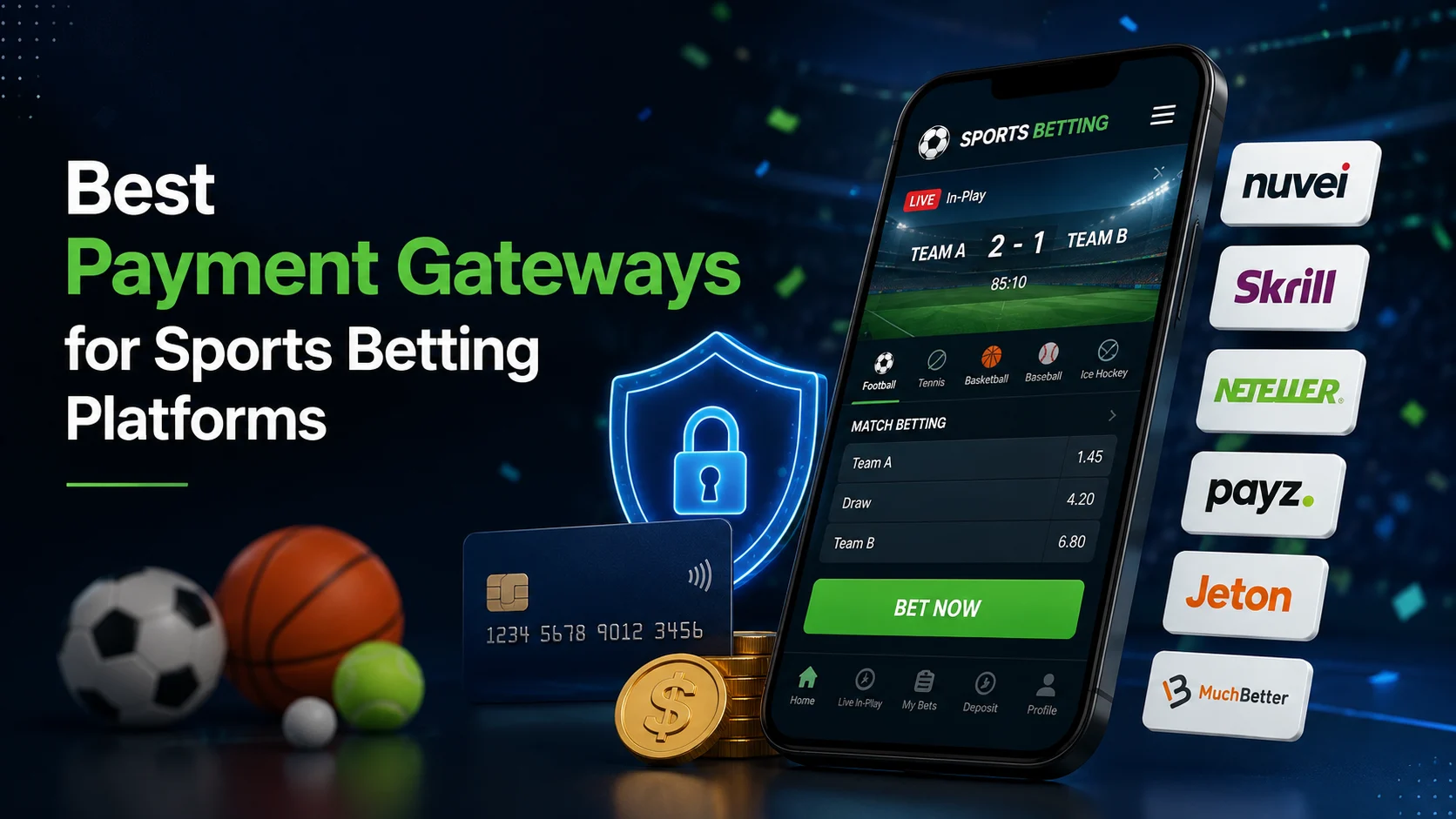
A sportsbook can have the sharpest odds engine and the smoothest app in the market, none of it matters if a bettor can’t deposit in three taps or gets a withdrawal held for a week. Payment infrastructure isn’t a background utility for a betting platform; it’s directly tied to conversion, retention, and regulatory standing all at once. This guide is written specifically for licensed operators, UKGC, MGA, or state-regulated in the US, evaluating payment gateway partners built for the category, not a workaround for operating without proper licensing.
Why Sports Betting Is Treated as High-Risk
Betting is classified as a high-risk industry by banks and card networks, and that classification shapes essentially everything about how payment infrastructure needs to be built for it:
- Elevated chargeback exposure: disputed losses, “friendly fraud” (a bettor disputing a legitimate loss as an unauthorized transaction), and fraud attempts run meaningfully higher than typical e-commerce categories
- Multi-jurisdiction regulatory complexity: operators frequently run across multiple licensing jurisdictions simultaneously, each with its own KYC, AML, and licensing rules that a payment gateway needs to support natively rather than as an afterthought
- Card network scrutiny specific to gambling MCC codes: a gateway without genuine experience handling gambling-specific merchant category codes creates friction at exactly the moments, payout, live-event surges, where friction costs the most
- Underlying regulatory sensitivity: because gambling itself is tightly regulated (and outright illegal in some jurisdictions), acquiring banks demand solid, verifiable licensing before onboarding, and reject applicants without it
None of this means a well-run, properly licensed sportsbook is inherently risky to work with, it means the payment infrastructure supporting it needs to be built by providers who understand the category specifically, not generalist processors hoping the volume works out.
What Licensing Verification Actually Requires From a Gateway
Before comparing providers, it’s worth being direct about the non-negotiable starting point: confirming the gateway explicitly supports gambling merchants in your specific target markets, with licensing verification built into onboarding, is the single most common reason high-risk applications get declined when operators skip this step. A gateway needs to genuinely support your specific licensing footprint, not just claim broad “gaming” experience:
- UK Gambling Commission (UKGC): licensed operators need gateways with documented UKGC compliance experience
- Malta Gaming Authority (MGA): licensed operators similarly need MGA-specific familiarity, particularly given MGA’s role as a common EU licensing hub
- US state-regulated operators: face a genuinely fragmented picture, licensing, tax treatment, and payment rules vary by state, and some operators need separate merchant IDs per state or product line, a structural decision that should be aligned between legal counsel and payment provider before launch
- Other regional regulators: (Ontario’s AGCO, and various LatAm and emerging-market frameworks) each carry their own specific requirements a gateway either genuinely supports or doesn’t
If a provider can’t clearly name the acquiring bank programs and license types they support, that’s a signal to keep evaluating rather than proceed.
The Top Payment Gateways and Processors for Sports Betting
1. Nuvei
A specialist high-risk acquirer built specifically for sports betting and online gambling, Nuvei maximizes approval rates through intelligent routing, retry logic, and issuer relationships, achieving 90%+ authorization across multiple acquirers in practice. It supports 700+ payment methods, along with ACH, RTP, and FedNow rails in the US.
Standout feature: Nuvei’s “Assured Funds” product provides tiered chargeback protection, Assured Essential covers unauthorized transactions and fraud, while Assured Complete guarantees funds on all returns, including unauthorized ones, meaningfully reducing the chargeback exposure that makes betting so costly to process elsewhere.
Settlement speed: 1-3 business days. Processing capacity exceeds 10,000 transactions per second, supporting live-event betting surges without degrading authorization performance.
Best fit: Operators prioritizing maximum deposit approval rates, since authorization optimization tends to drive more incremental revenue than shaving settlement time.
2. Worldpay
A major global payment processor with genuine depth in gambling-specific risk management, sophisticated identity verification, real-time transaction monitoring, and direct integration with responsible gambling tools built into the platform rather than bolted on separately.
Best fit: Operators wanting the infrastructure and scale of a major acquirer, with the added benefit of native responsible-gambling tooling integration for jurisdictions where that’s a licensing requirement, not just a nice-to-have.
3. Paysafe (including Skrill and Neteller)
Paysafe’s e-wallet brands, Skrill and Neteller, are particularly entrenched among high-volume bettors specifically, functioning as a preferred deposit and withdrawal method in markets where e-wallets are a dominant payment culture.
Best fit: Operators in markets (much of Europe, parts of Asia) where e-wallet usage among bettors specifically is high, and where offering Skrill/Neteller as options meaningfully affects conversion and retention among your highest-value users.
4. Trustly
A gateway focused specifically on instant, real-time bank transfers under PSD2 Open Banking rules, enabling direct account-to-sportsbook transactions without requiring cards or e-wallets as an intermediary step.
Best fit: European operators specifically, where open banking and “pay by bank” rails are increasingly dominant, notably in the Nordics and UK, offering lower fees and same-day settlement compared to card-based alternatives.
5. PaymentIQ
An orchestration and cashier platform supporting MGA, UKGC, AGCO Ontario, and other major regulatory frameworks, bundling both the customer-facing cashier experience and the backend PSP orchestration layer in one platform.
Best fit: Multi-jurisdiction operators who want a single platform managing both the payment UX and the routing logic across multiple underlying PSPs, rather than building and maintaining that orchestration layer independently.
6. Praxis
Widely deployed across MGA-licensed and UKGC-licensed operators specifically, Praxis similarly bundles cashier and orchestration with smart routing across a multi-PSP network, with particular strength in regulated European markets and themeable cashier templates.
Best fit: Licensed operators in regulated EU markets (MGA, UKGC, regulated EEA jurisdictions broadly) wanting one platform handling both cashier UX and orchestration, a genuinely close alternative to PaymentIQ, worth comparing directly on regional coverage and pricing for your specific footprint.
7. Specialist High-Risk Gambling Processors
Beyond the larger platforms above, a cohort of smaller, gambling-specific processors focuses narrowly on operators that mainstream and even some larger high-risk providers still decline, typically offering more flexible underwriting and custom integration in exchange for higher per-transaction fees (commonly cited around 2.5% for this tier) and somewhat slower settlement (2-5 business days is typical).
Best fit: Newer or smaller sportsbooks that need flexible underwriting and can’t yet clear the volume or track-record thresholds larger acquirers expect, in exchange for accepting less favorable pricing than an established operator would negotiate.
Comparison at a Glance
| Provider | Model | Regulatory Strength | Notable Feature | Best For |
|---|---|---|---|---|
| Nuvei | Direct high-risk acquirer | Global, strong NA/EU | Assured Funds chargeback protection, 90%+ auth rate | Maximizing deposit approval rates |
| Worldpay | Major global processor | Broad, established | Native responsible-gambling tool integration | Scale + built-in compliance tooling |
| Paysafe / Skrill / Neteller | E-wallet + processing | Strong in Europe, parts of Asia | Deep e-wallet penetration among bettors | Markets with high e-wallet adoption |
| Trustly | Open banking / bank transfer | PSD2-regulated, strong EU | Instant, card-free bank-to-sportsbook transfers | European operators, Nordics/UK especially |
| PaymentIQ | Cashier + orchestration | MGA, UKGC, AGCO Ontario | Single platform for UX + multi-PSP routing | Multi-jurisdiction operators |
| Praxis | Cashier + orchestration | MGA, UKGC, regulated EEA | Themeable cashier, multi-PSP smart routing | EU-regulated operators |
| Specialist high-risk processors | Direct acquiring, flexible underwriting | Varies by provider | Custom integration for hard-to-place operators | Newer/smaller sportsbooks |
Must-Have Technical and Compliance Features
Regardless of which provider you evaluate, these aren’t optional extras for a betting platform, they’re baseline requirements:
- PCI-DSS compliance and tokenization: non-negotiable for any platform handling card data at betting-platform transaction volumes
- 3D Secure and two-factor authentication: strong fraud tooling protects both operator margins and, critically, the license itself, since regulators scrutinize fraud and AML controls directly as part of ongoing licensing compliance
- Real-time transaction monitoring: necessary for both fraud prevention and the AML obligations that come bundled with gambling licensing specifically
- Robust KYC/AML workflows built for gambling specifically: this is the single most common reason high-risk applications get declined; a gateway needs gambling-specific KYC/AML experience, not generic high-risk tolerance
- Multi-currency and, increasingly, crypto/stablecoin support: widens addressable market and, in regions with weak local banking infrastructure, can meaningfully drive both conversion and retention
- Chargeback and dispute tooling (Ethoca/Verifi-style alerts, descriptor control): allows disputes to be resolved before they escalate to formal chargebacks, a meaningful cost lever given how much more expensive chargebacks run in this category
- Multi-MID capability where regulators require separation: some jurisdictions or product lines (casino vs. sportsbook vs. daily fantasy, for example) require separated merchant IDs, a structural need to confirm with both counsel and provider before launch
Why Fast Payouts Matter More Than Operators Sometimes Realize
Fast payouts have become a genuine competitive weapon rather than a nice-to-have: a significant majority of European online gamblers say fast payouts are important when choosing a betting platform. A gateway with strong authorization rates but slow or unreliable payout processing solves only half the retention problem, bettors who can deposit instantly but wait days for a withdrawal churn to competitors who don’t make them wait.
This is part of why open banking and bank-transfer rails (Trustly, and RTP/FedNow support from providers like Nuvei in the US) have gained real traction specifically in betting: same-day or instant settlement on withdrawals is increasingly a genuine retention lever, not just an operational nicety.
Pricing: What to Actually Expect
High-risk processing in this category costs meaningfully more than standard e-commerce, and understanding the real cost structure matters more than comparing headline rates:
- Percentage rates: commonly run higher than mainstream e-commerce, reflecting the elevated chargeback and regulatory risk gateways are underwriting
- Fixed per-transaction fees: are standard on top of the percentage rate
- Setup costs vary by provider and are often negotiable, particularly for operators who can demonstrate solid licensing and a clean compliance history upfront
- Rolling reserves: are standard practice in this category, model the true cost at your actual volume rather than the advertised headline rate, since a lower percentage with a longer reserve hold can cost more in tied-up working capital than a slightly higher rate with better reserve terms
- Interchange-plus or transparent cost-plus pricing: is generally preferable to opaque tiered “qualified” pricing structures that can obscure the true markup, a red flag worth pressing on directly during evaluation
Decision Framework: Which Type of Gateway Fits Your Operation
If you’re a newly licensed operator building payment infrastructure for the first time:
- Prioritize a provider with documented experience in your specific licensing jurisdiction (UKGC, MGA, or your specific US state) over a generalist high-risk processor with broad but shallow gambling experience
- Budget realistically for rolling reserves and setup costs as part of your launch financial planning, not an afterthought
- Confirm KYC/AML workflow support explicitly during evaluation, this is the most common reason applications get declined at this stage
If you’re scaling and prioritizing deposit conversion above all else:
- Evaluate providers with documented high authorization rates and intelligent routing/retry logic (Nuvei is the clearest example in this category), authorization optimization tends to drive more revenue than incremental settlement speed improvements
- Consider chargeback protection products specifically, since dispute costs compound quickly at scale in this vertical
If you’re operating across multiple regulatory jurisdictions simultaneously:
- Orchestration platforms like PaymentIQ or Praxis, which manage both cashier UX and multi-PSP routing in one system, reduce the operational burden of managing separate integrations per jurisdiction
- Confirm multi-MID support if your product mix or regulatory footprint requires separated merchant IDs
If you’re focused on European markets specifically:
- Trustly and open-banking rails deserve particular attention given how dominant “pay by bank” has become in markets like the Nordics and UK, alongside Skrill/Neteller for e-wallet-preferring bettors
If retention and payout speed are your primary competitive concern:
- Prioritize providers with genuine instant or same-day withdrawal capability over marginal deposit-side fee savings, given how directly payout speed correlates with player retention
Common Mistakes Operators Make Choosing a Gateway
- Evaluating headline fees before checking gambling-specific licensing support: A cheap rate from a provider that can’t actually support your jurisdiction’s licensing requirements is worthless
- Underestimating rolling reserve impact on working capital: Model the true cost at your actual volume, not the advertised rate alone
- Treating payout speed as secondary to deposit conversion: Both sides of the transaction directly affect retention; optimizing only for deposits leaves real revenue on the table
- Skipping multi-MID planning until a regulator flags it: Structural decisions about merchant ID separation should be resolved with counsel and the provider before launch, not after a compliance issue surfaces
- Choosing a single-PSP setup with no redundancy at scale: Betting volume peaks sharply around live events, a gateway without round-the-clock support and high uptime will fail precisely when the stakes (and revenue) are highest
Conclusion
There’s no single best payment gateway for every sports betting platform, the right choice depends on your licensing footprint, whether you’re optimizing for deposit conversion or payout retention, and how many jurisdictions you’re managing simultaneously. Nuvei and Worldpay bring genuine scale and gambling-specific risk tooling. Trustly and the e-wallet ecosystem (Skrill/Neteller) dominate specific regional payment cultures. PaymentIQ and Praxis solve the multi-jurisdiction orchestration problem directly for licensed EU operators.
What matters most across all of them: confirming genuine, documented licensing and gambling-specific compliance support before evaluating fees, understanding the true cost of rolling reserves at your actual volume, and treating payout speed as seriously as deposit conversion, because in a category this competitive, both sides of the transaction directly shape whether a bettor stays or churns.
Frequently Asked Questions
Q: Why do mainstream payment processors decline sports betting merchants?
A: Betting carries elevated chargeback exposure, complex multi-jurisdiction regulatory requirements, and gambling-specific AML obligations that mainstream processors aren’t built to underwrite. Most rely on automated risk classification that filters out gambling-adjacent MCC codes before any individual review of a specific operator’s actual compliance quality.
Q: What’s the difference between a payment gateway, a payment processor, and orchestration platforms like PaymentIQ?
A: A payment gateway encrypts and transmits card data from checkout to the payment network. A payment processor routes the transaction and moves funds between issuing and acquiring banks. Orchestration platforms like PaymentIQ or Praxis sit above individual PSPs, managing routing across multiple providers and the customer-facing cashier experience in one system.
Q: How important is licensing verification when choosing a gateway?
A: It’s the starting point, not a secondary consideration. Confirming a gateway explicitly supports gambling merchants in your specific target markets is the single most common factor separating approved applications from declined ones in this category.
Q: Are rolling reserves standard for sports betting payment processing?
A: Yes, rolling reserves are standard practice given the category’s chargeback risk. Terms vary by provider and operator track record, so it’s important to model the true cost at your actual processing volume rather than comparing headline percentage rates alone.
Q: Does payout speed really affect player retention that much?
A: Yes – a significant majority of European online gamblers cite fast payouts specifically as an important factor in choosing where to bet. Providers offering instant or same-day withdrawal rails (open banking, RTP/FedNow) increasingly use this as a genuine competitive differentiator rather than a minor operational detail.
Q: Do sports betting operators need separate merchant IDs for different products or states?
A: Often yes, particularly for operators spanning multiple US states or multiple product lines (sportsbook, casino, daily fantasy). This structural question should be resolved between legal counsel and the payment provider before launch rather than after a regulatory issue surfaces.
Comments
No comments yet. Be the first to share your thoughts.
Leave a comment