
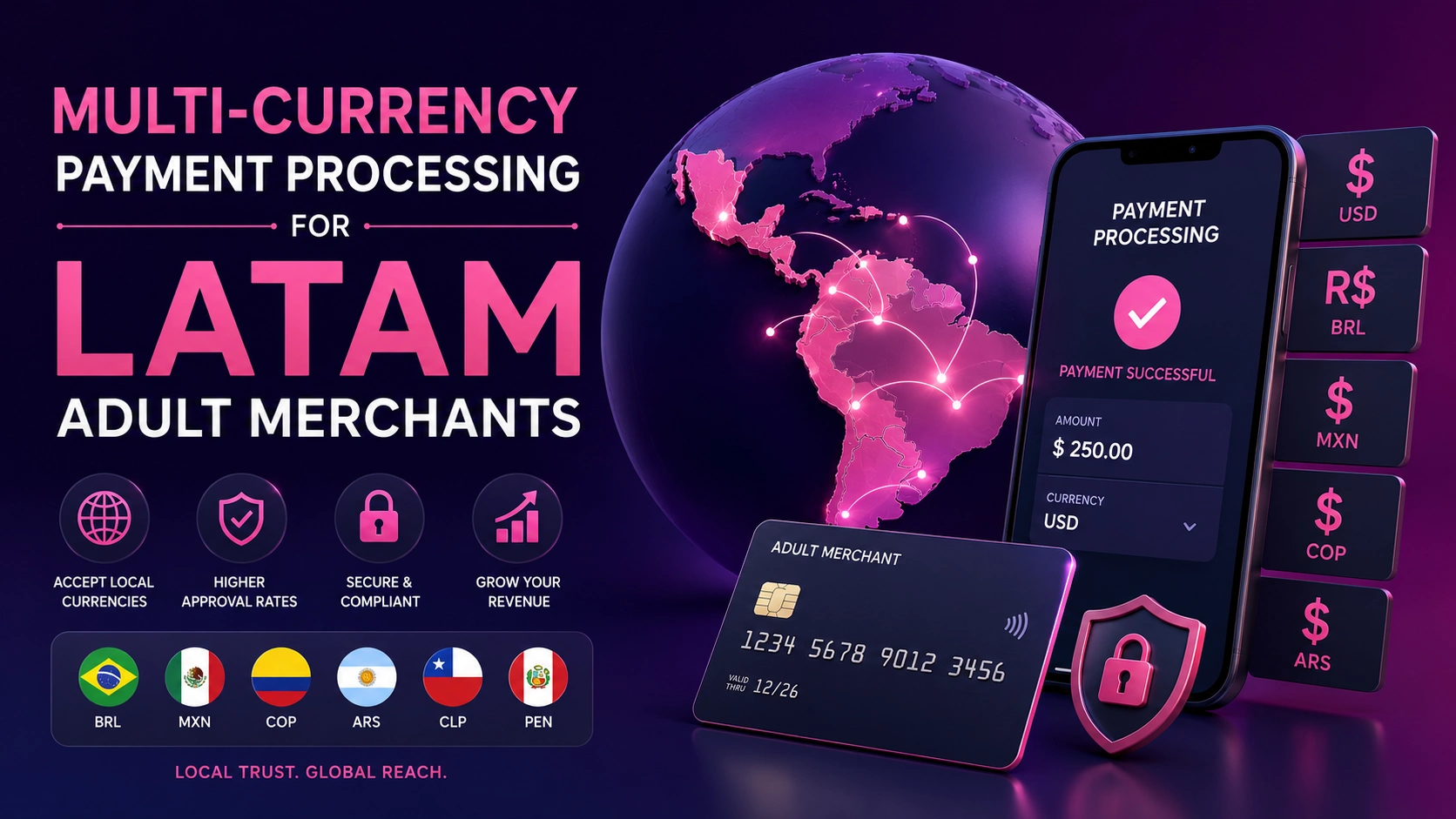
Currency management in Brazil or Mexico is a genuine but manageable operational task. Currency management in Argentina is a different category of problem entirely, persistent inflation and a parallel exchange rate reality mean the “official” rate and the rate customers actually reference in daily life can diverge substantially. This guide covers what actually changes about multi-currency strategy once Argentina, specifically, enters the picture, alongside the more standard currency considerations for Brazil, Mexico, and Colombia.
Brazil, Mexico, and Colombia require standard multi-currency best practices, local pricing, local settlement where volume justifies it, and awareness of each currency’s typical volatility range. Argentina requires a fundamentally different approach: persistent inflation and a parallel (“blue dollar”) exchange rate mean pricing in local currency without active management can erode margin quickly, which is exactly why stablecoin adoption, particularly USDT, runs unusually high among Argentine consumers as an inflation hedge. Adult merchants serious about the region need currency strategy that treats Argentina as its own case, not an extension of standard LATAM practice.
Why LATAM Currency Management Isn’t One Problem
The general multi-currency principles covered in our guide on global adult merchant currency solutions, local pricing, local processing, local settlement as three distinct layers, apply across LATAM broadly. What’s specific to this region is the currency volatility range: Brazil and Mexico exhibit relatively standard emerging-market currency behavior, Colombia sits in between, and Argentina is a genuine outlier requiring dedicated strategy.
Brazil (BRL) and Mexico (MXN): Standard Volatility Management
Both currencies require conventional multi-currency practice, local pricing display to avoid conversion friction, and local settlement once volume in that currency justifies the infrastructure investment (covered in depth in our Brazil-specific acceptance guide). Neither currency currently presents the kind of structural volatility that requires specialized handling beyond standard FX risk management.
Colombia (COP): Growing Digital Infrastructure, Moderate Complexity
Colombian peso management follows similar standard practice, with the added consideration that the market’s payment infrastructure itself is actively shifting, Bre-B, the new central-bank-operated instant payment rail, is rapidly gaining adoption alongside the existing PSE bank-transfer system. For merchants, this means currency and payment-method strategy in Colombia are moving targets together, worth revisiting periodically rather than setting once.
Argentina (ARS): Where Standard Practice Breaks Down
The Core Problem
Argentina’s economy has operated for years under a dynamic where the official exchange rate and the parallel (“blue dollar”) market rate diverge, sometimes substantially. A merchant pricing purely in ARS at the official rate, without active management, can see real margin erosion between the moment a price is set and the moment payment actually settles, purely from currency movement rather than any business factor.
Why Stablecoins Have Become the Practical Response
This dynamic is exactly why stablecoin adoption, particularly USDT, runs notably high among Argentine consumers specifically, it functions as an inflation hedge for individuals, and by extension, a genuinely useful settlement currency for merchants serving this market. A merchant accepting stablecoin payments from Argentine customers sidesteps a meaningful share of the peso volatility problem entirely, rather than trying to manage it through pricing adjustments alone.
Practical Approaches for Argentina Specifically
- Consider USD or stablecoin pricing and settlement: for Argentine customers where your platform and payment infrastructure support it, rather than defaulting to ARS pricing and absorbing the volatility risk
- If pricing in ARS, build in more frequent price review cycles: than you would for Brazil or Mexico, given how much faster the effective exchange rate can move
- Understand that local card-based settlement in Argentina carries currency risk that local acquiring alone doesn’t solve: this is a genuinely different problem than the approval-rate issue local acquiring fixes elsewhere in LATAM
- Layer stablecoin acceptance as a complement, not a replacement: for customers who prefer or already use it, while maintaining local payment method support for the broader customer base
Building a LATAM-Wide Currency Strategy
- Treat Argentina as a distinct strategic decision: not a variation on your Brazil or Mexico approach, the currency mechanics are different enough to require separate planning
- Confirm your payment provider genuinely supports stablecoin settlement: if you’re pursuing this route for Argentina specifically, since not every LATAM-focused provider offers this natively
- Review pricing and settlement currency decisions on a market-by-market cadence: more frequently for Argentina than for Brazil, Mexico, or Colombia
- Don’t assume a single regional currency strategy works uniformly: what protects margin in Argentina (stablecoin settlement, frequent price review) is unnecessary complexity in Brazil or Mexico, where standard practice suffices
Decision Framework
If you’re serving Brazil, Mexico, or Colombia primarily: Standard multi-currency best practices apply, local pricing and settlement, reviewed periodically as each market’s payment infrastructure evolves.
If Argentina is a meaningful part of your LATAM strategy: Build dedicated currency infrastructure for this market specifically, stablecoin settlement support, more frequent pricing review, and explicit acknowledgment that ARS-only pricing carries real, ongoing margin risk.
If you’re not yet sure how much Argentine volume justifies dedicated infrastructure: Start by tracking currency-driven margin variance specifically for Argentine transactions before committing to stablecoin infrastructure, the data will clarify whether the investment is justified at your current volume.
Conclusion
Multi-currency strategy across LATAM isn’t one problem with one solution, Brazil, Mexico, and Colombia require standard, manageable currency practice, while Argentina requires a genuinely different approach built around its specific inflation and parallel exchange rate dynamics. Merchants who treat the whole region uniformly either under-invest in Argentina-specific protection or over-build unnecessary complexity for markets that don’t need it.
Frequently Asked Questions
Q: Why is Argentina different from other LATAM markets for currency management?
A: Argentina’s persistent inflation and parallel (“blue dollar”) exchange rate mean the official and effectively-used exchange rates can diverge substantially, creating margin erosion risk that standard multi-currency practice in Brazil or Mexico doesn’t need to account for.
Q: Should adult merchants accept stablecoins for Argentine customers?
A: It’s worth serious consideration, stablecoin adoption, particularly USDT, is notably high among Argentine consumers specifically as an inflation hedge, making it a genuinely useful settlement currency that sidesteps much of the peso volatility problem.
Q: Does local acquiring solve Argentina’s currency problem the way it solves approval rates elsewhere in LATAM?
A: No, local acquiring in Argentina can still improve card approval rates, but it doesn’t address the underlying currency volatility risk, which requires separate pricing and settlement strategy.
Comments
No comments yet. Be the first to share your thoughts.
Leave a comment