
TL;DR:
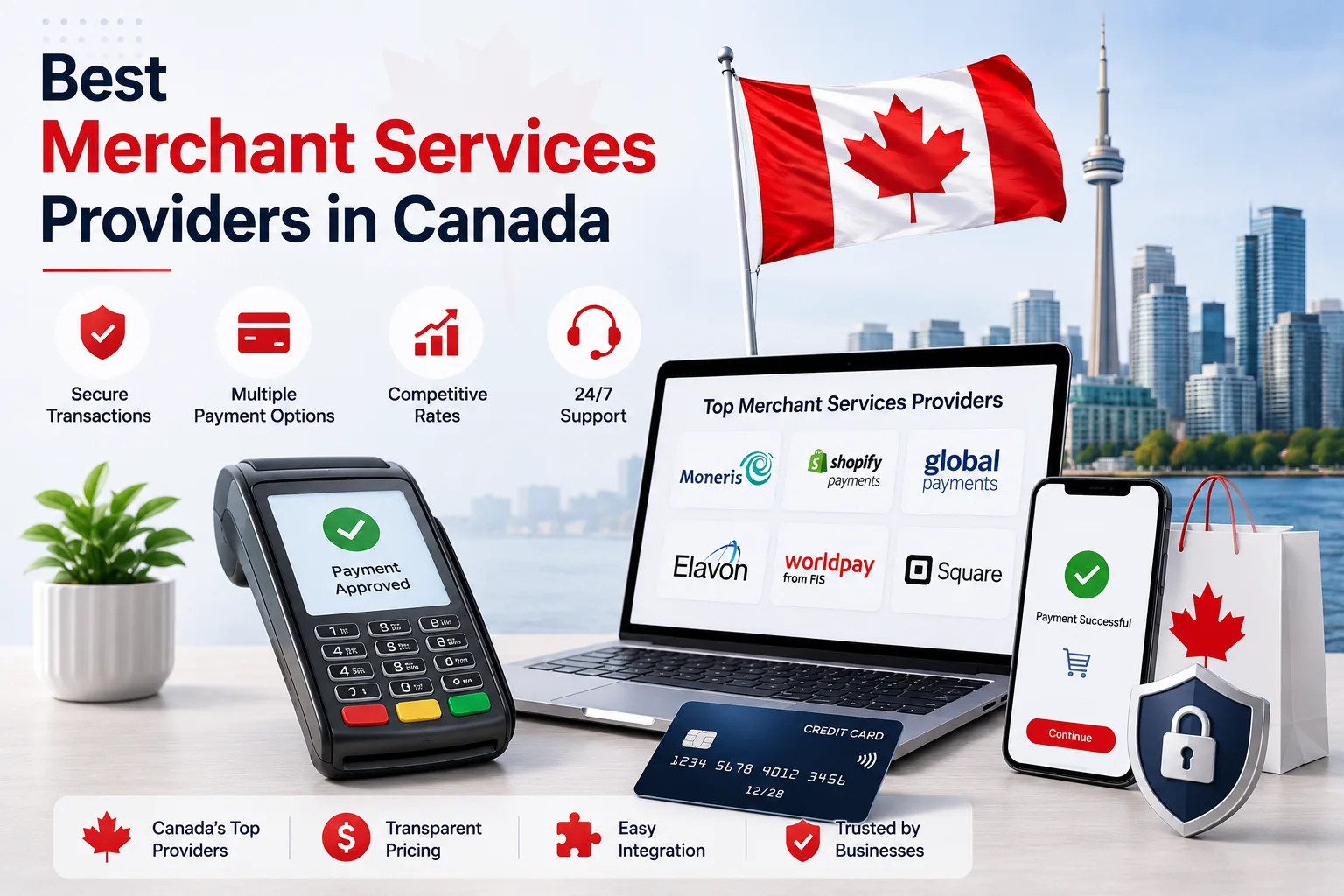
Canada’s merchant services market is led by Moneris by volume, with Stripe, Square, and Helcim dominating small business processing, and Nuvei and Paramount Commerce serving high-risk and cross-border payments needs. The right choice depends on transaction volume, contract flexibility, and whether a business, especially travel companies, needs a high-risk payment gateway built for chargebacks and multi-currency settlement.
Choosing merchant services in Canada means navigating a market with more overlap than it first appears. Payment processors, payment gateways, and merchant accounts are often bundled under one provider, but pricing structures, contract lengths, and industry fit vary widely between them.
This matters most for businesses with complex payment needs. Travel companies, subscription services, and cross-border sellers face fee structures and risk reviews that standard retail merchants rarely encounter, making provider selection a bigger decision than it looks on a pricing page.
This guide ranks the leading payment providers operating in Canada for 2026, compares their fees and contract terms, and covers what travel companies specifically need from a payment gateway and cross-border payments setup.
How We Evaluated These Providers
Rankings below weigh transaction fees, contract flexibility, cross-border payments support, customer service reputation, and fit for high-risk verticals like travel and subscription commerce. Interac Debit remains the most used domestic payment method in Canada by transaction count, with Visa the leading credit card brand and contactless payments now covering more than 70% of in-store card transactions, which shapes how providers prioritize their terminal and gateway technology.
Top Merchant Services Providers in Canada for 2026
Moneris
Moneris processes more Canadian card volume than any other single provider, making it the default choice for many established businesses. It suits retailers who want a full-service bank-backed processor with wide terminal availability.
- Predominantly tiered pricing, which can drift upward over time
- Contracts typically run three to four years, with cancellation fees near $250
- 24/7 customer support, though wait times draw frequent complaints
- Strong POS and in-person payment terminal ecosystem
Stripe
Stripe remains the top pick for developer-led businesses building custom checkout flows or marketplace payments.
- Widely regarded as the developer favorite, with strong API documentation and a broad product roadmap spanning issuing, connect, and treasury tools
- When Canada’s interchange rate dropped to 0.95% in October 2024, Stripe did not pass the reduction through on its standard flat-rate pricing
- Supports more than 135 currencies, though foreign cards and currency conversion carry added fees
- No long-term contract or cancellation fee
Square
Square fits small and mobile-first businesses that want simple, predictable pricing.
- No signup or cancellation fees, with flat-rate pricing from roughly 2.75% to 3.4%
- Cost-effective mainly under about $250,000 in annual volume, after which interchange-plus pricing elsewhere typically saves more
- Free POS software, though customer support is limited
- Strong fit for food trucks, pop-ups, and new retail businesses
Helcim
Helcim has built a reputation on transparent, contract-free pricing.
- No long-term contract and no cancellation fee, with interchange-plus pricing throughout
- Accepts USD or CAD from international customers with transparent cross-border fees based on card type, letting the customer’s bank handle conversion
- Well suited to businesses that sell across the Canada-US border without wanting to absorb hidden conversion markups
Nuvei
Nuvei is the largest Canadian-headquartered fintech in the payments space, and it has built specific strength in high-growth and higher-risk verticals.
- Strong fit for travel, iGaming, and subscription businesses with elevated chargeback exposure
- Global acquiring relationships that support multi-currency settlement
- More suited to established businesses than early-stage startups
TD Merchant Services and Chase Merchant Services
Both serve mid-market and enterprise merchants through traditional banking relationships.
- Chase Merchant Services, the payment processing arm of JPMorgan Chase, provides business analytics, fraud detection, and data security tools, but is best known for serving larger businesses
- TD offers bank-integrated merchant accounts, useful for businesses that already bank with TD
- Both typically require longer contracts and more extensive underwriting
Paramount Commerce
Paramount Commerce specializes in pay-by-bank payment processing rather than card-first solutions.
- Focuses on pay-by-bank solutions such as Interac e-Transfer and EFT, offering instant fund transfers with reduced chargeback risk
- Built for high-growth industries including iGaming, crypto, and remittance that need a fast, secure alternative to card payments
- Useful for travel companies looking to reduce card-based chargeback exposure on large bookings
PayPal
PayPal still carries brand recognition that smaller merchants find valuable at checkout, even as its fee structure lags more specialized providers.
- Commercial transactions run 2.9% plus $0.30 CAD for both online and in-store payments
- Most merchants pay no monthly service fee, though advanced features carry add-on costs
- Familiar to customers, which can lift checkout conversion for smaller ecommerce sellers
- Higher per-transaction cost than most interchange-plus providers once volume grows
Provider Comparison Table
| Provider | Best For | Pricing Model | Contract Terms | Cross-Border Support |
|---|---|---|---|---|
| Moneris | Established retail, in-person sales | Tiered | 3-4 years, ~$250 cancellation fee | Limited |
| Stripe | Developers, custom checkouts | Flat-rate | No contract | 135+ currencies, added fees |
| Square | New and mobile businesses | Flat-rate | No contract | USD/CAD only |
| Helcim | Contract-averse small business | Interchange-plus | No contract | Transparent, card-based fees |
| Nuvei | Travel, iGaming, subscriptions | Custom | Negotiated | Strong, multi-currency |
| Chase/TD Merchant Services | Enterprise, bank-integrated | Interchange-plus | Multi-year | Moderate |
| Paramount Commerce | Pay-by-bank, high-risk verticals | Custom | Negotiated | Strong via EFT/e-Transfer |
| PayPal | Small ecommerce, brand recognition | Flat-rate (2.9% + $0.30 CAD) | No contract | Moderate, currency fees apply |
Payment Gateways and Digital Wallets Canadian Merchants Need
Digital payments accounted for 86% of all payment transactions and 77% of total payment value in Canada in 2024, and that share continues to climb in 2026. Any merchant services provider selected today needs a payment gateway that keeps pace with how Canadians actually pay.
Priorities for Canadian merchants now include:
- Digital wallet support: including Apple Pay, Google Pay, and PayPal, alongside traditional card rails
- Interac e-Transfer integration: since it remains the dominant domestic payment method by volume
- Contactless and tap-to-pay terminals: now standard across in-person retail
- Multi-currency checkout: particularly for online payments serving US and international customers
- Fraud tooling built into the payment gateway: not bolted on as a separate subscription
Choosing a payment gateway that already supports these features avoids costly mid-contract migrations later.
Cross-Border Payment Pain Points for Travel Companies
Travel companies operating out of Canada face a distinct set of payment processing challenges that standard merchant accounts were not built to handle.
- Currency exposure on every booking: A Canadian tour operator selling packages priced in USD or EUR absorbs conversion risk unless the payment provider offers transparent, card-based cross-border fees rather than blended markups.
- Chargebacks tied to delayed delivery: Customers pay for flights or tours months before departure, so cancellations and disputes surface long after the original transaction, straining standard chargeback windows.
- Card-not-present fraud exposure: Most travel bookings happen online, increasing fraud risk relative to in-person retail and pushing many travel merchants into high-risk underwriting review.
- Seasonal cash flow strain: Booking surges around holidays and peak travel seasons can trigger reserve holds right when a business needs working capital most.
- Limited gateway options: Several mainstream Canadian processors decline or restrict travel merchants outright, narrowing the field to providers with explicit high-risk or high-growth vertical experience, such as Nuvei or Paramount Commerce.
These pressures explain why travel companies often outgrow flat-rate processors like Square or Stripe’s standard plans and move toward providers built for higher-risk, cross-border payments volume.
Payment wallets add another layer worth planning for. International travelers increasingly expect to pay through Apple Pay, Google Pay, or region-specific wallets rather than entering card details manually, and a gateway that cannot route these transactions cleanly loses bookings at checkout. Travel merchants selling into Asia-Pacific or Latin American markets in particular should confirm wallet coverage before committing to a provider, since card-only checkout flows underperform in markets where wallet adoption already exceeds card usage.
Choosing a High-Risk Payment Gateway in Canada
Travel companies and other high-risk merchants should evaluate providers on criteria beyond headline pricing.
- Chargeback and dispute tooling: built directly into the payment gateway, with real-time alerts rather than monthly summaries
- Multi-currency settlement: that avoids forcing customers through a single blended exchange rate
- Reserve transparency: including the exact percentage held back and the release schedule
- Pay-by-bank alternatives: such as Interac e-Transfer or EFT, to reduce dependence on card-based chargebacks for large transactions
- PCI DSS 4.0 compliance: now mandatory across the industry and non-negotiable for any provider handling online payments
- Vertical experience: confirmed through direct references from other travel or subscription merchants, not marketing copy alone
Comparing providers against these points, rather than fee percentage alone, gives travel companies a clearer view of true cost and reliability.
FAQs
What is the best merchant services provider in Canada for small businesses?
Square and Helcim both suit small businesses well, with Square offering simpler flat-rate pricing and Helcim offering contract-free interchange-plus pricing for growing volume.
Which Canadian payment provider is best for travel companies?
Nuvei and Paramount Commerce are better suited to travel companies than standard flat-rate processors, since both offer stronger chargeback management and cross-border payments infrastructure.
Do Canadian merchant accounts charge different fees for cross-border payments?
Yes. Providers vary significantly, with some passing through card-network conversion fees transparently and others applying blended markups on foreign transactions.
Is Interac e-Transfer a viable payment gateway option for online payments?
Yes, particularly for high-value transactions like travel bookings, since pay-by-bank transfers carry lower chargeback risk than card payments.
How long are typical merchant services contracts in Canada?
Contract length varies by provider. Bank-affiliated processors like Moneris often require three to four year terms, while fintech-first providers like Stripe, Square, and Helcim typically offer month-to-month agreements.
Final Thoughts
There is no single best merchant services provider in Canada for every business. Established retailers benefit from Moneris’s scale, developers lean toward Stripe, and small businesses often start with Square or Helcim for contract flexibility.
Travel companies and other high-risk, cross-border sellers need a different lens entirely: chargeback tooling, multi-currency settlement, and pay-by-bank alternatives matter more than headline transaction rates. Matching the provider to the actual risk profile, rather than the lowest advertised fee, is what keeps payment processing stable through peak booking seasons and beyond.
Comments
No comments yet. Be the first to share your thoughts.
Leave a comment