
TL;DR:
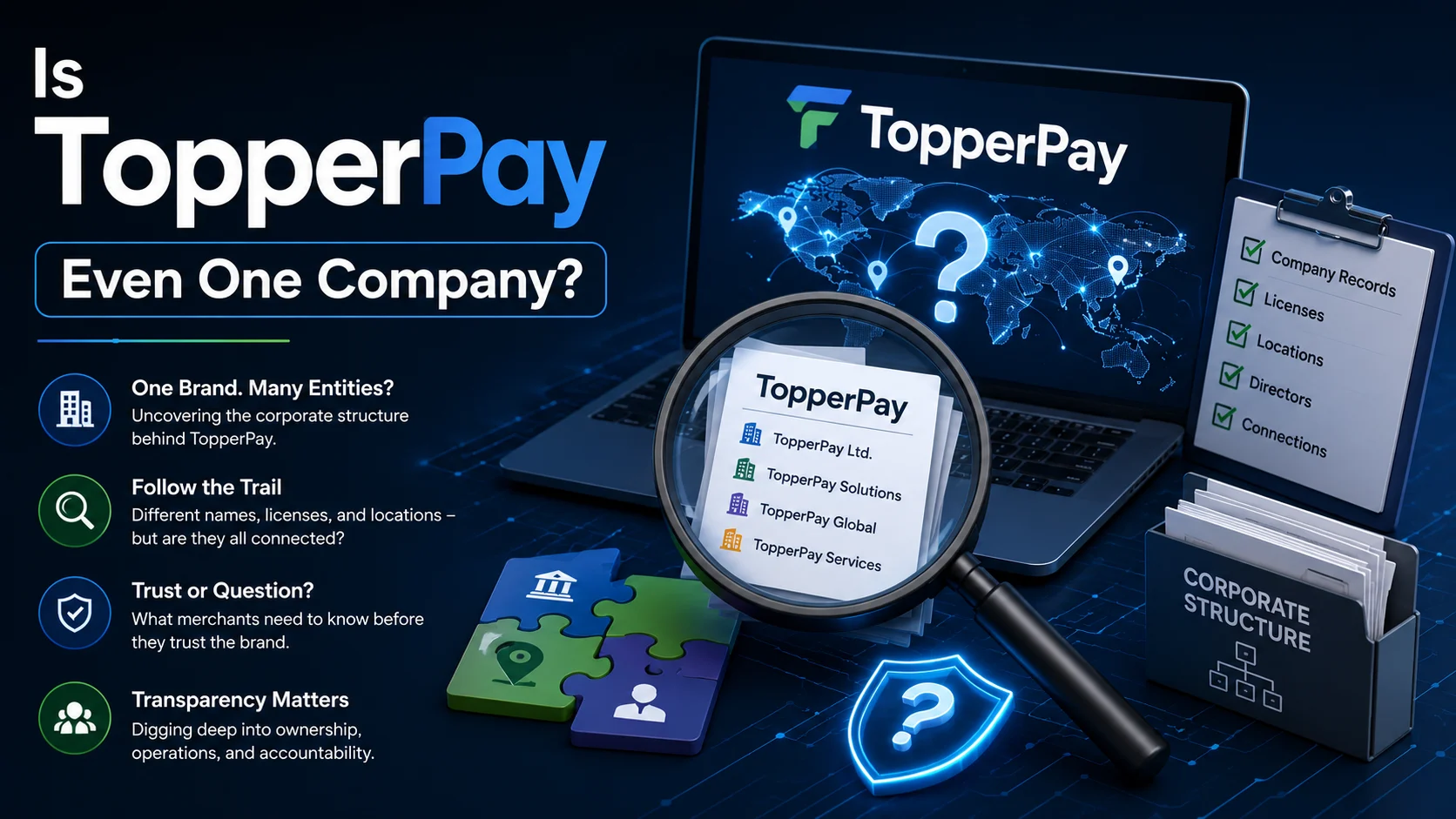
Search “TopperPay” and you’ll land on two very different descriptions of what looks like the same brand, a regulated fiat-to-crypto on-ramp built by Uphold, and a “high-risk friendly” merchant payment gateway described in near-identical marketing language on industry directories. The overwhelming weight of independent evidence, Trustpilot, press releases, the company’s own site, points to one real business. But the discrepancy is worth walking through, because it’s a useful case study in how easy it is for payment-provider identities to blur online, and how much that blurring can cost a merchant doing five minutes of due diligence instead of fifteen.
Here’s a genuinely strange research problem: type “TopperPay” into a search engine, and you’ll get two noticeably different stories about what the company actually does. One version, backed by press releases, Trustpilot reviews, and the company’s own about page, describes a regulated Web3 fiat-to-crypto on-ramp built by Uphold, a platform that lets people buy crypto with Apple Pay, Google Pay, or a debit card. Another version, showing up in payment-industry directory listings, describes TopperPay as a “high-risk friendly payment gateway” built for global merchants, high-risk onboarding, and cross-border payment processing, boilerplate language that reads almost identically to dozens of other unrelated companies listed in the same directory. That’s the real tension worth unpacking: not “which TopperPay is legitimate,” but “how confident can a researcher actually be that these are describing the same company at all?”
What the Well-Documented “TopperPay” Actually Is
The strongest, most consistent evidence points to one clear answer. Topper, operating at topperpay.com, is a fiat-to-crypto on-ramp product built and operated by Uphold, a Web3 financial platform. The documentation here is unusually solid for a smaller fintech brand:
- Corporate backing is verifiable and named: Multiple press releases confirm Topper is developed by Uphold, with Robin O’Connell identified as CEO of Uphold Enterprise in company statements.
- Regulatory status is disclosed specifically: Uphold states it is regulated in the US by FinCEN and state regulators, registered in the UK with the FCA, registered in Canada with FINTRAC, and registered in Europe with Lithuania’s Financial Crime Investigation Service.
- Product function is consistent across sources: Topper is described as a widget that lets crypto platforms accept fiat payments, supporting Apple Pay, Google Pay, debit/credit cards, and over 200 digital assets, aimed at boosting approval rates for crypto purchases.
- Independent review volume is substantial: Trustpilot shows nearly 2,000 customer ratings for topperpay.com, with generally positive sentiment around ease of use, alongside some recurring complaints about fee clarity and occasional transaction suspensions, a normal mix for a consumer fintech product of this size, not a red flag on its own.
- One sourcing detail worth flagging honestly: a third-party review aggregator lists Topper’s founding year as 2015 and its founder as Robin O’Connell directly, which is broadly consistent with, but not identical in phrasing to, the “developed by Uphold” framing used in Uphold’s own press materials, a minor discrepancy, but one worth noting rather than smoothing over.
Where the Confusion Actually Comes From
The second version of “TopperPay” shows up specifically in payment-industry directory listings, where the company is described as “your trusted partner in high-risk and global payment solutions,” offering high-risk merchant onboarding, custom payment gateways integrations, and secure cross-border payments processing “no matter the risk category.”
This is worth taking seriously rather than dismissing as a simple typo, because a few things about it are genuinely odd:
- The language is templated in a way that closely mirrors listings for other, entirely unrelated companies on the same directory, phrases like “empower businesses to accept, process, and scale payments globally” and “reduce chargebacks and increase authorization rates” appear as generic boilerplate across multiple different listed companies, not as TopperPay-specific copy.
- Nothing in this directory description mentions crypto, Uphold, or a fiat-to-crypto on-ramp at all, a notable omission if it’s genuinely describing the same well-documented company.
- No independent source outside that directory listing corroborates TopperPay operating as a general-purpose high-risk merchant services provider in the way described.
The most likely explanation, based on available evidence, is that this directory entry either reflects self-submitted marketing copy that was never fact-checked against the company’s actual, documented business, or reflects a listing built from a template that wasn’t properly customized to the real company. Neither of those possibilities means TopperPay is a scam or that two separate companies exist, but both possibilities point to the same practical lesson: directory listings, including on industry-rating sites, aren’t always a reliable primary source, and treating one as gospel without cross-referencing it against a company’s own materials is exactly the kind of due-diligence gap that creates confusion like this.
The Core Argument: Why This Kind of Identity Confusion Matters
1. It’s a symptom of a bigger problem in payment-provider research
Merchants and crypto-curious users researching payment providers routinely rely on directory sites, comparison articles, and aggregator reviews rather than primary sources, understandably, since checking a company’s regulatory filings directly takes real effort. But directories that accept self-submitted listings, or that populate entries from templates, can end up publishing descriptions that drift from what a company actually does. TopperPay’s case is a relatively benign example, the underlying company appears real and well-documented elsewhere, but the same dynamic, in a less well-documented case, could just as easily describe a company that doesn’t actually exist as advertised.
2. It highlights the gap between B2C fintech products and B2B merchant infrastructure
Part of what makes the TopperPay discrepancy specifically confusing is that the two descriptions aren’t just stylistically different, they describe fundamentally different business models. A fiat-to-crypto on-ramp like Topper serves individual consumers buying digital payments-enabled crypto assets directly. A high-risk merchant account and payment gateway provider serves businesses processing customer transactions at scale. These aren’t adjacent variations of the same service; they’re different products serving different sides of a transaction entirely, which makes the directory description’s framing especially unlikely to be an accurate secondary description of the same company.
3. What this means if you’re actually evaluating TopperPay for a real use case
If you’re a consumer or crypto project evaluating Topper for fiat-to-crypto online payments, the well-documented version, Uphold’s regulated, reviewed, press-covered product, is the one to rely on, and the evidence for it is strong. If you found TopperPay through a payment-gateway directory specifically looking for high-risk merchant services or a high-risk payment gateway, the responsible move is to verify directly with the company which product you’re actually being offered before signing anything, since the directory description doesn’t match the well-documented, independently verifiable business.
A Quick Note on Doing This Check Yourself
If you want to verify a payment-provider identity the way this article did, the process is repeatable and doesn’t require special tools:
- Start with the company’s own primary materials: its official site, any press releases issued through its own channels or reputable wire services, and named executive or founder information.
- Cross-reference against independent review platforms: Trustpilot, app stores, or industry-specific review sites, checking not just star ratings but whether the description of the product matches what the company’s own site says.
- Treat directory and aggregator listings as a starting point, not a source of truth: especially when the listing’s language reads like a template also used for unrelated companies on the same platform.
- When something claims regulatory status, check the specific type of registration named: an MSO license, MSB registration, or FCA authorization each has a public registry a merchant or curious researcher can check directly, rather than accepting the claim at face value.
That process is what surfaces exactly the kind of gap this article walked through: a well-documented core business, and a second, unverified description riding on the same name.
The Counterpoint
The steelman case for treating this as a non-issue: companies rebrand, expand into new business lines, and use inconsistent marketing copy across channels all the time without it indicating any real problem. Uphold itself operates broadly across web3 financial services, remittances, currency exchange, digital assets, so it’s not implausible that a business unit under the same brand could also pursue B2B high-risk merchant processing as a separate offering, even if that expansion isn’t yet reflected consistently in press coverage.
That’s a fair possibility to hold open, and it would fully resolve the discrepancy if confirmed. But it remains unconfirmed, no press release, official Uphold page, or independent source corroborates a merchant-facing high-risk gateway business under the TopperPay name, despite Uphold’s PR activity being otherwise fairly active and well-documented. Absent that confirmation, the more cautious and evidence-supported conclusion is that the directory listing reflects unverified, likely templated marketing copy rather than a second, genuine business line, a distinction worth maintaining rather than assuming the more generous explanation by default.
Comparison: The Two “TopperPay” Descriptions
| Dimension | Documented Version (Uphold’s Topper) | Directory Version (Industry Listing) |
|---|---|---|
| Core offering | Fiat-to-crypto on-ramp widget for individual users | High-risk merchant payment gateway |
| Corporate backing | Uphold, named CEO, verifiable press coverage | Unspecified; no named leadership or backing corroborated |
| Regulatory disclosure | FinCEN (US), FCA (UK), FINTRAC (Canada), Lithuania FCIS | None disclosed |
| Independent review volume | Nearly 2,000 Trustpilot ratings | None found outside the directory listing itself |
| Target customer | Individual consumers, crypto projects | Businesses across risk categories |
| Evidence quality | Strong, cross-referenced across multiple sources | Weak, template-like language, uncorroborated elsewhere |
Practical Takeaway
If you’re researching TopperPay for any reason, don’t stop at a single directory listing, cross-reference against the company’s own site, press coverage, and independent reviews before deciding what you’re actually evaluating. For crypto-facing use cases, the well-documented Uphold-built Topper product checks out. For a high-risk payment gateway need specifically, treat the directory description as unverified until you get direct confirmation from the company about which business line, if any, that description actually applies to. More broadly, this case is a useful reminder for anyone evaluating payment wallets or crypto payment infrastructure: a polished directory listing is a starting point for research, never a substitute for it.
Open question worth sitting with: how many other “one company” listings across payment-industry directories are quietly describing two different things, and how much responsibility should directory platforms themselves carry for verifying self-submitted listings before they shape a merchant’s or consumer’s due diligence?
Comments
No comments yet. Be the first to share your thoughts.
Leave a comment