
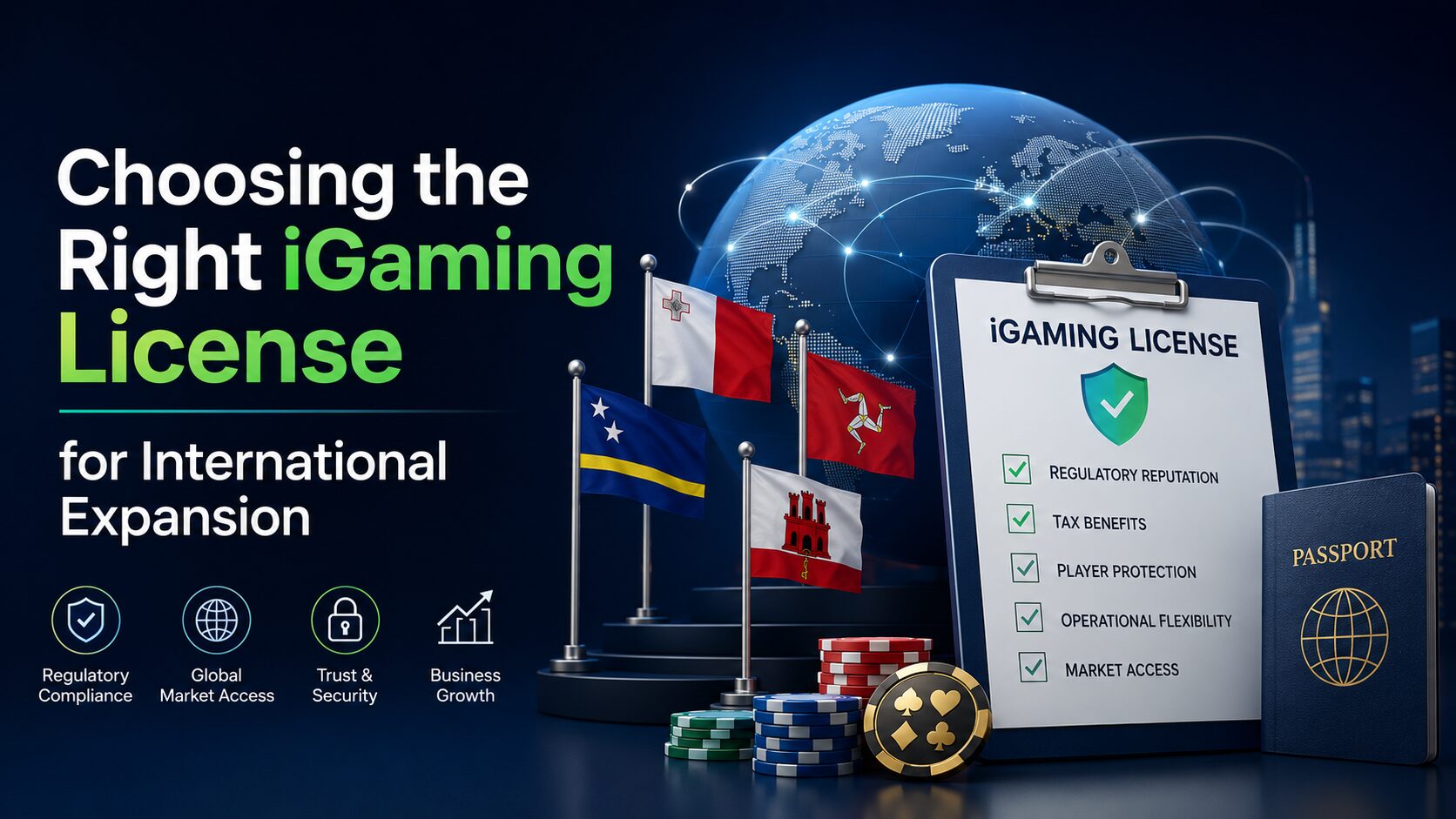
TL;DR:
In 2026, four jurisdictions dominate most operators’ shortlist, Malta (MGA), UK (UKGC), Curaçao, and Anjouan, each trading off cost, speed, credibility, and banking access differently. The mistake most operators make isn’t picking a “bad” jurisdiction; it’s picking one that doesn’t match their actual payment infrastructure needs, then discovering six months in that their chosen license won’t get them a working merchant account.
If you’re researching iGaming licenses right now, there’s a good chance you’re not asking “which license is best” in the abstract, you’re asking something more specific: which license will actually let me get a functioning payment gateway, avoid banking friction, and expand into the markets I actually care about, without burning six figures and a year of runway on the wrong jurisdiction. That’s the real decision, and it’s a payments question as much as a legal one, because in iGaming, your license doesn’t just determine where you can legally operate. It determines which payment providers will even take your call.
The Pain Point Nobody Explains Clearly Upfront
Here’s what a lot of first-time operators learn the hard way: a gambling license and a working payment processing relationship are two separate approvals, and getting the first one doesn’t guarantee the second. Mainstream merchant services providers routinely decline gambling outright, and even the specialist high-risk payment gateway providers that do serve iGaming weigh your licensing jurisdiction heavily in their own underwriting decision. A cheap, fast license from a jurisdiction with weak banking relationships can leave you legally operational but functionally unable to process online payments at all, which is a worse outcome than a slower, more expensive license that actually opens the payment rails you need.
The Four Jurisdictions Most Operators Actually Compare
Malta (MGA) – The Credibility Play
The Malta Gaming Authority remains the most globally recognized iGaming regulator, established in 2004 and respected across both EU and non-EU markets. As of 2026, Malta no longer issues separate licenses per game type, a single license can now cover casino, betting, and poker under one umbrella, making it more flexible than it used to be.
- Cost: Roughly €25,000-€100,000+ in direct fees, though full first-year cost including legal, compliance, and banking setup often runs €150,000-€300,000+.
- Timeline: 6-12 months.
- Tax: 5% gaming tax, plus compliance contributions.
- The real payoff: Malta opens banking relationships, Tier-1 game-studio supply agreements, and payment providers relationships that lower-tier jurisdictions simply don’t unlock. If your growth plan depends on premium game content or EU-facing banking partners, this is often the license that actually gets those doors open, not just a credibility badge.
United Kingdom (UKGC) – The Regulated Market Access Play
The UK Gambling Commission is the strictest license on this list, and it’s not really a “credibility” choice so much as a market-access requirement, if you want to legally operate in the UK market, there’s no substitute.
- Cost: $100K+ with a 21% gaming duty, materially higher than any other jurisdiction on this list.
- Best fit: Operators specifically targeting the UK market, where the license isn’t optional overhead but a hard prerequisite.
Curaçao – The Established Middle Ground
Curaçao has issued online gaming licenses since 1993 and remains one of the most accessible, cost-effective options, with more than 300 licenses granted to date. It’s worth flagging a real, current caveat here: Curaçao’s licensing framework changed under a new National Ordinance on Games of Chance (LOK) that took effect December 24, 2024, and at various points during 2025–2026, new online gaming applications have been reported as temporarily closed pending updated forms and process publication. This is exactly the kind of detail that changes fast enough to require direct verification with Curaçao’s official licensing channels before you build a timeline around it.
- Cost: Roughly €65,000-€90,000, or reported elsewhere as $50,000-$200,000 post-reform, with 0% gaming tax in most reporting.
- Timeline: 4-6 months, historically, subject to the current application-process status.
- Best fit: Operators managing multi-year tax efficiency who don’t need EU-facing premium content relationships.
Anjouan – The Speed Play
Anjouan Gaming Authority offers the fastest path to market among the major jurisdictions, 3-4 months in some reporting, 8-10 weeks in others, at the lowest cost tier, roughly €17,000-€50,000.
- The trade-off that matters most: Anjouan “faces payment processor friction” in multiple independent 2026 comparisons, meaning the speed and cost savings can be partially offset by a harder time securing offshore merchant account relationships with mainstream-adjacent PSPs, since Anjouan’s regulatory reputation carries less weight with banks and payment providers than Malta’s or the UK’s.
- Best fit: Startups prioritizing speed-to-revenue over long-term banking depth, often as a first license before migrating to a stronger jurisdiction later.
Other Jurisdictions Worth Knowing
- Isle of Man: Tier-1 credibility alongside Malta, strong banking access, but high fees and long timelines make it most viable for already-established operators rather than first-time launches.
- Gibraltar: Another premium, well-respected jurisdiction, though increasingly compared against Malta and the UK for similar EU/UK-adjacent market access.
- Nevis: Described in some 2026 comparisons as a fast-emerging “golden-tier” option (roughly 4 weeks, ~€28,000) with notably strong banking access relative to its cost, worth evaluating directly if speed and banking access both matter to your plan.
- Kahnawake: A long-standing option, particularly relevant for operators with North American ties.
The Core Argument: Match the License to Your Payment Strategy, Not the Reverse
1. Your license determines your PSP shortlist before you even apply
Payment providers underwrite jurisdiction risk as part of their own onboarding decision. A Malta or UKGC license typically opens relationships with Worldpay-tier acquirers and mainstream-adjacent high-risk payment gateway providers. An Anjouan license may require leaning more heavily on crypto-native rails or specialist offshore PSPs from the outset, not because the license is illegitimate, but because the payments industry weighs jurisdiction reputation directly into its own risk models.
2. Cheap and fast isn’t free if it costs you six months later
Multiple 2026 industry guides converge on the same warning: choosing the wrong jurisdiction fit can add 3-6 months of delay and tens of thousands of dollars in additional costs once an operator has to retroactively solve payment access, restricted-market rules, or documentation gaps the license didn’t anticipate. The license itself is rarely the most expensive mistake, the payment-infrastructure rework after the fact usually is.
3. Many operators now run a two-license strategy
A pattern showing up across 2026 licensing guidance: use a fast, affordable license (Anjouan, Curaçao) to reach revenue quickly, then add a premium license (Malta, Nevis) once the business can absorb the cost, specifically to unlock the stronger banking and cross-border payments relationships that premium jurisdictions provide. This isn’t a compromise so much as a deliberate sequencing strategy tied directly to cash flow and growth stage.
Pros and Cons Summary
Premium jurisdictions (Malta, UKGC, Isle of Man):
- Strongest banking and PSP relationships, access to Tier-1 game content
- Highest credibility with investors and enterprise partners
- High cost and long timelines, not viable pre-revenue for most startups
Mid-tier (Curaçao, Nevis):
- Reasonable cost-to-credibility ratio, decent banking access
- Regulatory frameworks can shift (see Curaçao’s 2024–2026 LOK transition), verify current application status before planning around it
Budget/speed jurisdictions (Anjouan and similar):
- Fastest, cheapest path to legal operation
- Real payment-processor friction reported across multiple independent sources, plan your PSP strategy around this limitation from day one, not after
Practical Takeaway
Before you file a single application, map out your payment strategy first: which markets are you targeting, which payment wallets and rails does your player base actually use, and which PSPs are you realistically going to need in year one versus year three? Then work backward to the jurisdiction that actually supports that plan, rather than choosing based on cost or speed alone. If your growth plan depends on premium supply agreements and mainstream-adjacent banking, budget for Malta or a similar Tier-1 jurisdiction from the start. If you’re prioritizing speed to revenue, go in with a clear-eyed plan for the payment-processor friction that comes with it, and treat a stronger second license as part of your roadmap, not an afterthought.
Comments
No comments yet. Be the first to share your thoughts.
Leave a comment