
Introduction
As international business operations become increasingly digital, companies are searching for more efficient ways to collect, manage, and reconcile payments across multiple countries. Traditional banking structures often require businesses to maintain numerous bank accounts, navigate complex compliance requirements, and manage costly cross-border transactions.To address these challenges, Virtual IBAN providers have emerged as a critical part of modern payment infrastructure.
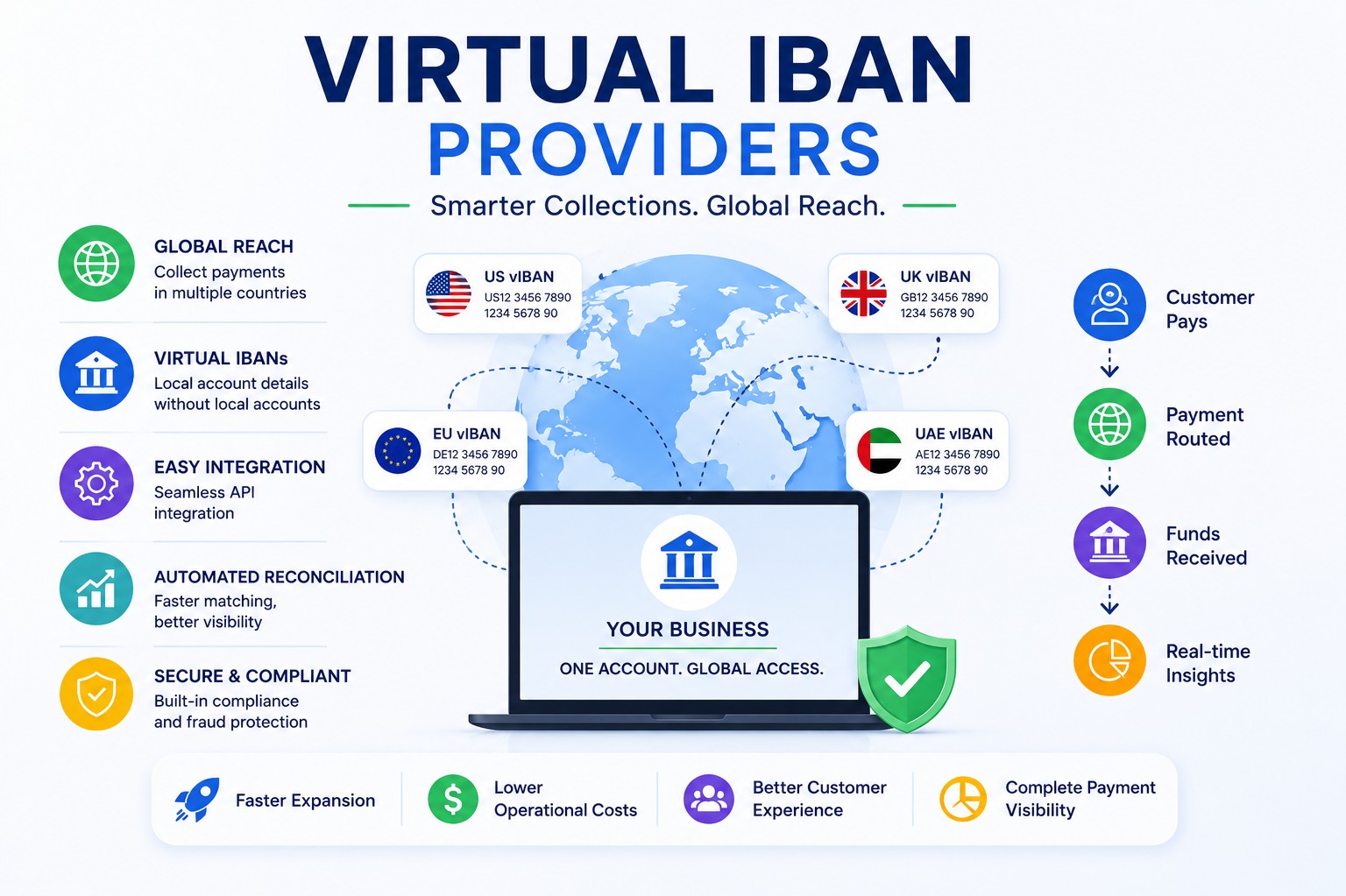
Virtual IBAN (vIBAN) providers enable businesses to receive payments through unique International Bank Account Numbers without the need to open multiple physical bank accounts. By simplifying global payment collection and improving transaction visibility, these providers are helping fintech companies, marketplaces, e-commerce businesses, SaaS platforms, and multinational corporations streamline international financial operations.
As global commerce continues to expand, Virtual IBAN providers are becoming increasingly important for organizations seeking scalable and efficient payment solutions.
What Is a Virtual IBAN Provider?
A Virtual IBAN provider is a financial institution, fintech company, electronic money institution (EMI), or payment service provider that offers Virtual IBAN infrastructure to businesses.
Unlike traditional banks that provide standalone accounts, Virtual IBAN providers assign unique IBANs linked to a centralized master account.
When payments are sent to a Virtual IBAN, funds are automatically routed to the designated account while preserving transaction information.
This allows businesses to:
- Collect international payments
- Improve reconciliation processes
- Create local payment experiences
- Centralize treasury management
- Reduce operational complexity
Virtual IBAN providers serve as the technology and compliance layer that makes these capabilities possible.
Why Businesses Use Virtual IBAN Providers
Managing international payments through traditional banking models can create significant challenges.
Businesses often face:
- Multiple banking relationships
- Manual reconciliation processes
- Delayed payment identification
- High account maintenance costs
- Complex onboarding requirements
Virtual IBAN providers help overcome these challenges by offering a more flexible payment collection framework.
Instead of opening separate accounts in every market, businesses can use Virtual IBANs to establish a local payment presence while maintaining centralized financial control.
Key Services Offered by Virtual IBAN Providers
Global Payment Collection
Virtual IBAN providers enable businesses to receive payments from customers and partners across multiple countries using local banking details.
This improves payment convenience and reduces friction for international transactions.
Multi-Currency Support
Many providers offer support for multiple currencies, allowing businesses to receive and manage funds in different markets efficiently.
This is particularly valuable for organizations operating internationally.
Automated Reconciliation
One of the biggest advantages of Virtual IBAN infrastructure is automated transaction matching.
Businesses can assign dedicated IBANs to customers, regions, or business units, making it easier to identify incoming payments and reconcile accounts.
API Integration
Modern Virtual IBAN providers typically offer APIs that enable businesses to integrate payment collection capabilities directly into their platforms and workflows.
This supports automation and operational efficiency.
Compliance and Risk Management
Leading providers incorporate robust compliance frameworks, including:
- Know Your Customer (KYC)
- Anti-Money Laundering (AML)
- Transaction monitoring
- Fraud prevention controls
- Regulatory reporting
These services help businesses meet financial compliance requirements.
Industries Benefiting from Virtual IBAN Providers
Fintech Companies
Fintech businesses frequently use Virtual IBANs to support customer accounts, payment processing, and digital financial services.
E-Commerce Businesses
Online merchants can simplify international payment collection while improving customer experiences.
Digital Marketplaces
Marketplaces benefit from enhanced transaction tracking, seller payouts, and reconciliation capabilities.
SaaS Providers
Software companies serving global customers can streamline subscription payments and recurring billing processes.
Multinational Enterprises
Large organizations use Virtual IBAN infrastructure to centralize cash management and improve visibility across global operations.
Benefits of Working with a Virtual IBAN Provider
Faster Market Expansion
Businesses can establish local payment collection capabilities without opening physical bank accounts in every country.
Improved Cash Flow Visibility
Dedicated Virtual IBANs provide detailed payment tracking and reporting.
Lower Operational Costs
Reducing the number of banking relationships can significantly decrease administrative expenses.
Enhanced Customer Experience
Customers can pay using local banking details, creating a more familiar and convenient payment experience.
Scalable Infrastructure
Virtual IBAN solutions can grow alongside business operations without requiring major changes to banking structures.
What to Look for in a Virtual IBAN Provider
Not all providers offer the same capabilities. Businesses should evaluate potential partners carefully.
Important considerations include:
Geographic Coverage
The provider should support the regions where the business operates or plans to expand.
Currency Availability
Multi-currency support can simplify international operations and reduce foreign exchange complexity.
Regulatory Status
Businesses should work with licensed and regulated providers that maintain strong compliance standards.
API Capabilities
Robust APIs enable automation and seamless integration with existing systems.
Security Framework
Providers should implement advanced cybersecurity measures to protect financial data and transactions.
Reporting and Analytics
Comprehensive reporting tools improve visibility into payment performance and cash flow.
Customer Support
Reliable support is essential when managing international payment operations.
Challenges Associated with Virtual IBAN Providers
While Virtual IBANs offer numerous benefits, businesses should understand potential limitations.
Provider Dependency
Organizations rely on the provider’s infrastructure, operational stability, and regulatory standing.
Regional Restrictions
Availability of Virtual IBAN services may vary depending on jurisdiction and local regulations.
Limited Banking Services
Most Virtual IBAN providers focus on payment collection rather than offering the full range of traditional banking products.
Integration Requirements
Businesses may need technical resources to integrate Virtual IBAN infrastructure into existing systems.
Emerging Trends in Virtual IBAN Services
Several trends are shaping the future of Virtual IBAN providers.
Open Banking Integration
Providers are increasingly connecting with open banking ecosystems to deliver enhanced payment experiences.
Embedded Finance
Virtual IBAN capabilities are becoming integrated directly into business software and financial platforms.
Real-Time Payments
Providers are adopting faster payment technologies to improve settlement speed and transaction visibility.
AI-Powered Reconciliation
Artificial intelligence is helping businesses automate transaction matching and improve operational efficiency.
Cross-Border Payment Innovation
As global commerce grows, providers continue developing solutions that simplify international transactions and reduce payment friction.
The Future of Virtual IBAN Providers
The demand for Virtual IBAN services is expected to grow significantly as businesses continue expanding internationally.
Organizations increasingly require:
- Faster payment collection
- Better reconciliation
- Lower operational costs
- Greater transparency
- Improved customer experiences
Virtual IBAN providers are well-positioned to meet these demands by offering flexible, scalable, and technology-driven payment infrastructure.
As digital finance evolves, Virtual IBANs are likely to become a standard component of global payment ecosystems.
Conclusion
Virtual IBAN providers are transforming the way businesses collect and manage international payments. By enabling organizations to receive funds through unique IBANs without maintaining multiple physical accounts, these providers simplify cross-border operations while improving visibility, reconciliation, and scalability.
As global commerce, fintech innovation, and digital payments continue to accelerate, businesses that leverage Virtual IBAN infrastructure can gain a competitive advantage through greater operational efficiency and enhanced financial control. For organizations seeking modern payment solutions, Virtual IBAN providers are becoming an essential partner in navigating the future of international finance.
Comments
No comments yet. Be the first to share your thoughts.
Leave a comment